
A Landlord’s Guide to Winter Weather and Snow Removal
By Kimberly Rau, MassLandlords, Inc.
Most years, Massachusetts averages between 44 and 49 inches of snowfall. The number can be lower on Cape Cod, and much higher in western parts of the state. That means regardless of where your rentals are located, chances are you’ll have to deal with at least a few instances of snowfall each winter.
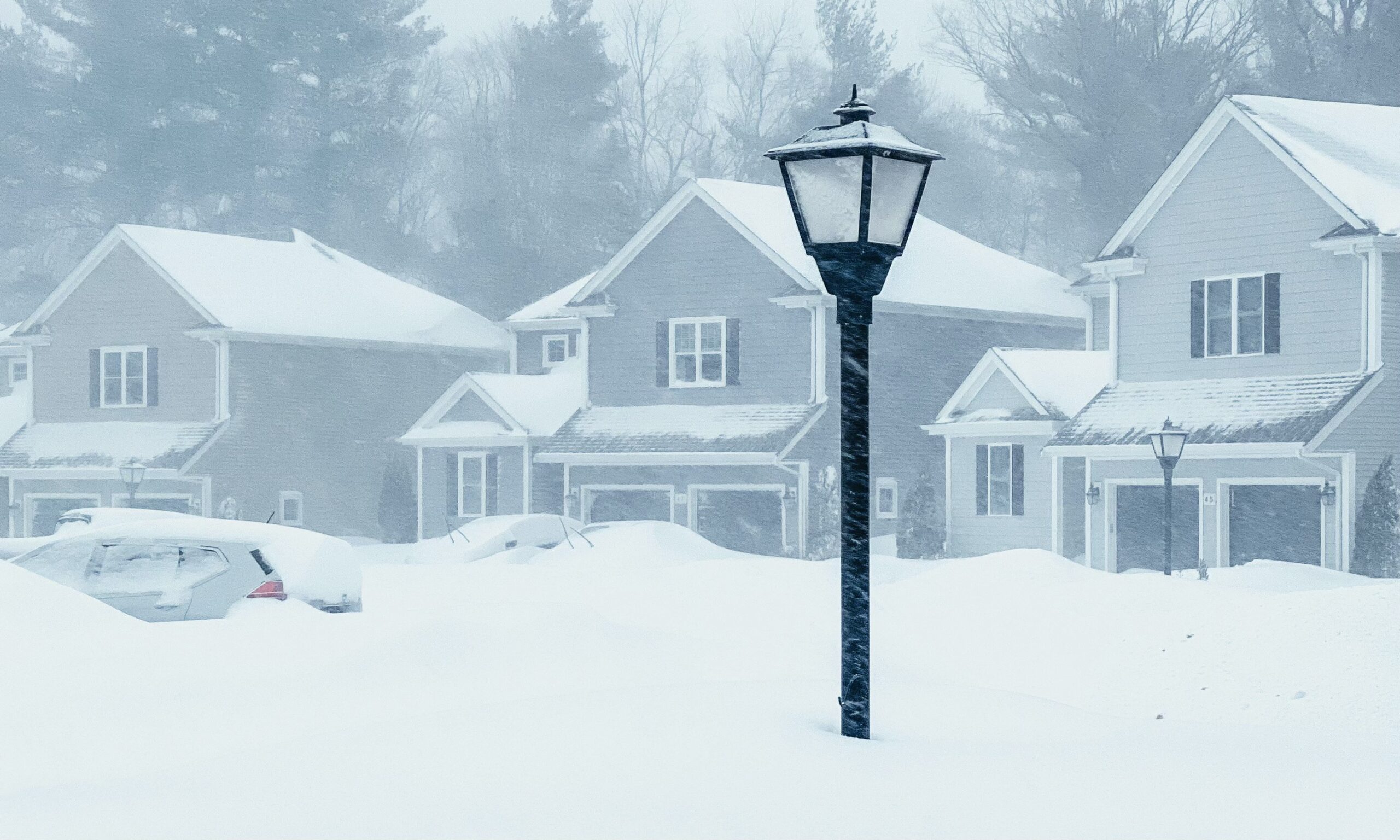
When the snow starts falling, the responsibility to clear the sidewalks, paths and driveways depends on what type of rental you have. (Image License: Elly Filho for Unsplash)
Who Is Responsible for Snow Removal at a Rental Property?
The State Sanitary Code outlines landlord responsibilities for snow and ice removal. Depending on the type of rental property, it may be up to you to figure out snow removal. In all cases, it is your job to make sure the structure is weather-tight and that snow cannot get in.
Single-family rental units
For single-family rentals, the renter is responsible for clearing snow and ice from their walkways and parking spaces or driveways. You would do well to leave them deicer, sand and shovels, but otherwise, it’s up to the tenant to make sure they can get out of the house.
That said, if your property has a large driveway and/or your renters are elderly or physically incapable of shoveling it out, you may want to look into snow removal services. More on that in the next section.
Multifamily rental properties
If you have a multifamily property, you are responsible for clearing snow and ice from common areas, egresses and pathways, including exterior staircases and parking lots. You should also put down salt and sand to prevent slip and fall accidents. You can do this yourself, or hire someone to do it for you.
If you have a large parking area, you may want to see what local snow removal services are available. Use our provider directory to find one near you, or ask on the message boards or Facebook group.
Finding someone to remove snow on an as-needed basis can be tricky. The best practice for hiring for snow removal (by shovel, snowblower or plow) is to put someone on a monthly winter contract, so they get paid even if there’s no snow. The contract will likely have an overage rate. This means if a major snowstorm causes them to do more work than outlined in the contract, they’ll get paid for that extra time. This isn’t a bad thing. Having a contract in place ensures you’ll be scheduled for snow removal when needed instead of having to scramble to find someone to fit you in at the last minute.
In multiunit rental properties, tenants are responsible for clearing areas that are for their exclusive use, such as dedicated entryways and paths. This is only if no other renters use them. If the walkway goes past several front doors, that’s a common area and your responsibility. Renter responsibility for snow removal, if any, must be outlined in the rental agreement, and you should consider supplying your renters with the tools for the job.
Check Local Ordinances for Snow Removal Laws
Municipalities will have different rules for when snow must be cleared from your property to allow public access. If you have a sidewalk in front of your rental, it is your job to make sure that stretch is free of snow and ice following winter weather events.
How quickly you must clear that snow depends on your city or town. Some are much more restrictive than others. For instance, Boston says sidewalks must be cleared within three hours of snow fall or sunrise, whichever is later. Worcester gives property owners 10 hours after a snowstorm ends to have snow removed, and Springfield allows a generous 24 hours. Other municipalities may specify a time of day. Fitchburg says you have until 6 p.m. on the day after snow has stopped to clear sidewalks.
Many places say snow cannot be shoveled into the street. This may be a challenge if your building has little frontage between house and sidewalk.
We’ve compiled a page of several municipalities’ snow removal ordinances. If your municipality has a vastly different set of regulations, email us at hello@masslandlords.net and let us know what they are.
Beware of Parking Bans
If heavy snow is in the forecast, cities and towns will often enact a parking ban so plows can clear the streets without cars in the way. For instance, Boston bans parking on major roads and throughways during declared snow emergencies. Vehicles parked there during the ban are ticketed and towed. Because not everyone has off-street parking in Boston, some garages and lots offer parking to residents during parking bans.
Worcester has a permanent parking ban that runs from Dec. 1 thorough April 30 for major roads, and declares parking bans for other streets as needed. Often, parking is limited to one side of the street for these less-traveled roads.
Your municipality may have something similar. In smaller cities and towns, responding to a parking ban is as simple as reminding everyone to pull into the driveway. For rentals with limited or no off-street parking, check and see what solutions your city offers. Some may allow street parking, but only on one side of the road. In Lowell, the city’s many parking garages are open during snow emergencies to keep cars off the roads. Other cities may suggest parking in nearby lots. If lots and garages are open, there is typically a time limit after the ban is lifted to move your vehicle.
When you hear of a parking ban, communicate that to your renters. They may already know about it, but make sure anyway. It’s an expensive mistake for residents to make.
Winter Weather Preparedness: Keep Your Tenants Safe
In 2023, we spoke with meteorologist Kelly Cebulko from STM Weather for a training video on winter weather preparedness, which we highly recommend you watch for some excellent information and tips.
In the 2010 case Papadopoulos v. Target Corporation, the Supreme Judicial Court ruled that property owners are liable for snow and ice accidents that happen on their property, regardless of whether the accumulation is natural or unnatural. In other words, if you cleared the snow, but then a plow deposits more ice that someone slips on, you can be held responsible as long as the person was lawfully on your property.
We’ll go over what to do about both snow and ice now.
Winter Weather: Know When to Deice
Ice is one of the biggest winter safety threats, posing a slip and fall risk wherever it ends up.
Some recommend not putting down salt for deicing purposes until after the snowstorm, when you’ve cleared away the snow. The logic is that doing so will create a layer of heavy slush, which is much harder to move.
But there are times when salting ahead of time is very important, according to Lyndsay Williamson of STM Weather, in a video with MassLandlords about a winter-related slip-and-fall lawsuit.
Even when there is snow in the forecast, if the weather also reports a chance of sleet, freezing rain, or a combination (sometimes called a “winter mix”), or rain with rapidly falling temperatures, you should put salt down before the weather event. All of those conditions are prime for ice forming, making shoveling the snow on top of it dangerous, and accessing already-cleared accessways treacherous as well.
Pay close attention to weather alerts, and if you hear reports of any of the above, or other icy conditions such as a black ice warning, get salt and sand down ahead of time. Make it available to your renters in single-family rentals as well.
Snow Removal: Different Methods for Different Situations
How to remove snow depends on how much snow is falling. If you wake up to a small accumulation, one trip out ought to do the job. If you are experiencing heavy snowfall, you may want to make multiple passes during the storm. This prevents you from having to shovel out very deep snow.
This is important especially if you are using a shovel and not a snowblower. Be careful. Shoveling and lifting heavy snow can cause heart attacks. If a plow leaves a wall of snow at the end of your driveway or path, you will need to remove that as well. This will be more tightly packed than the newly fallen snow. Go slowly.
Snow removal is only half the battle. Once you’re done, make sure people can get through cleared areas without slipping and falling. This includes walkways, driveways and sidewalks. When you are done shoveling, snow blowing or plowing, what is left behind could freeze into ice. You need to put down salt to prevent freezing and sand to provide traction, even if you already did it before the snow came.
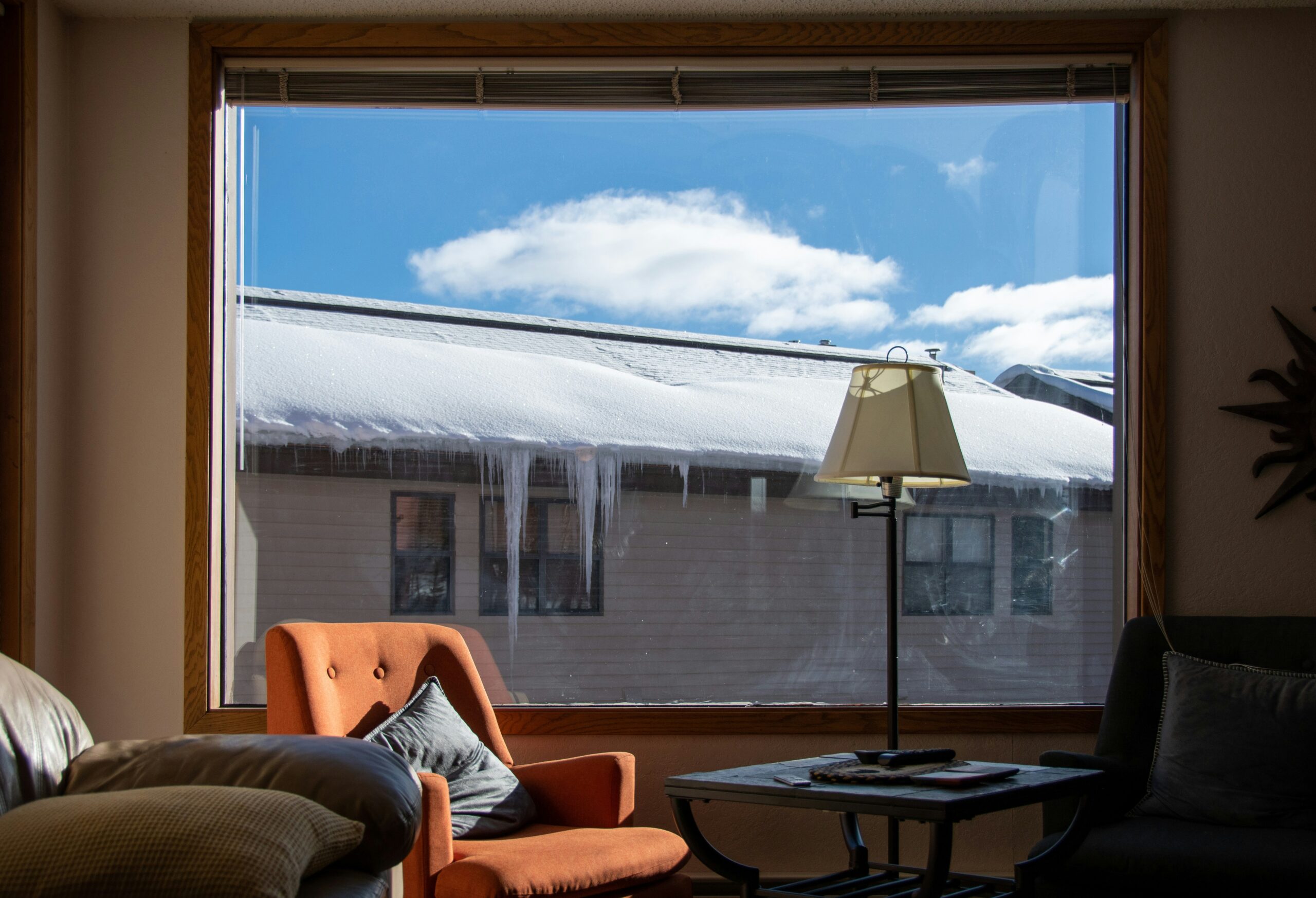
No snow on the roof peak? It could just be a drift, but this is often a sign of heat loss, which can lead to ice dams. (Image License: Nader Saremi for Unsplash)
Be on the Lookout for Ice Dams
If you live in Massachusetts, you need to know what ice dams are, and how to prevent them.
Ice dams are ridges of ice that form at the edge of your roof. They form when heat from the house melts snow on the upper roof. Unlike when the sun melts snow, this melting will start on the underside of the accumulation. Water runs down your roof, cooling as it gets away from the heat. Because there is snow above it and on the edge of the roof, it will not run off the roof. It will freeze again, creating a dam.
This dam traps more water behind it. The water will pool, back up under the shingles, and make its way into the house, potentially flooding the space below. It can damage ceilings, walls, paint and more. This can be very expensive to fix. Your homeowners insurance may cover the damage, but even if it does, repairs are time-consuming.
The best way to prevent ice dams is by making sure your attic space has good insulation. This will also save money on heating bills. Also, in the fall, clear any fallen leaves and other debris from your downspouts and gutters. This will help prevent backup.
When it does snow, you can remove excess accumulation from your roof by using an ice dam rake. These tools have long, telescoping handles and wide, flat heads that can remove snow from the lower part of your roof. You stand on the ground and use the rake to pull the snow off the roof, creating space at the edge where any snow melt will not become trapped. This can be very useful in preventing ice dams.
Be careful using an ice dam rake. Falling snow can be very heavy, especially if ice has already formed underneath. Follow instructions on use carefully, and be aware of your surroundings.
If you get an ice dam, you can try using your rake to remove it. Large or otherwise difficult ice dams could require a professional. Under no circumstances should you or your renters get on an icy roof yourselves.
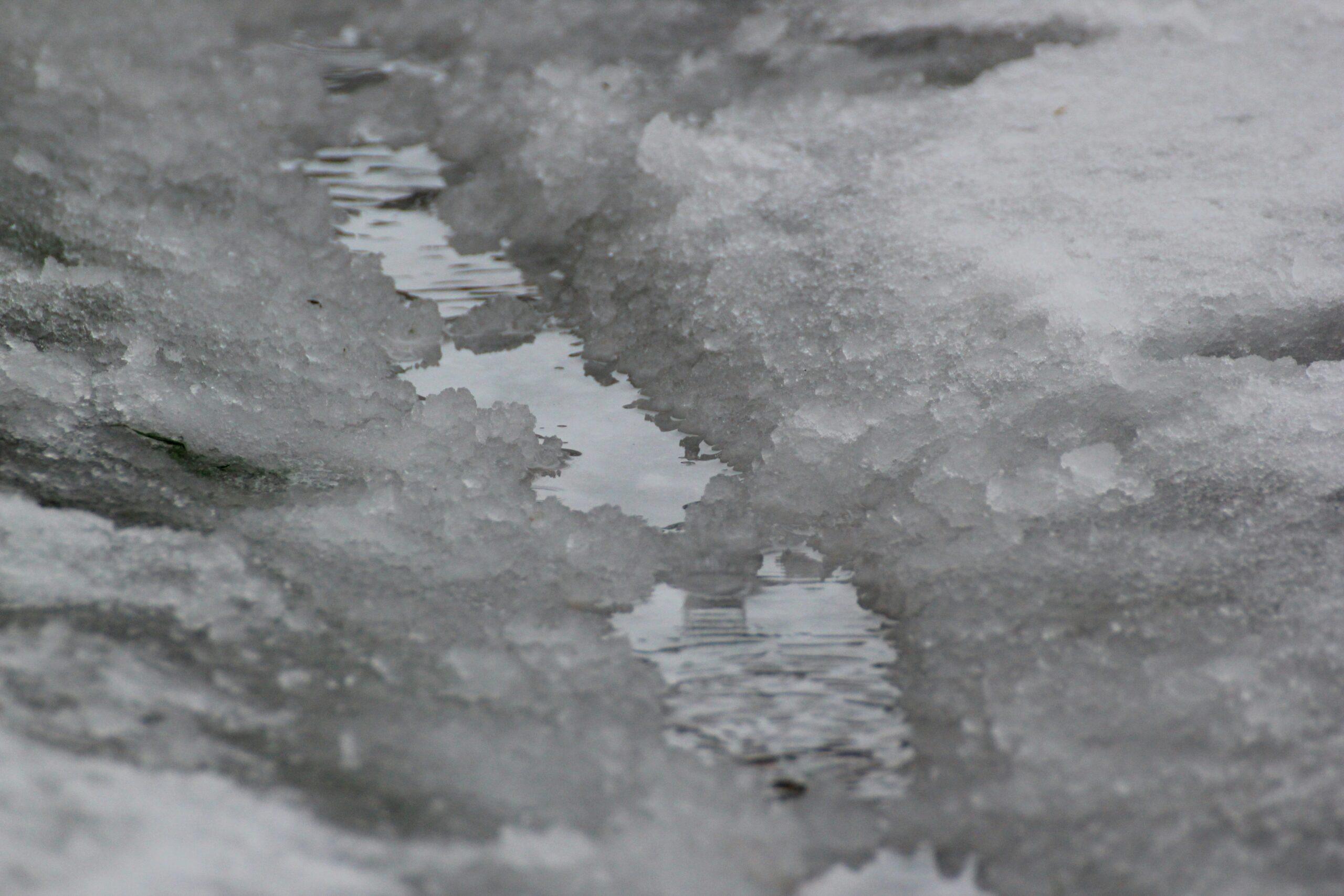
Slush, sleet and rain can lead to dangerous icy conditions if the temperature drops. (Image License: Selena Nova for Unsplash)
Winter Weather Tools Every Rental Should Have
If your renters are responsible for clearing some or all of the areas around their rental, make sure they have the right tools for the job. This makes it more likely the work will get done.
You don’t have to give every tenant a snowblower, of course. In fact, for liability reasons, you really shouldn’t do it at all. But all rental units should have a shovel, as well as some sand and ice melt, ready for when the snow flies. And if it is a single-family home, you should consider keeping an ice dam rake on the property. Remind your renters about the importance of proper snow and ice removal across the property, as well as any local ordinances about clearing sidewalks or other public access points.
Get in the Habit of Checking the Weather Forecast
One thing is certain about New England weather: It’s never certain. Massachusetts can have mild winters with hardly any snow at all, or back-to-back snowstorms that keep you shoveling all week long. That can be followed by an unseasonably warm day that melts all the snow, and an overnight freeze that turns your driveway into a skating rink by morning.
But that doesn’t mean you should go into your day expecting to be blindsided. Check the weather forecast every day so you can be prepared for whatever possibility they’re predicting. If there is especially severe weather headed your way, you may want to give your renters a heads-up as well. Remind them what (if any) snow removal responsibilities they have and let them know they can contact you if they have trouble.
Winter Weather & Snow Removal Articles
Note: Some of these articles were published several years ago. If you see something on an article that needs updating, let us know at hello@masslandlords.net.
- Snow Clearing Ordinances by Municipality
- Fuel Assistance for Renters (updated 2025)
- Video: Weather Preparedness/Slip and Trip (2024)
- Prepping Your Rentals for Winter Weather (2021)
- Your Renters’ Winter Responsibilities (2020)
- Shoveling Out the Past: Changes to Snow Laws (2018)
- Keeping a Multi-unit Property Winter Weather Safe (2018)
- Using Rock Salt vs. Calcium Chloride for Snow Removal (2016)