
How to Handle Unauthorized Occupants In Your Rental Unit
. Posted in News - 0 Comments
By Kimberly Rau, MassLandlords, Inc.
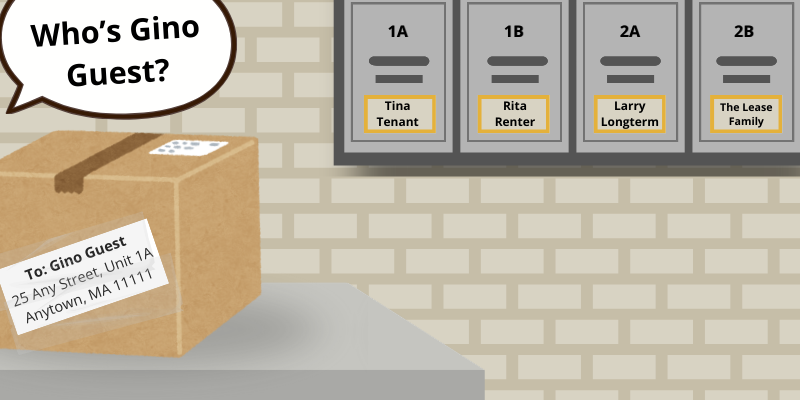
An unknown person receiving mail at one of your rental units could be a sign of an unauthorized occupant, and merits a discussion with your tenant. (Image License: cc BY-SA 4.0 MassLandlords, Inc.)
The problem of unauthorized residents in a rental unit is one that every landlord will likely encounter at some point in their career. As housing pressures and economic pressures increase, more renters will be looking to find ways to make housing more affordable for themselves. What you do to prevent this issue, and how you respond when it happens, can make all the difference in the success of your tenancies.
Imagine you rent your apartment to a single adult and then notice there’s someone else coming and going every day. They’re staying the night, using the water and, occasionally, Amazon drops off a package addressed to them.
When you go to discuss it, your renter argues that this other person isn’t a tenant, they’re a guest. Or they push back, arguing it’s not your problem who’s in the unit because the rent is being paid on time. What do you do?
In this article, we’ll discuss why unauthorized occupants can be problem for landlords, and go over some tips for prevention. We’ll highlight a variety of scenarios in which you may find yourself dealing with surprise residents, and discuss what to do when that occurs.
Why Unauthorized Renters Are a Problem for Landlords
As a landlord, you need to know who is living on your property at all times. Whenever you rent your property, you are taking a chance on a new tenant. You pick someone who you expect will be able to pay the rent for the duration of the tenancy, and who will not cause problems on the property.
The main issue is, if you ever have to take a renter to court, you must name and serve each occupant aged 18 and over. If you don’t know who is living in your rental unit, it’s like renting to someone without a written agreement. Without proper service, your argument will be unenforceable in court.
Furthermore, if you haven’t screened each tenant, you have no idea if this occupant is a model citizen or violent criminal. You don’t know if they have a steady source of income or if they see not being on the lease as a green light to wreck the place.
There are liabilities beyond that. What happens if an unauthorized occupant gets hurt while on your property? If they have a child, it may be unsafe for them to live there if you have not deleaded. And, if they haven’t signed a lease or other rental agreement with you, it’s going to be much harder to pursue unpaid rent or damages they may cause. This is especially true if your original tenant has abandoned the unit entirely or is uncooperative (more on that later).
Establishing Tenancy: When a Guest Stops Being a Guest
Once someone has spent enough time at the property, with or without your knowledge, they may be considered a tenant regardless of whether you approved them. This can make it harder to get them to leave, so it’s important that you act quickly once you believe someone is living in one of your rentals without authorization.
Unfortunately, proving someone is living at the unit versus visiting frequently can be challenging. Keep an eye out for “guests” who seem to be there at all hours, and seem to follow a daily routine involving the rental. If you drive by and see their car there every night, they’re probably living there. If they are receiving mail at the rental, that’s another sign. You may see them moving things into the unit, or spending a lot of time in common areas.
While just one or two of these signs alone may not be enough to prove someone is living in the unit, observing any of them is your signal to start a discussion with your official tenant immediately. The longer a new person stays, the stronger their claim on a tenancy is. If a judge agrees with them, you will have a harder time removing them quickly.
Prevent Unauthorized Occupants With Lease Verbiage
It’s important to note that most of these scenarios can be prevented by communicating clear boundaries to your renters and having verbiage in your rental agreements prohibiting subletting, long-term overnight guests or adding occupants without approval.
“The landlord really should keep an eye on who’s living there and always have it in writing if they allow a new tenant or a sub-lessee of some sort,” said attorney Adam Sherwin, who has experience in landlord-tenant issues, including unauthorized occupants.
Sherwin added that even a landlord who doesn’t mind long-term guests or informal agreements between renters should still make sure everything is in writing. This way, you have a record of what’s going on and can also refer back to the original agreements you made with your renters if things go awry. Our rental agreements contain this language and are free for members, along with many other rental forms.
Prevent Negative Situations by Being Open To Change
One of the quickest ways to get your renters to go behind your back and break the rules is to imply that there is no situation where you would ever consider a change to the original household composition.
Personal relationships change. Income may fluctuate. If your renters need or want to bring someone else in, you should be open to that possibility. You can (and should!) insist the new occupants pass the same screening criteria the original tenants did.
Your lease can contain language stating that unauthorized roommates and/or subletting is not allowed, but still communicate to your renters that if something changes, they should speak with you. A communicative renter is better than a secretive one. Happy tenants are better than angry ones. And collecting the rent in full is better than an eviction for nonpayment.
Situations That Can Lead To Unauthorized Residents in a Rental
Unauthorized occupants can happen for a variety of reasons. We’ve come up with five scenarios that should cover most of them. But if you can avoid the problem in the first place, you’ll be better off.
If it’s already too late, some scenarios are easier to handle than others, but most will start with communicating with your renters. It’s going to be a lot easier if you can get them on board with the next steps.

It’s common for renters to want to move in new partners or roommates. Make sure you know who’s going to be living in your rental. (Image License: cc BY-SA 4.0 MassLandlords, Inc.)
Scenario 1: A renter invites a guest to stay indefinitely.
You rent an apartment to a single person (or a group of screened, approved renters), and then at some point during the lease, you learn they’ve moved a new partner in. Or perhaps they’ve taken on an additional roommate to help alleviate budget strain. Either way, there are now more people than you expected, or that are on the lease, occupying the rental. This new person is a surprise to you, and they don’t want to move out.
Break ups (of friendships or relationships) can also lead to this. One half of the couple you rented to moves out, and the remaining renter moves a roommate or new partner in. You have the same number of occupants you started with, but you have no idea who the new person is.
This scenario is first on our list because it’s very common. You can’t stop people from living their lives, and that includes getting serious with new partners or finding ways to stretch their budget. However, it is very important you know who’s living in your rental.
How to address “surprise” new tenants
Your renter may tell you upfront that their new partner is moving in, or let you know they want to bring in a roommate. If you are amenable to this, let them know the new person will have to be screened just as your existing renter was. If they pass your screening, you and your renter can agree to end the current rental agreement and sign a new one naming the additional person.
If you do this, make sure you return any move-in money you collected the first time (security deposit, last month’s rent) and issue new receipts when you collect them again. Note that the new rental agreement does not have to be a one-year lease unless you want it to be. It can be fixed-term for the remainder of the original agreement.
If you discover the new occupant after the fact, the same steps still apply. If your lease has verbiage against unauthorized occupants (it should), remind your renter that you have to screen new residents and that it is a lease violation to move someone in without your knowledge.
If you do not want anyone else living in the unit, you can tell your renter they must have this person move out. If they will not, your next steps will depend on whether you want the renter to remain, or you want everyone out. We’ll discuss this in a later section.
Scenario 2: A tenant allows a temporary guest who refuses to leave.
In this situation, your renter has allowed someone to stay with them for a short amount of time, and that person is now abusing your tenant’s hospitality. Maybe your renter was allowing someone to crash on the sofa “for a couple of weeks” until they find a place, and two months later that person isn’t showing much motivation to leave.
How to handle guests who won’t leave
If your tenant doesn’t mind the guest staying, and you’re okay with adding someone to the lease, explain the importance of adding that person to the lease. Screen them and proceed accordingly if they pass (see scenario 1).
If your tenant does not want the person to remain in the rental, attorney Sherwin suggests seeking an injunction through the courts, a process he has had success with on behalf of landlord clients. If the person was intended to be a guest and won’t leave, and the court agrees they have not established tenancy, you may be able to get a judge to order them to vacate without going through the eviction process.
If successful, this allows your renter to remain in place while removing the unauthorized guest. This is a situation where you should speak to your attorney before deciding on a course of action.
In our rental agreements, optional clause T explicitly grants you a limited power of attorney to seek a restraining order (injunction) on behalf of your renter if the guest is detrimental to the renter.
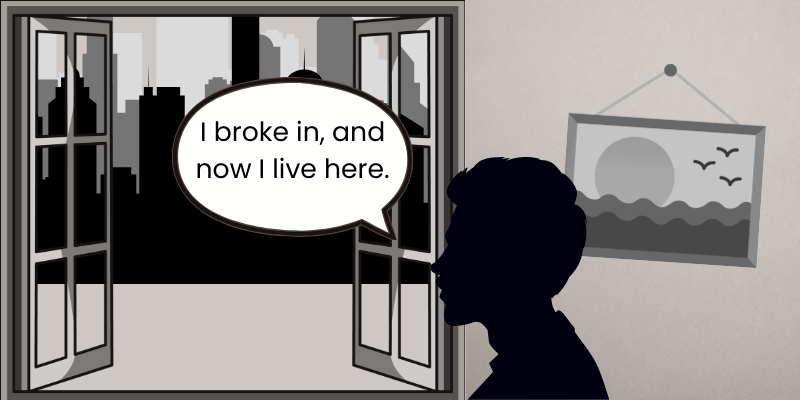
The odds of someone breaking in and squatting in a vacant unit are low, as long as you’re keeping an eye on your property. (Image License: cc BY-SA 4.0 MassLandlords, Inc.)
Scenario 3: Your renter leaves permanently and gives the keys to someone else.
You sign a lease with a model renter. Good income, good credit score, no red flags in the background check. Everything goes off without a hitch, and it’s business as usual, until one day it isn’t.
Maybe you stop by the apartment one day and the person who comes to the door isn’t your renter. They explain they had been a caretaker and the original tenant opted to move in with family, so they intend to pay the rent going forward.
Or, perhaps you always collect the rent via Venmo, and one month the rent arrives from a different account, someone you’ve never heard of before. When you reach out, they tell you they are the former partner of your original tenant. That person moved out for whatever reason, and the new person has started paying the rent.
What to do about unauthorized sole tenants
This is another situation where you can vet the new person and get them set up with a rental agreement. You will also have to go through the steps to terminate the old rental agreement. If the person is not going to be a good fit for your rental, and refuses to lease, you may be able to use an injunction against them, as you did not authorize the tenancy in the first place.
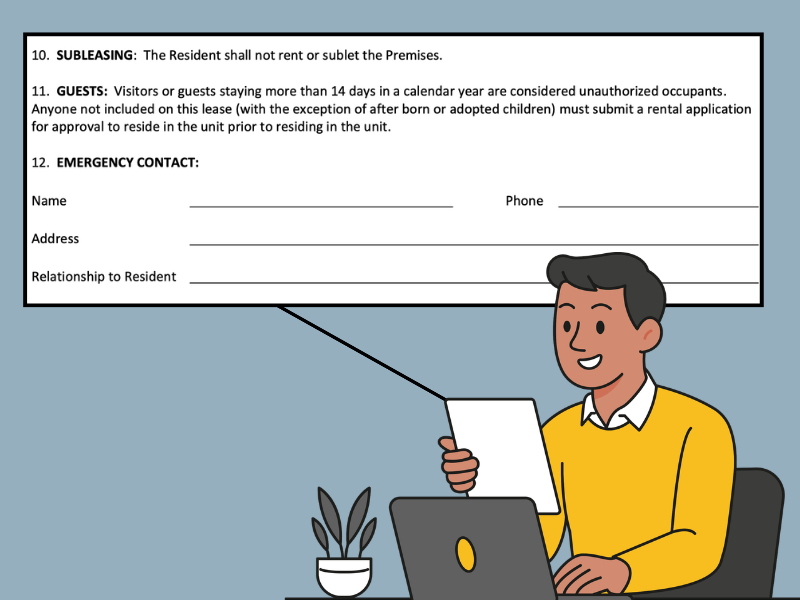
Having language in your lease prohibiting unapproved subletting or long-term guests can help prevent unauthorized occupants. Our rental forms include this language. (Image License: cc BY-SA 4.0 MassLandlords, Inc.)
Scenario 4: Your tenant allows an unauthorized subletter.
This scenario looks a lot like the previous one, but in this case your tenant keeps paying the rent. They just aren’t living there. The subletter is paying the renter, who is paying you.
This is still a problem because you have no signed agreement with the subletter. You haven’t vetted them, and you have no idea what they may do to the rental.
You may also see this scenario if you’ve rented to a group of roommates. Someone wants to move out and the remaining tenants find a replacement to make up that portion of the rent. You’re still getting the full rent every month, but things are going to get sticky in the event of an eviction.
How to handle unauthorized subletters
In a best-case scenario, you can terminate the original lease and sign a new rental agreement with the subletter. If it’s a roommate situation, you can probably screen the new person and create a rental agreement that includes them, as in the first scenario we presented. This protects everyone.
If you do not want the new person to remain in the rental, be very careful about accepting any rent from them directly. Make sure any payments you take are for “use and occupancy” only.
If you must move forward with an eviction, having strong language in the lease against subletting or additional occupants without permission can help you in court. Your original renter was not acting within the scope of the contract you signed.
Scenario 5: Someone breaks in and occupies a vacant unit.
This is the least common scenario, but it’s not impossible. You have a vacant unit, and unbeknownst to you, someone breaks in and starts living there. This is a problem, for obvious reasons. How big a problem it is will vary.
How to handle squatters
In this case, calling the police may be enough to get someone to leave. You did not rent the unit to them (or anyone else), so they don’t have anyone’s permission to be there. They broke in, which is a criminal offense, and unless you really haven’t been paying attention, they probably haven’t been there long enough to establish tenancy.
This is the most unlikely scenario but is also the easiest to prevent. Keep an eye on your properties. If the unit is going to be empty for a while, check in on it often. Make sure doors and windows are secured and check that there are no other easy access points, like bulkheads.
For additional protection, you might consider installing cameras by common entry points to both keep you informed and act as a deterrent for intruders. You can also ask neighbors to let you know if they see anything out of the ordinary (people entering or leaving the house, unknown people accessing the yard or spending time on the property, etc.).
I Want The Unauthorized Renter To Leave and They Won’t
If you don’t want to add a new person to the rental agreement (or they don’t pass screening), they cannot stay in the apartment. However, getting them to leave may be a difficult matter.
As discussed previously, it may be possible to go to court and get an injunction against the unauthorized occupant, since you did not give your permission for them to be in the unit. However, attorney Sherwin cautions, you must be careful about how you interact with this person.
“It’s very easy to turn an unauthorized occupant into a tenant,” he said. If you start taking rent money from them, or responding to their maintenance requests, the court is likely to consider that person a tenant, with tenants’ rights. The longer you let a tenancy go as is, the harder it is to back out.
I Want My Tenant and the Unauthorized Renter Out
If you’re reading this because you suspect or know that one of your rental units has an unauthorized occupant, the time to act is now.
If you do not have a clause about visitors or long-term guests in your lease, all is not lost. If you have an otherwise good relationship with your renter, talk with them. Explain what you know and remind them that their rental agreement is only for them.
If your renter pushes back and refuses to have the other person move out, or the other person does not pass screening, you may have to evict your tenant. This is a long, potentially expensive process that should be avoided whenever possible.
Conclusion
Unauthorized occupants can cause many issues for landlords. In some cases, rectifying the situation may be as simple as screening the new person and adding them to a rental agreement. In others, you may end up in court fighting for possession of your unit.
In all scenarios, it pays to pay attention. You cannot prevent new occupants, but you can prevent unauthorized occupants. Keep an eye on what’s happening in your rentals (or make sure your property manager is being alert), address issues as soon as they become known to you, and keep the lines of communication open with your renters. Just as importantly, be open to change as long as everyone is properly screened and added to the rental agreement. If you do wind up in a no-win situation where someone must be removed from the property, consult your attorney before taking action.