
Landlord Basics: Heating and Cooling Rentals with Heat Pumps
By Kimberly Rau, MassLandlords, Inc.
Landlords looking to upgrade their heating/cooling systems in their rentals should consider heat pumps among their options. This somewhat new technology is better for the environment, and can be more efficient and cheaper than fossil fuel options. You may also be able to save money on a heating system retrofit through Mass Save.
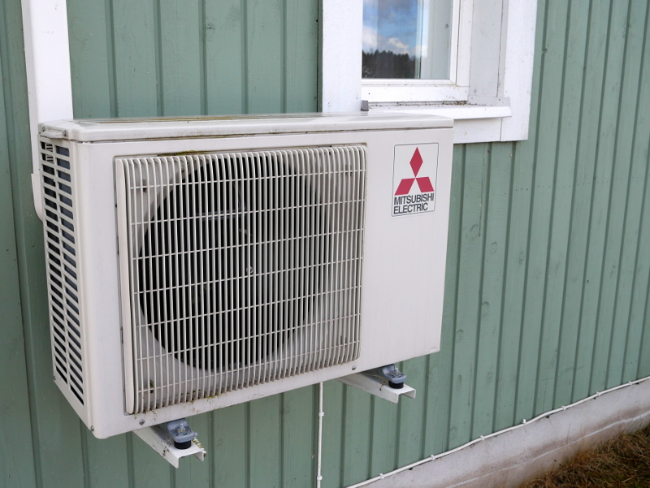
Heat pumps are cleaner and more efficient than fossil fuel systems like gas or oil, and are often cheaper to operate. (Image license: cc BY-SA 4.0 Santeri Viinamäki)
What Are Heat Pumps?
Heat pumps use a series of coils to heat or cool air for in-home climate control. Think about how your refrigerator works. Room air passes over a series of hot coils (ever notice how warm the air behind the fridge is?), which have refrigerant in them. The refrigerant absorbs heat from the interior space, making the air inside the refrigerator much colder than room temperature.
Heat pumps, in warming mode, perform the same exact activity, but in reverse, emitting heat from circulating refrigerant into a space to warm it.
Are Heat Pumps Better Than Using Natural Gas or Oil?
When sized correctly, heat pumps are cheaper to operate than oil burners. Some types of heat pumps can be cheaper or on par with natural gas. You can use our heat pump vs. furnace calculator to input your own numbers and see the difference between your current system and a heat pump.
Heat pumps are also often more efficient than gas or oil boilers, especially if you have an older model.
In terms of carbon emissions, it’s no contest: Heat pumps, when they don’t leak, are better for the environment than gas or oil. Unfortunately, as much as we may love gas for its efficiency and low cost, we cannot keep burning it. Fossil fuels, including natural gas, contribute to climate change, which is causing more natural disasters. This is taking a heavy toll on insurance companies and, by extension, us.
Three Types of Heat Pumps
There are three different types of heat pumps: air source, water source and ground source. There are similarities and differences in how they work.
All heat pumps work by moving refrigerant through coils of pipes in the unit. This action warms or cools the air for year-round climate control in your rental. All types of heat pumps also heat water for home use (cooking, showering).
Air source heat pumps use fans to pull air into the apparatus. The air interacts with the pipe coils and either heats or cools the refrigerant inside. The refrigerant cycles from liquid to gas and back to either cool or warm the inside air. (Read a more detailed explanation of air source heat pumps.)
A water source heat pump will draw water from a nearby natural source to either warm the refrigerant or absorb the coils’ heat to cool the air. This is called an “open loop” system.
Ground source heat pumps typically have an exterior unit that is buried deep in the ground. This allows it to use the earth’s thermal energy and more stable temperatures to heat or cool the unit. (Read more about water- and ground-source heat pumps.)
Mass Save and Heat Pumps
As of this writing in early 2026, the Mass Save program is offering energy incentives, including large rebates, for property owners in designated equity communities (DECs). Though other federally funded incentive programs expired in 2025, landlords with DEC properties that are more than 50% rented out can receive full funding for energy upgrades. This includes getting rid of old wiring and other barriers to fuel efficiency.
Conclusion
This is a basic article, designed to give you a general overview of heat pump technology. If you’re ready to learn more, we have you covered. You can read a more in-depth article about heat pumps, or learn more about installation and monetization. You can also learn more about heat pump water heaters.