Landlord Basics: Things You Can Do With a Rental Agreement in Massachusetts
By Kimberly Rau, MassLandlords, Inc.
Our landlord basics series continues with a look at things that can be included in a rental agreement in Massachusetts. Your lease can include just about anything you’d like, as long as you aren’t asking your renters to sign away their legally protected rights.
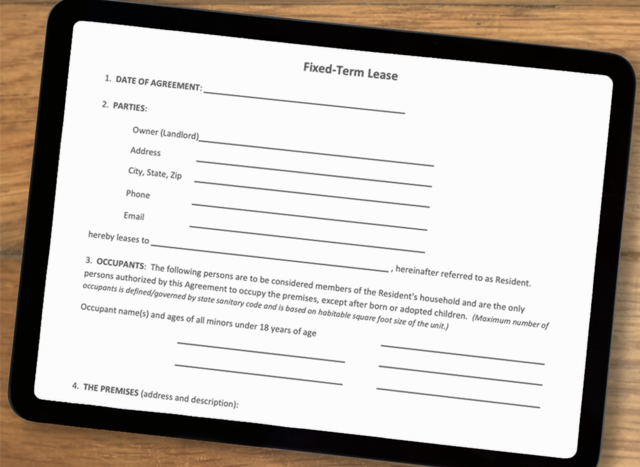
Even in tenant-friendly Massachusetts, rental housing providers have a lot of leeway about what can go in a rental agreement. Our fixed-term lease and tenancy at will forms are fully customizable and included with membership. (Image License: CC BY-SA 4.0 MassLandlords, Inc.)
In this article, we’ll go over some key topics that your rental agreement can cover, as well as some important things you can expect from your renters.
You Can Inspect the Rental During the Tenancy
The state sanitary code requires you give your renters 48 hours’ notice before entering the property (unless it is a true emergency). As long as you provide that notice, you can (and should) access the rental unit at least once a year for an annual inspection. This is in addition to any maintenance or repair calls your renters might make throughout their tenancy.
This inspection is your chance to make sure smoke detectors are still in place and operational, that there is no unreported damage that needs attention, and that any lease stipulations about animals are being followed. It’s also a good time to check for routine maintenance tasks that you may have forgotten about.
You can also use this time to look for evidence of unauthorized occupants or other activities prohibited in your rental agreement.
You Can Charge Pet Rent or Say “No Pets”
Recent court cases have determined that pet rent is likely lawful.
Under new “junk fee” regulations that took effect September 2025, you must disclose this when advertising the unit, but as long as it’s part of the monthly rent and not an additional deposit or fee, you are likely in compliance with state law. Remember that pet deposits are unlawful (state law says the only things a landlord can charge for at move-in are the first month’s rent, last month’s rent, security deposit and the actual costs to re-key the unit).
If you don’t want pets in your rentals (and many landlords don’t), you have options. You can prohibit pets of any kind, or bar certain types of pets. Some landlords are fine with small animals in enclosures; others may be okay with cats but not dogs, etc.
Note: While you can ban pets, or charge pet rent, you may not prohibit service animals or emotional support animals. You also may not charge “pet rent” for service or emotional support animals. They are not considered pets under the law.
You Can Prohibit Smoking
Smoking cigarettes is legal for anyone over the age of 18 in Massachusetts. Smoking marijuana recreationally is legal for anyone over age 21.
That doesn’t mean you have to allow either in your rentals. Smoking tobacco products is harmful to people’s health and can cause serious property damage. Smoking marijuana may have fewer documented health risks, but that doesn’t mean everyone else wants to smell it.
You can ban smoking and start a for-cause eviction process if your renters violate this provision (just make sure you can prove the violation in court).
If your renter has a medical marijuana card, there are plenty of ways to consume cannabis that do not involve smoking. See if your tenant is amenable to any of those options.
There is one caveat here: If you have a property that receives a federal housing subsidy (like Section 8), you cannot allow federally illegal substances on property in any form. As of publication, marijuana is still illegal on a federal level.
You Can Prevent Long-Term Stayovers and Short-Term Rentals
Your rental agreement can (and should) put a prohibition on long-term guests. Some landlords limit overnight stays to a certain number of days within a 30-day period.
This protects you from unauthorized occupants, that is, people you haven’t screened staying for a long period of time and gaining tenant protections. If that happens, you may have to evict if you cannot add the newcomer to the rental agreement.
It can be difficult to prove someone is living in your rental without permission, but having this provision in your rental agreement will give you grounds to move forward with an eviction if necessary.
You can also ban renters from using your property as an Airbnb. You can do this even if your city or town does not have an ordinance against short-term rentals.
You Can Have Automatic Rent Increases
When your rental agreement period (typically one year for standard leases) ends, it will automatically convert to a month-to-month rental agreement if a new rental agreement is not signed.
That doesn’t mean you’re stuck charging the old rent. You can have language in your lease that sets automatic rent increases that kick in after the lease would normally expire. This allows you to increase the rent regardless of whether a new agreement is signed, or you let the old agreement roll over to a month-to-month tenancy.
We no longer recommend you use a self-extending lease. Read why, and more about automatic rent increases, here.
You Can Designate Parking
Your multifamily rental property may have parking spaces available for renter use that you allow anyone to park in at any time. Or, your lease can prohibit guest parking. It can state that only cars registered with you can park on the property.
If you want, you can also use a parking addendum to rent spaces only to those tenants who have a car. Renters who use public transportation, walk or bike can enjoy the base rent, and tenants who use a car can pay for the space. Just make sure you advertise this option when you advertise the apartment to avoid running afoul of the Massachusetts “junk fee” law.
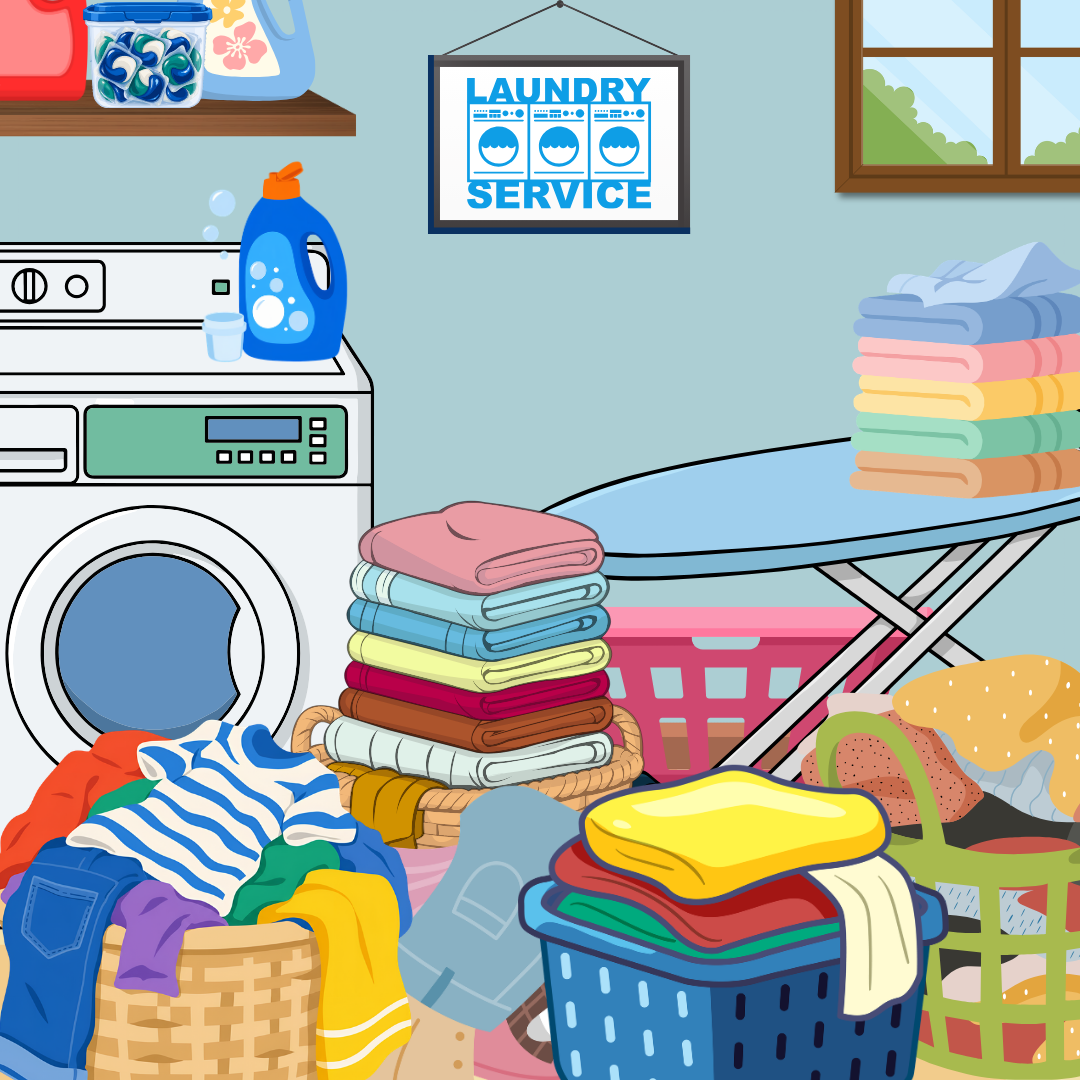
No wash-and-fold service allowed: Your lease can prohibit your tenants from using the rental as a business, and can specify that laundry facilities or hookups are for the renter’s personal use only. (Image License: CC BY-SA 4.0 MassLandlords, Inc.)
You Can Require Your Property Is Kept Up
Your rental is your investment, and your renters’ home. In a perfect world, both parties would agree that taking care of the property is of utmost importance. In reality, there are landlords who let their investment fall apart (don’t do this), and renters who neglect or destroy their home.
You can have verbiage in your lease that requires renters to keep their home clean and safe (no hoarding, no blocking egresses, remove trash as appropriate). You can have language that asks your renters to report damage or maintenance needs as soon as possible. This avoids larger issues and code violations.
Your lease can prohibit satellite dishes on certain properties, and have no-smoking addendums. You can tell your renters political signage in windows or in the yard is prohibited, as long as you are applying this rule evenly for all renters.
You can prevent undue wear and tear and liability by prohibiting your renter from running a business out of their home (this is different from a remote worker working from home).
This is just a short overview of some of the many things you can detail in your rental agreement. We offer a full set of rental forms, including fully customizable rental agreements with addendum options, to all members in good standing on our forms page.
This article goes on to:
- Offer a “health check” for your existing rental agreements.
- Provide resources for modifying your rental agreements.
- Give you a choice of two clauses to add for an automatic rent increase.
Join us, or log in as a member, to keep reading.