
Massachusetts Voters Narrowly Reject Ballot Question 7, Minimum Lot Sizes for Single Family Homes
. Posted in News
The outstanding issue after election polls closed in Massachusetts on Nov. 3, 2026, wasn’t a hotly contested seat, but a question that would have reduced the minimum lot size for single-family homes to 5,000 square feet. The Associated Press officially called the race on Friday, Nov. 7, with 99% of the votes counted. The final split was 50.6% against and 49.4% for Question 7. Just 33,322 votes defeated the question.
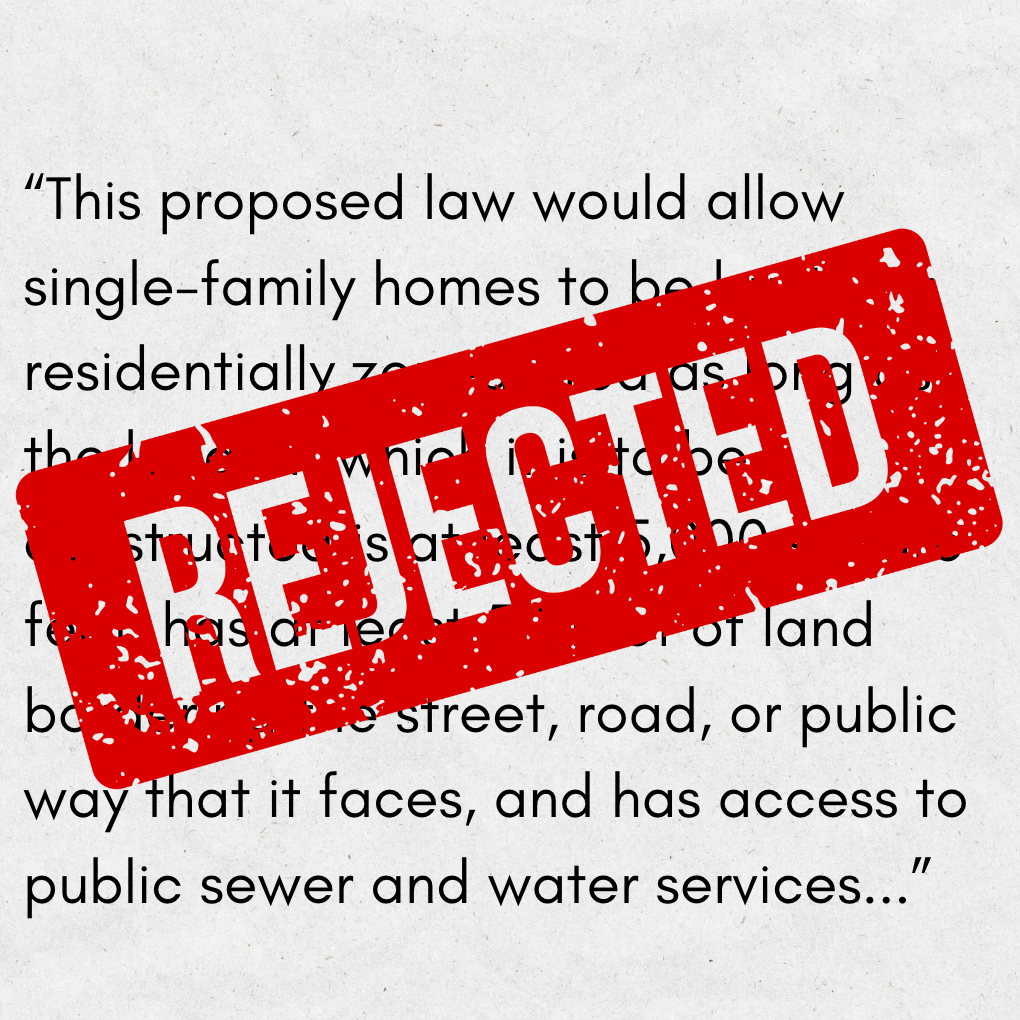
A question that would have reduced the minimum lot size by right for construction of single-family homes was narrowly defeated on the November 2026 ballot. (Image License: CC BY-SA 4.0 MassLandlords, Inc.)
There were some exceptions baked into the ballot question. Though it lowered the minimum lot size for single-family home construction to 5,000 square feet, it still required a 50-foot setback from the street, and eligible lots would have had to be connected to municipal water and sewer services. This means some of the towns that have the most expansive minimum lot sizes for single-family homes – some insisting on a minimum of one or two acres – would have been largely exempt.
For instance, Carlisle, located 26 miles northwest of Boston, requires one- and two-acre lot size minimums throughout most of its residential zones. Some lots are a minimum of four acres. However, Carlisle has no municipal water supply, and would not have had to change a thing about their exclusionary zoning practices. That is, not unless they were forced to come up with some kind of municipal water and sewer system. They may have to, in order to address the myriad issues the town is facing with sewage.
Rejecting Question 7 sets back density efforts for a long time. State law prohibits a rejected ballot question from reappearing on the ballot for the next two state elections. Massachusetts holds elections every two years. We won’t see Question 7 again until 2032 at the earliest.
We spoke out in favor of the ballot question over the summer, seeing it as a step toward addressing the housing crisis. Though many feared developers would build only so-called luxury single-family homes on the smaller lots, that still would have freed up older housing stock, allowing more people to get on the property ladder.
Others disagreed. The Massachusetts Municipal Association published a statement following the question’s defeat, where its executive director, Adam Chapdelaine, said the following:
“We’re grateful to the voters of Massachusetts for recognizing that Question 7 was not an effective or workable approach to creating entry-level homes in the Commonwealth. Cities and towns have the right – and responsibility – to manage growth by taking into account its impact on local roads, schools, public safety and other essential services.”
However, as rents remain high and housing stays in short supply, we at MassLandlords wonder how long it will be tenable for towns in the Greater Boston area to insist on one acre-plus lot size minimums. Can you really expect to live the rural life less than an hour from Boston?
MassLandlords Executive Director Doug Quattrochi expressed disappointment that the question did not pass, and wondered whether upcoming generations would tolerate such exclusionary zoning.
“I can imagine tomorrow's youth, feeling absolutely certain they will never get on the property ladder, endorsing a ballot initiative to eminent domain existing homes on large lots,” he said.