Brookline and Easthampton 2026 Rent Control Home Rule Petitions Would Require Legislative Approval, Are Unlikely to Pass
. Posted in News - 0 Comments
By Kimberly Rau, MassLandlords, Inc.
Brookline and Easthampton, Massachusetts, are looking to enact rent control on a local level through home rule petition, but neither initiative is likely to become law. Home rule petitions such as these require approval from the state Legislature once they are approved locally. Historically, our lawmakers have largely shown no desire to wade into the contentious politics surrounding this bad housing policy.

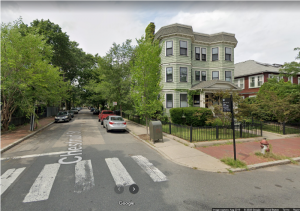
Brookline’s rent control home rule petition, S.960, would cap rent increases at CPI-U plus 3%, or 7%, whichever is lower. (Image License: Brett Wharton for Unsplash)
There are many reasons why most economists agree rent control doesn’t work. It curtails housing supply and discourages new development, even when the program has exemptions for new construction and other carve-outs. It has a disparate negative impact on minority populations. Rent control causes rental housing to fall into disrepair and makes it hard to move. All of these and other reasons are why voters struck the policy down in 1994, after decades of problems. You can read more about Massachusetts’ history with rent control at rentcontrolhistory.com.
In this article, we’ll examine how these home rule petitions differ from the proposed rent control ballot question that the courts struck down in June, and discuss why they’re unlikely to gain support from the state Legislature.
Brookline: Passed the Senate in 2026
Brookline’s rent control home rule petition is in some ways more generous than the failed ballot measure.
First, it caps rent increases at inflation (CPI-U) plus 3%, not to exceed 7%, which is marginally better than the ballot initiative that would have instituted a rent increase hard cap of 5%. There is a 12-month lookback period from the plan’s enactment for base rent (so whatever you were charging a year before passage is your base rent under rent control).
It allows for vacancy decontrol, which the ballot initiative did not. Under Brookline’s plan, if all prior renters have lawfully given up possession, the landlord can set a new base rent that is then subject to rent control increases after.
Owner-occupied properties with four units or fewer would be exempt under Brookline’s version of rent control. So would new construction for 15 years, with additional exceptions for physical additions to existing buildings and buildings that are converted from another use to residential use.
Under the Brookline proposal, housing through nonprofit hospitals, religious institutions, extended care facilities and licensed elderly residential care facilities are exempt. So are dorms, “transient occupancy” buildings and “shared facility units,” defined as rental units where the renter shares bathroom or kitchen facilities with the owner, who claims the address as their primary residence.
Subsidized and income-based housing are also not subject to rent control in this home rule petition.
Finally, Brookline’s plan outlines provisions for just-cause eviction, meaning no-fault/no-cause stated evictions would not be allowed under rent control.
You can read the full verbiage of S.960 on the state website.

Easthampton’s rent control home rule petition is still awaiting approval at the local level. It calls for a maximum rent cap of 5%, set by the city. (Image License: CC BY 4.0 Quintin Soloviev, Wikimedia Commons)
Easthampton: First Draft Published Fall 2026
Easthampton’s Rent Study Committee presented a final draft of its home rule petition to the City Council on Sept. 30, 2026. The council is expected to vote on it in December.
There are many similarities to Brookline’s home rule petition. There is a 12-month lookback period for initial base rent, vacancy decontrol, and a 15-year exemption for new construction. Although Easthampton’s proposal does not make an exception for physical additions to existing buildings or converted use, it does allow a 12-month lookback period from when the policy is enacted. Like Brookline, subsidized and income-based housing, dorms, shared facility units, and institutional housing including nonprofit hospitals are also exempt from rent control. And both proposals have a section outlining fair return.
Some things are stricter than Brookline’s proposal. In Easthampton, only owner-occupied properties with 2 units or fewer would be exempt. Their rent cap would be determined annually by the city, not inflation, and may never blanketly exceed 5%, though there are some exceptions.
Unlike Brookline, Easthampton’s rent control plan includes possible exceptions for documented improvements, “substantial” rehabilitation, unused increases from prior years, fair-return adjustments (it mentions fair returns in two places), and “increases petitioned for and approved by regulating board.”
Like Brookline, Easthampton’s proposal would get rid of no-fault evictions, allowing for just-cause evictions only.
You can read the full draft on the Rent Study Committee’s public Google Drive in the “Drafting Ordinance & Legislation” folder.
Compensated Rent Control Is Still Lawful in Massachusetts
After rent control was struck down by ballot initiative in 1994, MGL Chapter 40P became law. It states that all forms of rent stabilization are unlawful, unless it is voluntary and the landlord is compensated for the difference between market rate and the rent control rate. This allows cities and towns to adopt rent control if they choose, and protects rental housing businesses as well. There is no need for Brookline’s or Easthampton’s petitions.
Legislature Unlikely To Pass Either Local Petition
It is unlikely the Legislature will ultimately back rent control via home rule petition. Brookline’s petition was sponsored by Senator Cynthia Stone Creem, but it’s seen very little movement since passing in the Senate earlier in 2026. Easthampton’s proposal is still up for vote at the local level and hasn’t made it to Beacon Hill yet.
We know the Legislature is unlikely to support rent control because so far lawmakers have overall seemed tepid to the idea.
During the 2026 rent control opposition campaign, we sent every member of the Legislature a 36-page White Paper outlining how municipalities that wanted rent control could legally adopt a compensated form of it. Our calculations provided in the White Paper proved cities and towns could afford it at little cost to the taxpayer.
Our White Paper went out in the mail in early 2026. We did not hear back from any member of the Legislature, nor any of the rent control proponents who claimed to want to fix the housing crisis, until a May 14, 2026, State House briefing convened by the Housing For Massachusetts ballot campaign.
“Senator Jehlen said, ‘That costs money. Nobody has money.’ I said, ‘Housing isn’t free and you get what you pay for.’ ” said Doug Quattrochi, Executive Director.
Also in May, after we had already brought a lawsuit against the ballot initiative, but before the Supreme Judicial Court had a chance to rule on it, rent control proponents submitted a rent control compromise to the Legislature. Like us, they received little response, and when the ballot initiative was struck down, the compromise faded.
Our lawmakers are clearly hesitant to make waves with rent control, especially when these home rule petitions violate the existing laws regulating the practice.
This article goes on to:
- Prepare you to meet documentation requirements for fair return and “net operating income” should rent control pass.
- Detail one way an owner-occupy landlord can still lose under rent control.
- Discuss how religious exemptions could be applied.
Join us or log in as a member to continue reading.