Rent Prices Are Falling Nationwide and in Boston, Reports Realtor.com
. Posted in News - 0 Comments
By Eric Weld, MassLandlords, Inc.
After several years of escalating home and rent prices that began during – and maybe because of – the 2020 pandemic that sparked stubborn inflation nationwide, rent (and some home) price tags are on a downward trend.
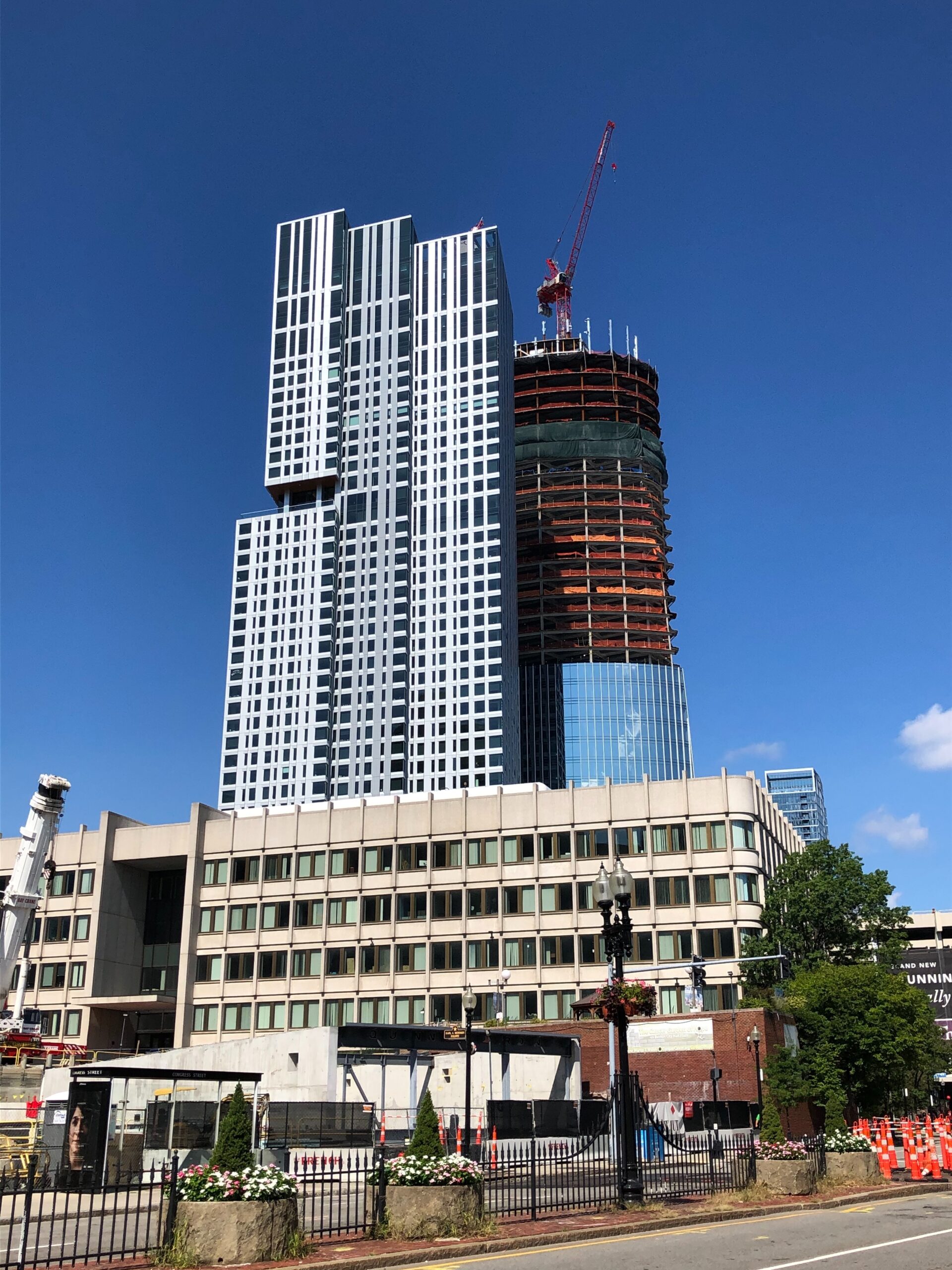
A surge of new apartment construction coming online in recent years, such as The Sudbury at Bulfinch Crossing, which added more than 400 rental units in 2020, may be applying downward pressure on rent prices in Boston, which have fallen 3.4% in the past year, following the national trend. Image: CC BY-SA Wikimedia Commons-Percival Kestreltail
That’s the statistical conclusion of recent rental reports by Realtor.com. The national real estate listing company’s most recent rental report, published in August 2026, found that median rents across 50 of the leading markets in the U.S. fell for the 37th consecutive month.
Since summer 2022, when rents and home rates hit their peak across the country, asking rent prices have been on the decline, now having shrunk by 3.7%, averaging $1,699 nationally, $65 lower than four years ago. The year-over-year average rent fell 0.9%, or $16, compared with August 2025.
While average rents in Boston tower over the national average, the Boston region is among those 50 markets that have seen rent prices falling. Median rents in the state capital and surrounding area have fallen to $2,939, a year-over-year decline of 3.4%, following the national trend, Realtor.com states.
This trend applies across all rental size categories, affecting studio rentals (median price down 1.2%, or $19, year over year), one-bedrooms (down 0.8%, $13) and two-bedrooms (down 0.9%, $18), according to Realtor.com tracking.
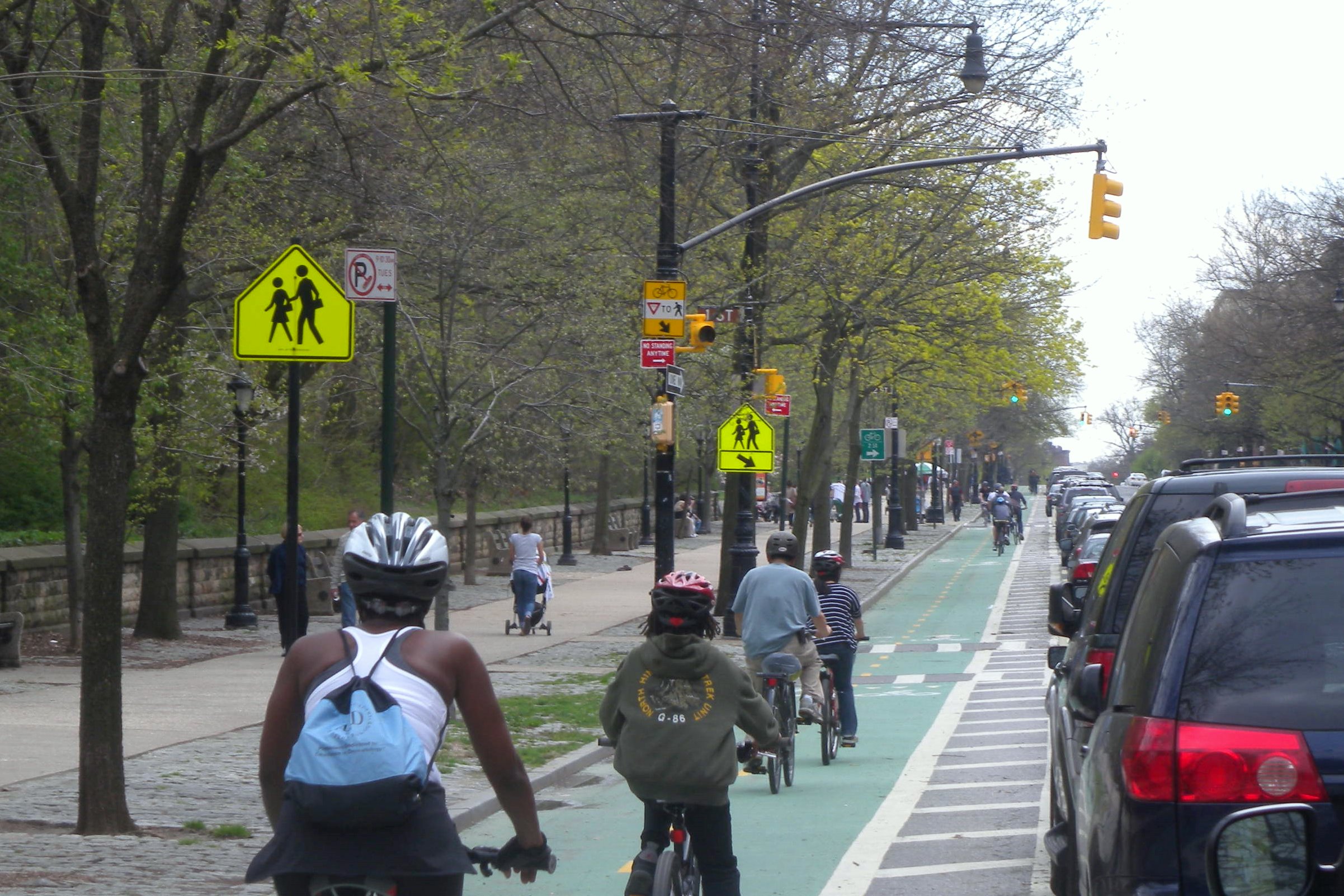
An increase in bike lanes, as well as pedestrian and mass transit infrastructure, in Boston may be assisting a boost in housing development, leading to lower rental prices. Neighborhoods with bike lanes, friendlier pedestrian environments and public transit access are attractive to multifamily developers for several reasons: parking requirements are often lowered, grants and financial incentives are more available for such construction projects and zoning may be more accommodating for projects that add more density. Image: CC BY-SA Wikimedia Commons-Jim.henderson
What’s Causing Rent Prices to Fall?
News of recent rent price declines may come as a surprise to some people looking to rent an apartment in Boston, San Francisco, Miami or another of the top dozen highest rental markets in the U.S.
And, importantly, slightly falling housing prices don’t mean the national and our state’s housing crises are over. Overall, demand still outpaces supply.
The good news is, following a significant lag after the pandemic, due largely to supply chain disruptions, housing construction in Massachusetts and other top markets is gaining momentum. More than 34,000 new homes were built in the Bay State in 2025, according to Mass.gov statistics. That represents a solid increase over the 14,000+ building permits issued statewide in 2024, and only 11,600 issued in 2023.
Still, much more housing is needed. Gov. Maura Healey’s housing plan, “A Home for Everyone,” calls for 222,000 new homes to be built in the state between 2025 and 2035 in order to catch up with demand.
As in other states, new permitting and construction no doubt account for some of the slowdown in housing price increases.
Policy reforms, such as multifamily building incentives, zoning reform, reductions in parking requirements for new housing and transportation investments (e.g., mass transit increases, bicycle lanes, pedestrian accommodations) are also making positive impacts on housing construction, in Boston and other cities as well, such as Phoenix, Minneapolis, Houston and Columbus, Ohio.
These examples underscore the potential of policies encouraging housing construction and investment as remedies to address housing crises, as opposed to cities that have applied rent control to achieve the same means. Notably, urban centers like St. Paul, Minnesota, Washington, D.C., and Montgomery County, Maryland, all of which impose some form of rent control, have seen plummeting housing permits in recent years.
Other Factors
There may be other factors at play, too, in addition to housing construction. In Boston, for example, a city renowned for its dozens of colleges and more than 100,000 students, a sizable reduction in the population of international students may be impacting the market, resulting in one of the highest rental vacancy levels in years. Read the related article, “Where Did the Renters Go?” for more details about Boston’s reduced international student population.
In recent years, colleges in the Greater Boston region have hosted tens of thousands of international students, a large share of whom rent apartments. A report published by the Common App, a nonprofit representing more than 1,100 American colleges and universities, states that the number of international applicants for 2026-27 fell 10%, the steepest decline recorded. That statistic continues a trend that began in fall 2025, on the heels of new federal policy, when new international students studying in the U.S. fell 17% year over year, as reported by the U.S. Department of State.
Higher vacancies translate into lower rents as landlords slice prices to get the rentals filled or compete with other vacant units. According to Bostonpads.com, the city’s rental vacancy rate shot up to 3.37% in August, a 106.75% increase year-over-year.
As rent rates decline, landlords are also offering concessions, such as rent credits or reduced rent for a period, in higher numbers. Concessions in the 50 top rental markets ticked up 3.1% in August 2026, to 43.5% of listings. That’s up from 40.4% a year earlier, Realtor.com reports.
Home Prices Down, Too, in Some Areas
In addition to rentals, selling prices on homes are also showing signs of easing down, though for different reasons. Realtor.com showed a drop in pending home sales of 0.2% year-over-year in August, the first such setback in nearly three years.
As homes sit on the market for longer stretches, asking prices tend to also come down. Realtor.com showed that, nationally, 20.4% of homes on the market in August 2026 had reduced their asking price, the highest such rate for the year.
The national online broker also found that home price per square foot has come down for the 10th straight month, dropping 1.8% year-over-year in August. And while home price per square foot varies widely from metro region to region, the median price has fallen in 36 out of the 50 top housing metro markets, mostly affecting the Northeast (down 3.6%), the South (down 2.6%) and the West (down 2.1%) regions, with Midwest prices mostly flat.
The main reasons the company gives for the falling home prices are increases in mortgage loan rates, with increased construction also affecting prices in some regions.
After the Federal Reserve cut its benchmark interest rates by 0.25% for three months (September, October and December) in 2025, it held rates steady for all of 2026 until an increase of 0.25% in September, the first rate hike since 2023. That hike nudged the bank prime rate from 6.75% to 7.00% for people taking on new mortgages. Higher mortgage rates price out a sector of the home-buying market as their projected debt ratios exceed banks’ comfort zones. Fewer buyers translates to a weaker seller’s market. Logically, home asking prices would ease down to adjust.
Return to Normal?
Despite rate increases and other factors, some realtors point out that the housing market was inflated after the Covid pandemic constrained supply, and recent price reductions are a sign of returning to a natural mean with better supply-demand balance.
And even with 37 straight months of rent price reductions, Realtor.com points out, rates still remain inflated in comparison to pre-pandemic.
In August 2019, months before Covid swept the nation and world, median asking rent prices were 15.4%, or $227, lower than today’s rates, they report. Still, that level of increase represents a 2.2% rise each year (seven years), a normal inflationary trend that would likely exist at or near that percentage neighborhood in spite of other factors.
To be clear, while rent and some home prices may be on a gradual downward trend for the moment, the nationwide housing shortage, and our housing crisis in Massachusetts, are not over. Much more housing is needed to meet demand, assuming Massachusetts aims to continue, in the long-term, to hold a place of preeminence in the United States, and the United States in the world.
We will continue advocating for growth-oriented policies that incentivize housing investment and construction, such as zoning reform, mixed use communities and increased soft density, while fighting policies like rent control that stifle new construction and ultimately raise overall rent prices.