New Educational Literature: Double-sided Landlord Tips Flyer Available for Order
. Posted in News - 0 Comments
A new, double-sided, full-color flyer highlighting best practices for landlords is available for order, free of charge, through our educational literature page. Though the flyer is aimed at new landlords and prospective members, the content provides a good refresher for even the most seasoned housing providers.

Know a new landlord or someone who works on rental housing closings? Let them know about our new flyer! (Image License: CC BY-SA 4.0 MassLandlords, Inc.)
The flyer includes information on office hours, tenant safety and how to be prepared on a budget.
The front side of the flyer includes a list of “Five Things Successful Landlords Know To Do,” which we have reproduced and expanded on for this article. If you already do these things, great! Pass this article along to someone who could also benefit.
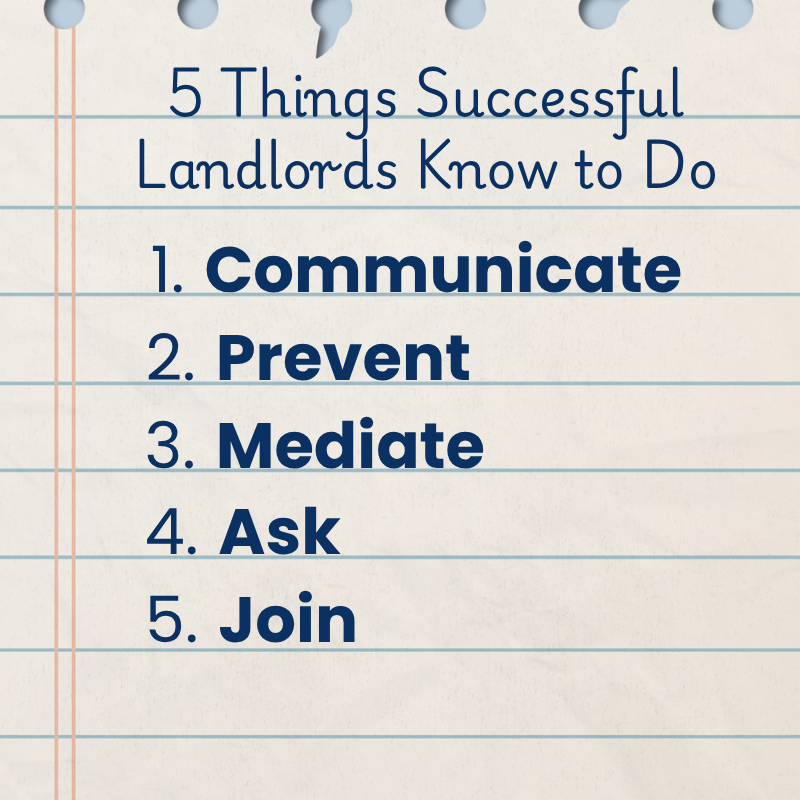
These basic tips can help set your landlord business up for success. Are there any you’ve forgotten? (Image License: CC BY-SA 4.0 MassLandlords, Inc.)
Five Things Successful Landlords Know To Do
These are things that seem basic, and are sometimes required by law, but are vital to running a successful rental housing business. Following these steps won’t guarantee you a trouble-free career, but doing so will certainly help you avoid some otherwise preventable problems.
1. Communicate
A little communication goes a long way. In fact, communication is so important to the landlord-tenant relationship that Massachusetts law codifies some aspects of it.
Answer your phone and reply to email. Massachusetts regulation requires you to check the phone number you provided to your renters every 12 hours (104 CMR 410.400(B)). Make sure when you respond, your reply is as professional and thorough as possible.
Explain to your renters what you are doing. Let them know what a project or repair will entail, including the timeline and anything else they need to know, such as when service people will be arriving.
Don’t show up unannounced for routine issues. Massachusetts regulation allows you to enter a rental unit without notice in the case of true emergencies. Otherwise, 48 hours’ notice is required for basic matters (105 CMR 410.003(E)). Give your renters as much notice as you can.
2. Prevent
You should always maintain your properties so they comply with the state sanitary code. Keep your rentals in good shape. Make sure they are weather tight, and inaccessible to vermin and other pests. That will help you avoid many issues, but even the most prepared landlords will still have issues occasionally.
When a problem happens, respond to it as quickly as you can. It will help if you already know which professionals you can rely on (and if you’re looking for someone, you can try our service provider directory). It’s a lot cheaper to fix the slow leak in the bathroom than it will be to replace an entire rotted floor if you ignore the problem.
3. Mediate
Mediation through the court is required in Massachusetts as a first step in the eviction process.
Whenever possible, you should try to reach a solution during mediation. This can save you thousands of dollars and months of your time. This is especially true if your rental is under an LLC, as Massachusetts law requires corporations have an attorney represent them in court.
However, you may be able to work with your tenant before lawyers ever get involved. It’s possible, and can represent the best of both worlds for you and your renter.
Before you file with the court, we strongly suggest contacting the Massachusetts Office of Public Collaboration. Through them, you have the opportunity to mediate without lawyers, and without getting the courts involved.
Even better: If you are well-versed in communication and prevention, you may be able to work with your renter before you ever get to the point of mediation.
4. Ask
A savvy businessperson knows they don’t know everything. Mistakes are expensive in Massachusetts, where one security deposit slip-up can cost you triple damages plus attorney’s fees. Relying on common sense may not always be the best course.
Whether you’re trying to delead, update your plumbing, start an eviction or take a security deposit, relying on common sense may make things harder (and more expensive). Instead, ask someone who knows. We have multiple virtual office hours sessions every month where you can ask your questions and get answers from people who do this kind of thing every day. Once you know what the law requires, you can find the right people for the job from our service provider directory.
5. Join
Massachusetts is full of mom-and-pop landlords just like you. Sometimes it helps to know there are other people who understand exactly what your job is like.
If you’re reading this and you’re already a member, you know you’re part of a community of roughly 2,600 active rental housing providers in the state. Community doesn’t stop with registration. Check out our events page to find local meetups and attend office hours, and join our Google message boards and Facebook members-only group to meet other landlords and exchange ideas.
You can order this flyer, along with all of our other educational literature offerings, on our literature page. If you know real estate agents or closing attorneys, suggest they order some as well to provide to new purchasers of rental units.