Landlord Basics: Abandoned Property Law for Massachusetts Rentals
By Kimberly Rau, MassLandlords, Inc.
When a tenancy ends, your former renters should take all of their belongings with them. Sometimes, however, tenants leave items behind. When that happens, you may be tempted to throw away everything or take it all to a thrift store. Most of the time, that would be unlawful.
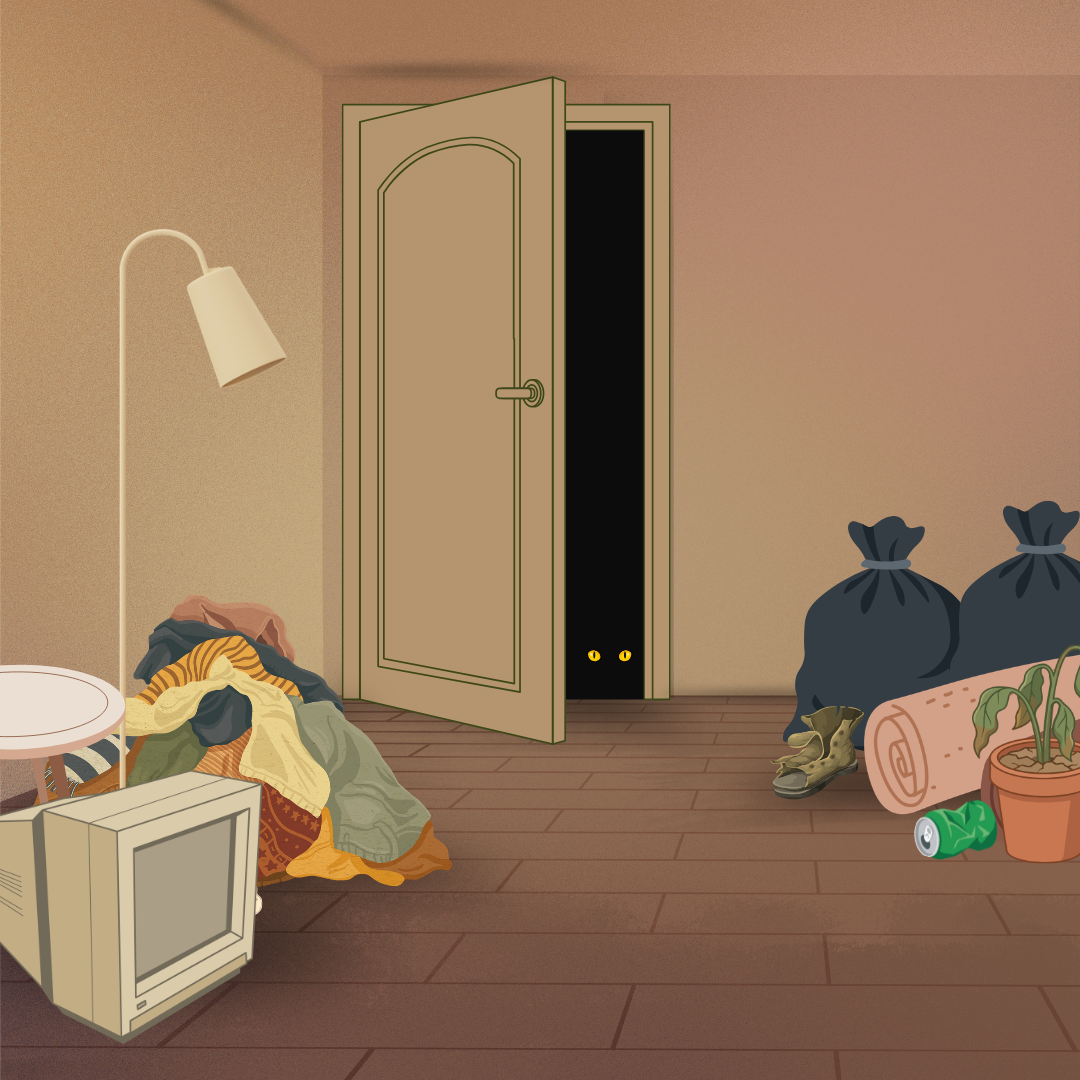
What do you do when your renter moves out, but leaves personal items behind? Massachusetts law is clear: You can’t get rid of it without permission. (Image License: CC BY-SA 4.0 MassLandlords, Inc.)
This article will give a basic overview of what you should do if your renter leaves behind any property, including trash.
The Move and Store Law in Massachusetts
In most cases, regardless of how your rental becomes vacant, you cannot throw away abandoned property, or otherwise get rid of it in what is sometimes called a curbside eviction.
You can legally dispose of anything that poses an immediate health risk, such as old food. Everything else is subject to Massachusetts’ move and store law. This includes coat hangers, hair ties, clothes lying on the floor, mattresses and all things big and small. When in doubt, store it.
The move and store law states you must have a sheriff or constable transport the items to a licensed and bonded storage facility. You must let your former renter know where they can retrieve their possessions.
These items must be stored for up to six months. The state website is not clear if you must pay upfront for storage. It only tells renters if they do not return for their items within six months and do not pay for storage, the facility can sell their abandoned items. However, storage facilities may require prepayment. This is especially true if the items to be stored are unlikely to have much resale value for the company.
You are legally allowed to pursue repayment from your former renter for any moving and storage costs you incurred. This could mean going to small claims court. Do not use the security deposit (a security deposit can be used for “damage” beyond reasonable wear and tear, Chapter 186 Section 15B, but abandoned property is not damage).
My Renter Was Evicted
If your renter is evicted, a judge will give you judgment for possession of the unit. They will also give your tenants a move-out date. Your renters must be off the property by that date, or you can have a constable or sheriff escort them off.
In a perfect scenario, your renters will pack up and leave on or before that date, taking their possessions with them. In an imperfect scenario, they won’t pack a thing. The constable or sheriff will supervise lawful removal of clothing, furniture, household items and trash.
Follow the move and store law and make sure your renters are notified of where they can retrieve their items.
My Tenant Vacated the Rental Unit Without Notice
If your rental unit is abandoned with the tenants’ personal property inside, you have two issues. The first is regaining legal possession of the unit. The second is dealing with the abandoned items.
If your renter died, reach out to their emergency contact. They should be able to put you in touch with the appropriate person, usually next of kin or the executor of their estate. That individual should work with you to find a convenient time to collect the property in the rental. This is also when you can discuss what to do with the rental.
If your renter simply moved out with no notice, or your renter passed away without family or other designated representative to handle their estate, you will need to follow the state’s law on abandoned property.
This essentially means issuing a notice to quit, going through the eviction process and then following the move and store law. These typically move faster than other evictions, since the motion will not be challenged.
![A screen shot of a text exchange from “Randy” reads as follows. “I’ll be out by noon on Sunday!” The landlord replies, “Thank you!” and Randy answers, “All set, keys on counter!” The landlord answers, “Got the keys…looks like you left a lamp and some other stuff.” Randy says “Sorry! (grimacing emoji]) You can throw it out.” The landlord responds by reacting with a thumbs-up emoji.](https://masslandlords.net/app/uploads/landlord-basics-abandoned-property-image-2-lic-CC-BY-SA-4.0-MassLandlords-Inc.png)
It doesn’t have to be complicated: This text exchange confirms that Randy Renter has officially moved out, and is okay with his landlord getting rid of the items he left behind. You need confirmation of both before you can get rid of abandoned property. (Image License: CC BY-SA 4.0 MassLandlords, Inc.)
I Knew My Renter Was Leaving and They Said, “It’s Trash.”
If your renter moved out and returned the keys to you, you may have a bit more leeway with anything they left in the unit. However, you cannot touch their things until you have two things: possession of the unit and permission to do so.
First, confirm they’ve officially moved out and will not be returning. Get it in writing (text messages and/or email count). This creates a paper trail that proves you have possession of the rental. Then, ask them for permission to get rid of any remaining items.
Once you have their permission, the items are effectively yours. You may need or want to throw all of it away. Depending on what has been left behind, that could be expensive, especially if your city or town charges for bulky item pickup.
If your lease has a clause for move-out fees, you may be able to bill them after the fact for this service. Do not use the security deposit.
Please note, any clauses you have in your lease concerning move out fees cannot be applied to abandoned units cleared via the eviction process, because the eviction law says the landlord pays for removal.
My Former Renter Left a Pet Behind In The Rental
Two separate Massachusetts laws require landlords and property managers to inspect vacated rental units for animals within three days, regardless of whether the renter moved out with notice, abandoned the unit without word or was evicted.
If you find wild animals, take steps to secure the unit from further invasion, and call an animal control officer or exterminator as appropriate.
If you find a pet, you must first try to contact the former renter. There’s a chance they have no idea their pet was left behind (or made their way back “home”) and have been frantically searching for their animal.
If you cannot reach your former renters, call your local animal control department and let them know what’s going on. They’ll direct you to the appropriate people, or take over from there.
Conclusion
Abandoned items after a tenancy ends can be a headache, but it’s important you deal with them lawfully to avoid court and fines.
If you are ever unsure about your next steps following a move-out, consult your attorney.