
SJC Hears Arguments About Rent Control Question’s Constitutionality, Religion Is Focus of Debate.
. Posted in News - 0 Comments
By Kimberly Rau, MassLandlords, Inc.
The Supreme Judicial Court held the hearing for the lawsuit filed against the 2026 rent control ballot question on Wednesday, May 6, where oral arguments centered primarily around the religious exemption in the proposed law. MassLandlords filed amicus briefs supporting the lawsuit, which were provided to the justices hearing the case.
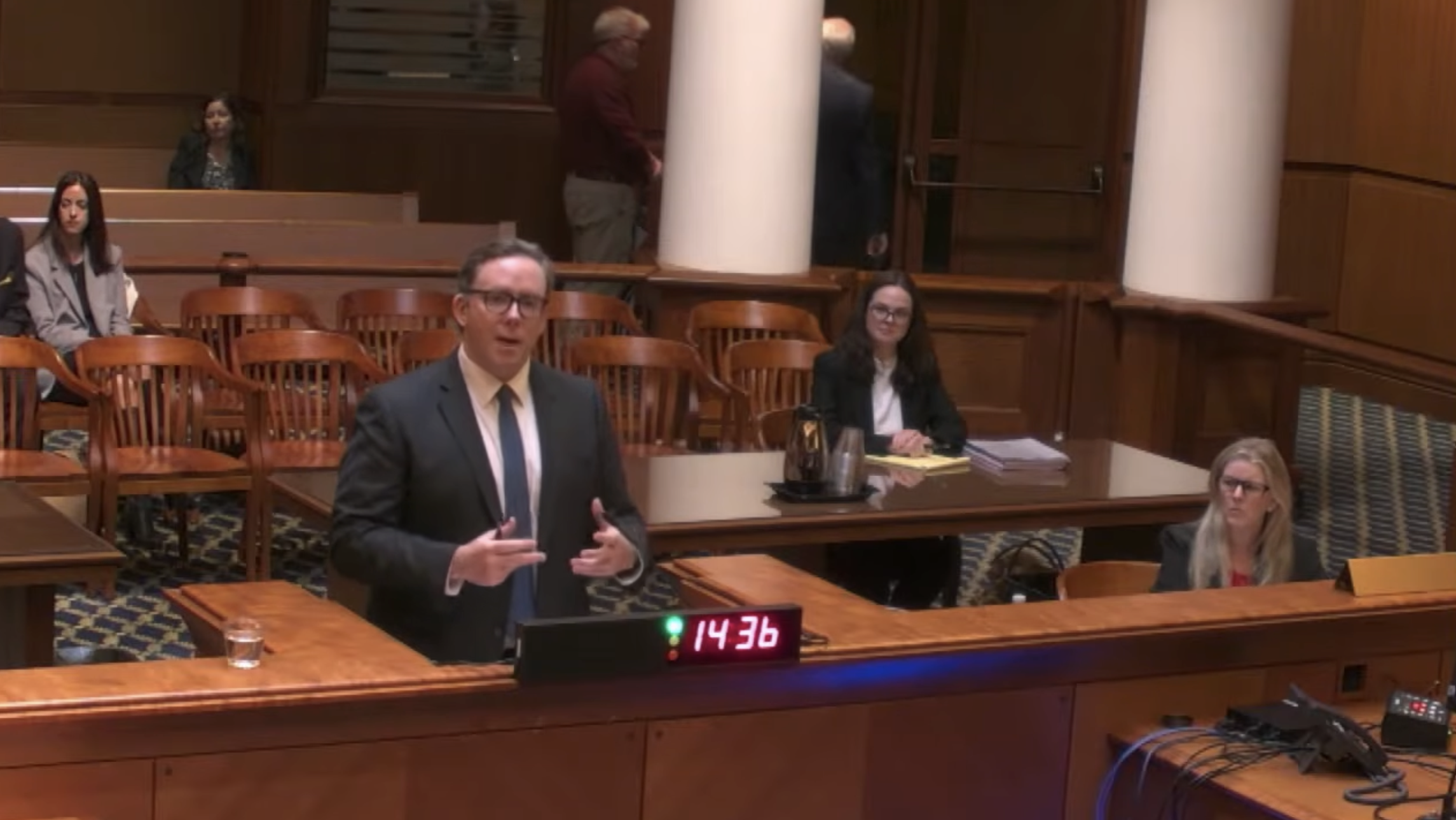
Attorney Edmund Daley III begins speaking at the May 6 rent control hearing at the Supreme Judicial Court. (Image: Public Domain)
The rent control hearing was third on the morning’s docket, following a hearing about the state audit of the legislature, which has yet to happen after voters approved it on the 2024 ballot, and a hearing disputing the legality of installing religious statues outside the new Quincy safety complex.
Those cases have garnered extensive media attention, and drew a large audience at the hearing. MassLandlords Executive Director Doug Quattrochi and others who arrived at the State House after the courtroom reached capacity watched arguments from an overflow room. (This article’s author watched the live stream of the hearing remotely.)
“I was up at 5 a.m. to get the train from Worcester but still didn’t make the cut. I was the first person sent into the damn overflow room. At least I got to shake hands afterwards,” Quattrochi said.
Primary Arguments Center Around Religion
Attorney Edmund Daley III from the law firm Mintz, Levin, Cohn, Ferris, Glovsky & Popeo made arguments against the rent control ballot question. Assistant Attorney General Phoebe Fischer-Groban presented arguments on behalf of the state, which certified the ballot question.
The written arguments filed against the proposed law covered many reasons why the question is unconstitutional and should be struck from the ballot, but surprisingly, oral arguments mainly focused on the portion of the ballot question that exempts religious institutions from rent control.
Attorney Daley argued that Article 48 of the state constitution prohibits matters of religion from going before the public on a ballot question. The exemption, he stated, makes the rent control ballot question a matter of religion.
“Units used solely for religious purposes are given a benefit under this proposed law that other secular uses are not,” Daley told the seven assembled justices.
Daley noted that the purpose of Article 48 was to prevent religion from infiltrating the ballot process, and added that if the ballot question passed, religion would become operative factor in whether a building is rent controlled. That, Daley stated, could give rise to public political debate that religions are getting an advantage.
The justices raised questions with Daley’s assertion, including Justice Dalila Argaez Wendlandt, who suggested the religious exemption may not hold much weight, because the exemption for nonprofits would include most churches anyway. However, they seemed equally unwilling to embrace the idea that religion was a non-issue, as the state contended.
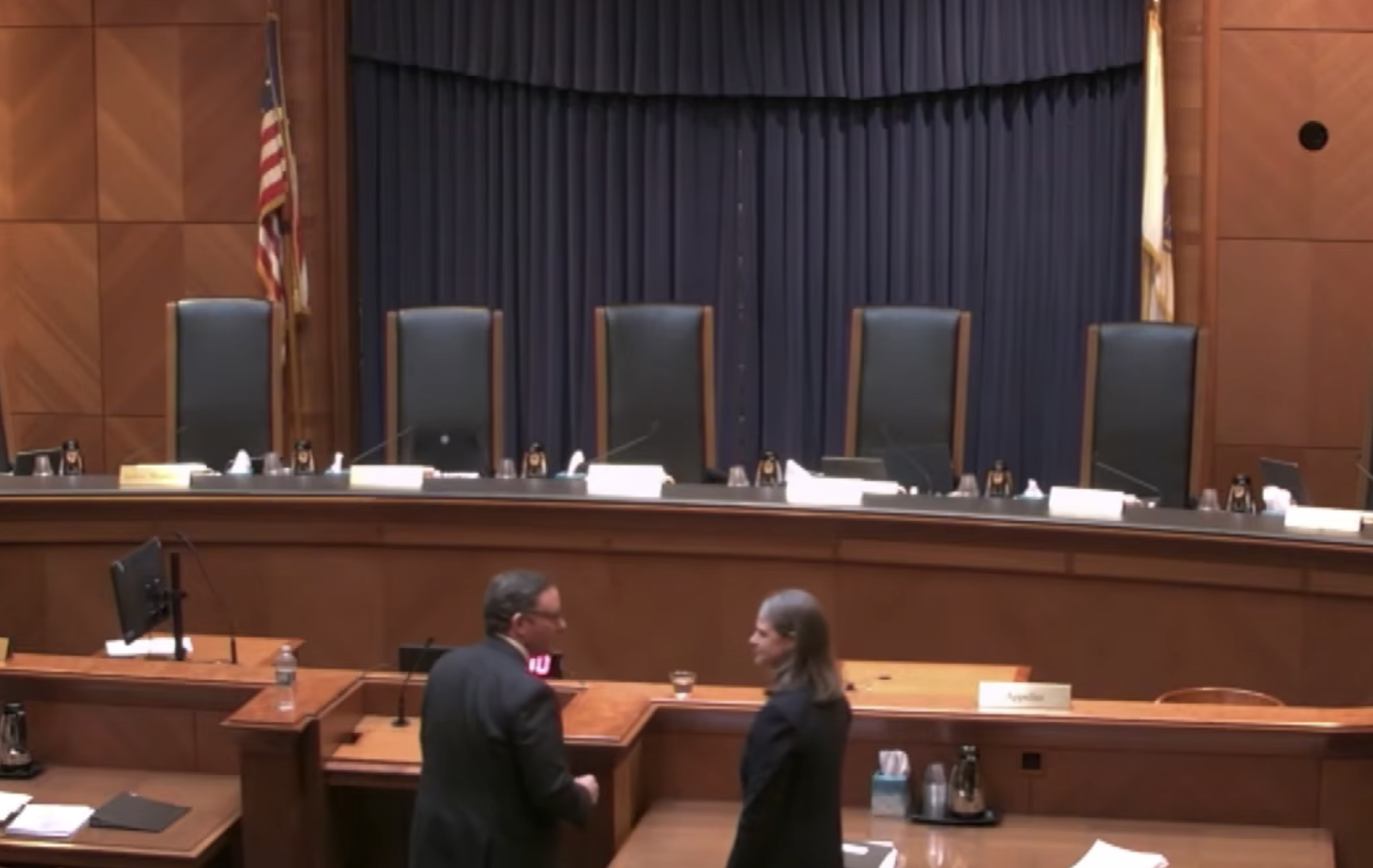
Attorney Edmund Daley III and Assistant Attorney General Phoebe Fischer-Groban briefly spoke after the hearing concluded. (Image: Public Domain)
State argues no preferential treatment for religions was intended.
Attorney Fischer-Groban took the stand and countered that the ballot question did not afford extra advantages to religious institutions. Justice Serge Georges Jr. questioned the statement.
“Based on how [the ballot question is] written it’s going to invite debate whether religious housing should receive preferential treatment,” he said. Fischer-Groban replied that it wasn’t clear what advantages religious groups would receive, a curious statement given that the law would exempt them from rent control entirely.
“If a unit that would otherwise be subject to the law, but it’s not because it’s related to religion – how is that not giving preferential treatment?” Georges asked Fischer-Groban.
Fischer-Groban further stated that religious institutions were just one of several exceptions outlined in the ballot question, including nonprofit organizations, and therefore the ballot question doesn’t single out religious institutions.
“It doesn’t just list nonprofits,” Justice Wendlandt countered. “You could have done that. It lists religious institutions.”
The justices also questioned whether other aspects of the ballot question, including the section exempting only some short-term rentals. Fischer-Groban said the question was “fair and accurate.”
“If a voter has a concern about the scope of the law, they can vote no,” she said.
“If they understand it,” Georges replied.
Takings Clause Takes Backseat, Gets Minimal Airtime
Toward the end of Attorney Daley’s allotted 15 minutes, Justice Scott Kafker requested he pivot from religion and briefly address the alleged takings clause violation, another argument against the ballot question.
Daley told the court that the ballot question would revoke Chapter 40P, thereby removing rental housing providers’ right to compensation.
“This petition…doesn’t provide [landlords and property owners] with any ability to recoup costs or to recognize a fair net operating income for their property,” he began. Some justices questioned whether the proposal’s built-in rent caps did not, in fact, allow for a profit margin.
“What it doesn’t build in…is the ability for a landlord to be able to get an exemption from the rent control limit to deal with costs, to deal with hardship,” Daley continued. Deleting Chapter 40P is “huge,” he said.
“It does not allow those individuals to adjust rent based on the costs they are incurring that have nothing to do with inflation,” he stated.
The state did not comment extensively on the takings clause, instead using the entirety of their time to address the religious exemption.
Conclusion
Though the oral arguments were limited to just a few talking points, the justices will also have the opportunity to read the written arguments filed from both sides, as well as the amicus briefs filed, before ruling.
The court can take its time ruling on the case, but will likely need to decide before the ballot is finalized this summer.
Watch the full hearing – our docket begins right around the 1:59:00 mark.