
Rent Control Hearing Tuesday, July 29 (194 S.1447 Jehlen, Gomez)
. Posted in News
If it passes, rent control will become mandatory statewide, with one of the harshest rent caps in the nation.
A hearing has been scheduled for a rent control bill filed by Senators Jehlen and Gomez, S.1447 "An Act enabling cities and towns to stabilize rents and protect tenants." The hearing will be Tuesday, July 29, at 1 p.m.. The deadline to register to testify via zoom is Monday, July 28, at 3 p.m. Click the hearing link to register.
To submit written testimony, write a letter on company or personal letterhead and email hello@masslandlords.net subject: Rent control testimony, by 9 a.m. Tuesday, July 29. We will collate and submit testimony.
This bill would hold rent increases to rents 12 months ago, even for recently renovated properties.
Optional: Click or tap the coversheet to read our 86 pages of testimony:

Summary:
Rent control would help the people who have an apartment when the bill passed into law. It would hurt everyone else forever after.
The main problems with S.1447 are as follows:
It would cost Massachusetts half a billion at least.
Rent control lowered assessed values and real estate tax revenue. Rent control reduced the budget of each town that adopted rent control. This resulted in that town siphoning State Aid from surrounding non-controlled towns and lowering their budgets.

Rent control worsened discrimination.
Rent control has an unintended disparate impact on the basis of race. It creates "availability discrimination" where landlords hold apartments vacant longer waiting for a "perfect" application.

Cambridge residents who obtained rent-controlled units included Massachusetts Superior Judicial Court Judge Ruth Abrams (left); Prince Frederik of Denmark, a Harvard graduate student at the time (center); and Cambridge Mayor Kenneth Reeves, who lived in a rent-controlled apartment from his undergraduate Harvard days in the 1970s beyond 1994 (right). Images: Ruth Abrams public mass dot gov; Frederik cc by-sa Wikimedia Aarhus uni; Ken Reeves editorial use spoa.
A fair version of rent control is already allowed under Chapter 40P.
If a town wants rent control, they have to pay for what it truly costs.
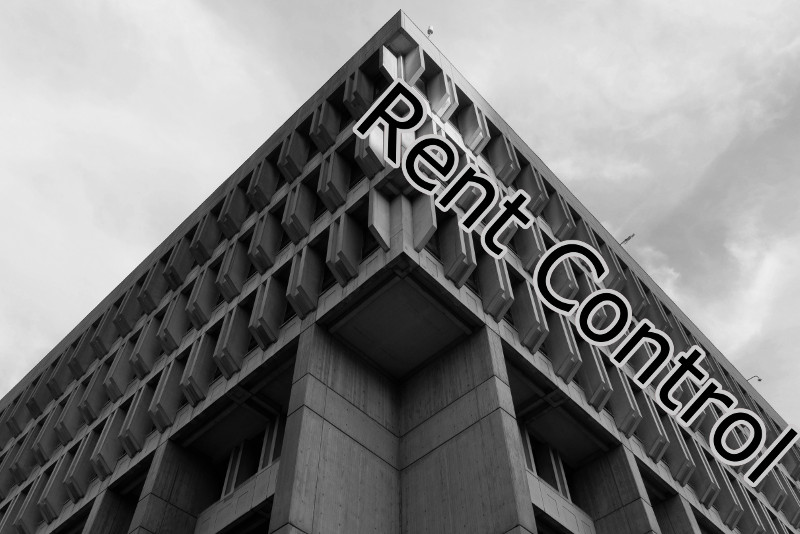
Rent Control in Boston would take us back to the middle of the 20th century when towns subsidized this terrible policy. Derivative of Licensed Unsplash
Rent control lowered the ability of property owners to maintain and renovate buildings. It resulted in hundreds of boarded up buildings across Boston and Cambridge.

Policies interpreted and applied by rent control boards in Boston discouraged development of new buildings, improvement of existing buildings and basic upkeep of rental units. The result was too often scenes like this, in Southie. Image: public domain.
Rent control created unevictable professional tenants, who drove out good landlords and good renters.
Under the "just cause eviction" rules of S.1447, renters could not be evicted for "no cause stated." This makes it impossible to protect good renters from violent offenders. There is no witness protection program in civil matters.

Landlords Emil and Donna Javorski were convicted of a crime for not living in their house and not filing a change of address form. Supporters of rent control today are either profoundly uneducated or barbarous.
Rent control was tried in Massachusetts in 1994. It failed.
Rent control had disastrous social impact on landlords. Peter Petrillo died because of rent control. George Tarvezian was jailed for six months. The Bolognas were bankrupted. Many others were harmed, all documented. Naturally occurring affordable housing disappeared.

Peter Petrillo died of a heart attack after being ordered by the Cambridge rent control board to jack up this building. This intersection was named for him and his widow. CC BY-SA 4.0 MassLandlords EricB
Can they freeze rents from 12 months ago?
This law holds rents relative to their value 12 months ago for the purpose of an increase. This means any rent that increased faster than CPI or 5%, including renovated units, will be unable to increase rent again until inflation has eaten away at the improvement.
A dilapidated building that was 50% below market and has now been gut renovated to market will be unable to raise rents for at least 9 years, whatever inflation may be the next nine years. The math is the maximum allowable rate, 5%, compounded for n years, must meet or exceed the 50% appreciation from 12 months prior to the law's passage. 1.05 ^ 8 = 1.47, and 1.05 ^ 9 = 1.55.
Nine years must therefore elapse before the 50% rent increase is met. If inflation were only 2% per year, that will lower the maximum allowable rate. The landlord would then have to wait 21 years for a rent increase. Assuming Senators Jehlen and Gomez understand math, we have to conclude they have cruel intentions.
Read the text for yourself:
State House website slow? Download the full text from MassLandlords.
Read about Massachusetts' failed experiment with rent control:

The housing crisis is real, but rent control was tried and failed. Join us in our mission to create better rental housing!