
How To Get Rid Of Mice
Mice contaminate our crops and spread various diseases by biting us and leaving urine and feces on surfaces. They can also introduce fleas, carry ticks infected with Lyme Disease and carry an assortment of mites. Mice also carry Hantavirus, which causes severe respiratory infections in humans. Mice love to gnaw and often spend time chewing on electrical wires, books, clothing, and cause extensive damage when they are able to get into vehicles and RV’s. Mice urinate and defecate constantly on everything they walk on (cans, utensils, plates, countertops, etc.). One female mouse can produce 40 to 60 young per year and the young can start breeding in as little as 4 weeks. Mice can squeeze into holes as small as a pencil and will use existing gaps in bulkheads and garage doors for quick entry. If an existing gap is not available, they are more than happy to chew a brand-new hole to enter a structure.
Jump to
Eeek! Get Rid of Mice in Your Rentals
Many times a homeowner will use over-the-counter mouse poisons and find the rodents are removing the poison and storing it around the home (usually attics or basements). The formulations of baits our technicians use are in a style that rodents are forced to eat and not store. Our technicians will also use snap traps for a quick knockdown of the rodent population. Are you being bugged? Contact us at FORDSHOMETOWN.COM
Questions and Answers for October 2016: Mice
Adapted from our Message Boards, where members can ask questions and get answers. Practicing landlords and service providers answer questions, and we combine the best answers into one here.
Q: Mice!!! I’ve been setting out bait blocks in the kitchen. Is that enough? They’re multiplying!
Be careful! It seems to be consensus that landlords are not allowed to set out exposed bait blocks in rented premises (we’re pretty sure, but we can’t find a link to the law or regulation; if you know, please send us a link at info@masslandlords.net).
Exposed bait blocks pose a hazard to children and pets. You should hire a professional, licensed exterminator. When you hire an exterminator, they will set the bait blocks in stations that cannot be opened without a special exterminator’s key.
Bait stations must be placed very frequently, at least one for every room, in every apartment, and many more must be placed in the basement and attic. You must also interrupt chaseways and mouse holes by stopping them up with steel wool and foam. Pay special attention to the areas around heating pipes and wires.
The cost to have an exterminator do this is very affordable, at roughly $100/unit, depending on how many units you have and who you hire. There may be minimums or higher costs if this is the first time the property is being treated for mice.
Whoever you hire, don’t wait! Mice multiply like all rodents: very quickly. And there may be ten mice behind the walls for every one you catch.
Should I Hire a Mice Exterminator or Get Rid of Mice Myself?
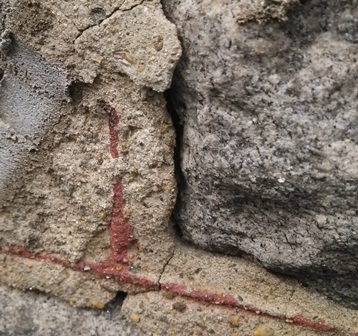
This stone foundations is vulnerable to mice infestation. All stones must be perfectly repointed outside and in.
Before trying to get rid of mice on your own, consider what a mice exterminator can do.
A mouse in the house can create a mix of fear, disgust, and filth, and left unchecked, will quickly turn into dozens or hundreds of mice. It is possible to get rid of mice yourself as a DIY owner/manager, but there are definite advantages to hiring a mice exterminator as well. This article reviews the basics.
Know Thy Enemy
According to Wikipedia, mice are -- along with humans -- one of the most successful groups of mammals on the planet. They are remarkably adaptable to varying food sources and environments. They reproduce quickly and in large numbers.
In the wild, mice eat fruits and grains from plants. In manmade settings, they will eat anything, including pet food, chocolate, peanut butter, and meat scraps.
On a per-weight basis, mice eat ten times more food than people. NPR reported that the average American eats close to 2,000 pounds a year, and the CDC reported an average body weight (men and women) of 182 pounds, which equates to eating 1.5% of our body weight each day. A mouse eats 15% of its bodyweight each day.
Mice are fertile when they’re about 50 days old. Gestation of a new litter takes 20 days, and under optimal conditions, produces 10 to 12 pups. Weaning takes three weeks, and then two to five days later the female can conceive again.
Well cared-for pet mice can live for approximately two years (the record is four years, see the rodent link below). This means a single breeding pair could theoretically produce approximately 150 offspring. This figure is highly dependent on temperature and food availability.
Mice teeth (like the teeth of other rodents) have evolved to grow continuously so they can continually be filed down and sharpened. This is partly why mice can destroy moldings, casings, walls, and electrical wiring.
Get Rid of Mice Yourself
Mice are inside to look for nesting material in the early fall and food sources throughout the winter. As an owner, there are many things you can do to get rid of mice yourself.
First, eliminate access to loose fluff, fiberglass insulation, blow-in insulation, old carpet, and other nesting materials.
Second, close off interior chaseways like holes for electrical wires and pipes. If you have forced hot water heating, pay special attention to the holes around those pipes. They should be blocked with a copper wool mesh and black PUR foam. If you seal up all the chaseways in all your units, it will take an hour or two per unit. You will want knee pads, a flashlight, a butter knife or dowel, more copper wool than you think you need, tin snips, a trash bag, and PUR foam gun with a can or two of foam.
To close a chaseway, use the tin snips to cut off an appropriately sized piece of copper wool. Do this over your open trash bag to catch metal shards. Shape the copper into a donut, place it around the pipe and against the hole, and use the butter knife to jab the copper wool firmly into place. Squirt black foam around it. Don’t use “great stuff,” which is easier to chew through, and don’t do this when the heat is actively working , which can cause the foam to run. Repeat for every hole, no matter how small.
Third, close off exterior access. Pay attention to the lower corners of exterior doors, stone foundations riddled with holes, and the sills between the foundation and the frame. These must all be sealed perfectly to prevent rodent access.
Fourth, seal the interior foundation. Mice can burrow, so sealing the foundation above ground-level is not adequate. Seal the wall from inside the basement down to the basement floor. If you have a dirt floor, it is hopeless; put in a slab.
Fifth, once the place is sealed up, place traps and check them regularly. A mouse that is alive in a trap should be killed immediately for humane reasons. Place your thumb and index finger behind its skull. With your other hand, grab its tail and draw sharply back, holding the head in place. You will feel the spine snap and the mouse will be put to rest.
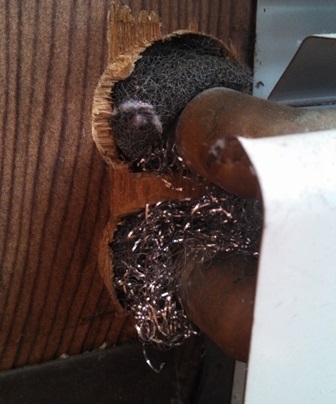
These forced hot water pipes are inadequately sealed against mice. They need copper wool, more of it than the steel wool pictured, and an application of PUR foam.
Hire a Mice Exterminator
Exterminators are licensed and trained to use lethal rodenticides in a safe way. For instance, under 333 CMR 13.08(1), rodenticides must be placed in tamper-resistant bait stations and secured so as not to be lifted. The bait station must also be labeled to identify the person or company who placed it there, the date it was placed, the EPA registration of the product inside, and the active ingredients of the product.
Applicators are also required to keep logs of where they applied baits, and share those logs with any person upon reasonable request.
As an owner/manager in a litigious age, hiring a licensed exterminator solves several problems beyond mice.
First, there is no question in a court’s eyes that you have taken appropriate action to address a vermin infestation. If it takes a long time to get rid of all the vermin, you won’t have liability the way you might if you were doing it yourself.
Second, you cannot be liable for improper or unlicensed application of a pesticide or rodenticide.
Finally, there’s a good chance that the mice exterminator knows more about mice than what can be learned in a newsletter article.
Whether you decide to hire a mice exterminator or get rid of mice on your own, don’t wait. Mice are one problem that multiply.
Got rid of mice? Share your best tips to hello@masslandlords.net.
Eeek! Get Rid of Mice in Your Rentals
By Eric Weld, MassLandlords, Inc.
It’s a rare property owner in Massachusetts who hasn’t dealt with mice. But landlords who aim to get rid of mice in their rentals need to think long-term, and might consider hiring a mice exterminator on an annual basis.
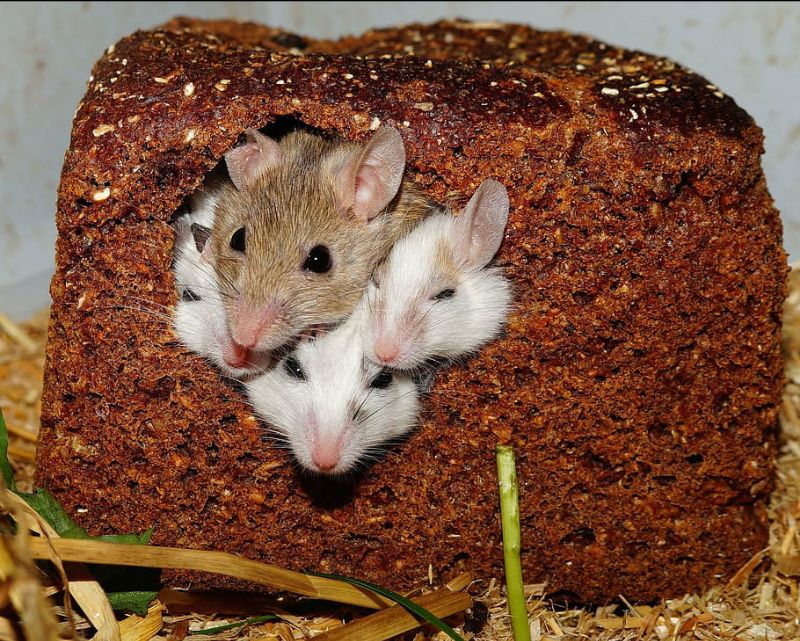
Mice are creative and adept at finding places to nest. Tip: store bread in the refrigerator during winter months.
Massachusetts properties are fertile ground for the common house mouse (mus musculus or mus domesticus), an historically successful species that has adapted over millennia to survive and thrive in a huge range of circumstances, largely aided and abetted by humans. Some property owners in outlying or rural areas might also have field mice in their homes.
Rats, the larger cousins of mice, may be found more commonly in urban areas, where easy food sources are plentiful and natural predators less prevalent. Getting rid of rats in a home can be just as intractable as exterminating mice, and requires different strategies to account for rats’ larger size, stronger teeth, and appetites and behaviors distinct from mice.
Mice and rats have been around at least as long as humans. The house mouse is found in every corner of the world and likely traveled to the United States hundreds of years ago from Central Asia, stowing away on ships and all forms of land transport. Mice are presumed to be the primary impetus for domesticating the pet house cat (perhaps still among the most effective anti-mouse weapons.)
The bad news is mice and rats are not going away. The good news is there is more information available than ever before about how to exclude mice from homes. More good news: rodent exterminators have also become savvier in their methods, and options for products and tools used to eradicate mice have increased and improved.
Keeping Mice Out
“We are more educated now,” said Michael Cutler, owner of MC Pest Control in Fiskdale, MA. “And the products are just a lot better.”
Further, the focus for exterminators has shifted more to exclusion -- keeping mice out of the home rather than just treating those that get inside, said Cutler.
But while mice exterminators have refined their methods to get rid of mice in homes, it may be an ongoing process. Exterminating mice from many New England properties -- older homes in particular -- is often not a one-and-done treatment. The pesky rodents may be exterminated in December and steps taken to keep them out for the winter, but because they are so adaptable and prolific as breeders, and creative in finding ways to shelter, warmth and food, there is always the possibility that they will find paths back into your properties the following fall or winter.
“You need to have a good, systematic, thorough experience to resolve a rodent problem,” said Brian White, owner of Pro-Tech Pest Control in Worcester, MA, who addressed the Worcester Property Owners Association in March 2015 about mice extermination. “It’s not just a mouse trap here and there. You can block some holes, but you’ve got to find all of them if you can, get as many as you can.”
Copper Wool and PUR Black Foam
The best material for blocking holes is copper mesh, or copper wool, says White. Though copper wool can be expensive, it doesn’t rust, so it’s the ideal material for stuffing gaps around and between pipes. Steel wool could be used as a less expensive substitute but it is vulnerable to rusting over time.
Fill every single hole the size of a dime or larger around the exterior of your rentals with copper and steel wool. Copper and steel wool are effective fillers because mice cannot chew through them. White recommends using a screwdriver to stuff and shape the mesh snugly and securely into holes.
Once holes are filled with copper or steel wool, cover the opening thoroughly with PUR Black, an expanding foam product made by Todol that creates an airtight seal that mice can’t penetrate.
Repoint Stone and Brick Foundations
Stone and brick foundations with mortar bonding the pieces together are vulnerable to rodents. Mice -- and rats in particular with their hard, sharp teeth -- can gnaw on the mortar and make any holes or crumbling edges large enough to climb through.
The best way to maintain the integrity of stone and brick foundations is to make sure all corners and edges are repointed with fresh mortar. This maintenance will not only protect your buildings from moisture seeping between the bricks and stones, which can cause irreparable structural damage. It will also keep out mice and rats (and snakes for that matter), and may help reduce seepage of dangerous gases like radon.
Seal Sills
Rodents are masters at finding gaps and cracks in the foundations of buildings. The seam where the wall frame sill plate meets the foundation is a vulnerable place for deterioration, especially in older buildings, and mice can exploit crumbling gaps around the sill. Ideally, sills will be thoroughly sealed during frame construction. But even for existing structures built without modern sill-sealing, steps can be taken to seal sills and fortify aging seals.
There are many products available for sealing building sills. DAP’s DynaFlex 230 silicone sealant, for example, or sealing tape like SIGATapes Wigluv are both effective for interior sealing. Around the outside use a sealant like QUAD by OSI (also usable for window and door sills) or strips of backer rod to create a tight seal.
When possible, apply sealant around sills on both the interior and exterior.
Killing Mice Inside
Once you’ve taken steps to disallow mice from entering your rentals, you can turn your attention to eradicating any who may already be inside.
Killing mice is gruesome work. But hopeful inaction is not a viable choice when mice are in the house. Mice can cost property owners thousands of dollars in damaged appliances, destroyed wiring and gnawed up personal belongings. They are a potential safety threat -- such as when they chew through insulation and expose high voltage wires, or start a fire, or when they carry diseases into the home, like Hantavirus (deer mice), leptospirosis, lymphocytic chorio-meningitis, salmonellosis, and others. And mice can multiply quickly over time.
There are sonic sound deterrents that aim to drive mice from a property. These are effective only in the short-term as a way to change behavior. Long-term, the mice either go deaf and are unaffected by the noise, or become accustomed to the sound and resume their habits.
Professionals may apply poison bait stations, which landlords are not allowed to do without licensing. There are mice poisons and rodenticides with brand names like d-Con, Tomcat and Havoc. These can be highly effective, but there can be a downside. Some quick acting poisons may cause mice to die out of sight but still inside the house, behind walls and under floors, where landlords cannot easily remove dead bodies. The carcasses will rot and may smell, stain or create further health risks.
A Range of Mouse Traps
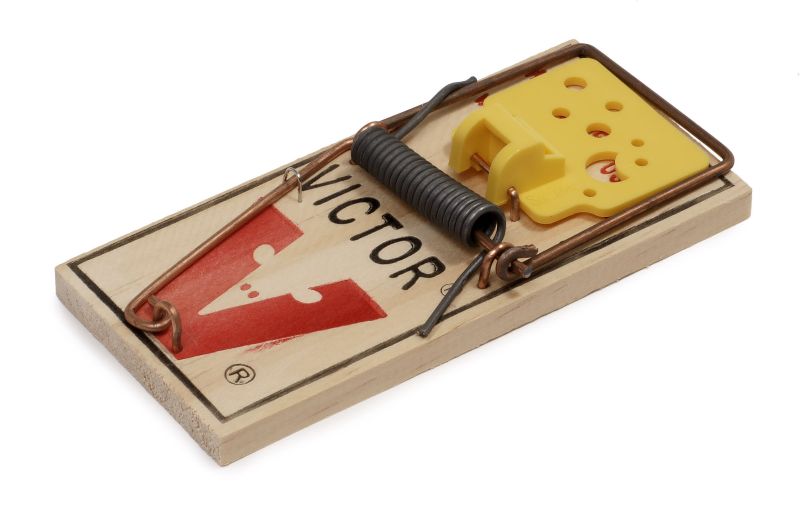
The standard bar snap trap, still among the most effective mouse-killers, hasn’t changed much.
Using traps with bait can be an effective step in exterminating mice. There are many traps available, each with its benefits and downsides, from the traditional bar snap trap to electric shock traps and glue traps. Live catch traps allow mice to live and potentially re-enter your house another day.
Fatal traps are usually called for, and with warning to squeamish readers, we now elucidate:
Snap traps aim to kill mice instantly by breaking their spines. These are highly effective but dangerous to landlords’ fingers, and to children and pets if placed within reach. They are also noisy in the middle of the night. Snap traps sometimes miss, resulting in noise and labor without any progress toward removal of mice.
Glue traps are commonly distributed as a quiet alternative to snap traps. Although effective, they are inhumane. Mice will self-mutilate in an attempt to get free. They may linger on traps for days before dying of dehydration or self-inflicted wounds. If you elect to use glue traps, you should examine them at least once a day.
When you find a mouse stuck to the trap or wounded but not dead, do not attempt to bludgeon it to death. You will further extend its suffering and create a biohazard. Rather, the most humane way to kill a wounded mouse is by donning latex or vinyl gloves, placing the thumb and forefinger of one hand behind the skull to hold it steady, and with the other hand grabbing the tail and drawing it sharply back. This will sever the brain stem instantly, the same as a well aimed snap trap. May you never have to experience this.
Those who work with mice in laboratories have found the most humane way to kill a mouse is to place it in a sealed container and flood it with carbon dioxide or nitrogen gas. It is unlikely you will be able to find the equipment needed for this, but if you can it will be far better than manual termination.
Setting traps and capturing or killing mice is only part of the long-term solution. Exterior exclusion is by far the most important thing. And the interiors of your rentals also need to be optimized to deter mice from making their homes there.
Hide Nesting Materials
Mice are very creative when it comes to making nests in your homes and rentals. They will use any material available to craft a soft, comfortable haven for staying warm and building a family. String, paper, cardboard, mattress and pillow filling, plastic and foam, fiberglass insulation and much more can all be put to use by mice.
The best way to deter mice already inside the home from setting up residence and getting comfortable is to keep home interiors tidy, clean and free of clutter, especially in the late fall and winter. Any spare scraps of packaging, filling and insulation should be discarded. Items that you want to keep for possible use later should be stored in a plastic bin with a tightly fitting lid.
Eliminate Harborages
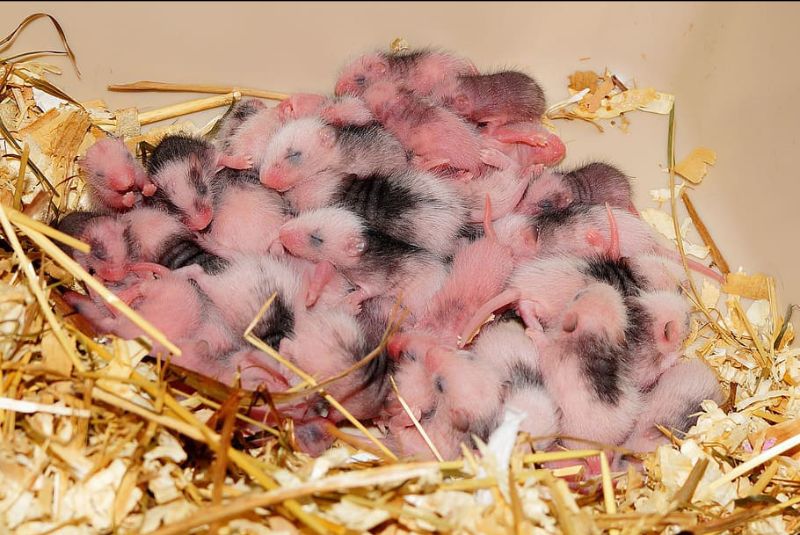
Mice can breed very quickly if left undisturbed. A family of six can become 50-60 within 90 days.
Basements are ideal places for mice and rats to nest, especially utility cellars that are used and visited by humans infrequently. Basements are out of the way, usually quiet, and too often home to forgotten discards like linens, blankets, furniture, camping equipment and the like -- in other words, a haven for rodents.
Home exteriors near the house can also offer harborages for mice in the form of abandoned cars, old furniture and appliances, tall weeds and filled garbage bags.
Eliminate rodent harborages by storing seasonal items in plastic containers with tight-fitting lids, sealing garbage bags in lidded bins, discarding all unwanted items, keeping grass trimmed and weeds cleared, and regularly checking around the inside and outside of your property to make sure they are clear of nests.
Tenants’ Roles in Fighting Mice
Getting rid of mice is a battle necessarily waged inside and outside, on all floors of the building, basements and attics included, and in every room in every rental unit. And it’s a year round endeavor.
Landlords need to work with their tenants to make sure their units remain mice-averse.
Tenants should regularly remove trash bags, recycled materials and compost from areas around the house where they may be kept temporarily to avoid inviting mice toward the building. Also, renters might get in the habit of storing all plastic-packaged food in the refrigerator. Mice don’t see well, but they have a very good sense of smell and are attracted to any food left where they can access it.
Finally tenants must know to contact their landlords the minute they see signs of mice so that action can be taken.
Outsourcing Mice Extermination
This never-ending game is one reason why business is booming for mice exterminators across the state, with annual spikes in the fall. Hiring a mice exterminator may be the most cost-effective solution for landlords with multi-unit properties or several rentals. Mice exterminators can address the problem comprehensively with the most efficacious products, and most provide a guarantee for at least a few months or through the winter season (i.e. they will come back and repeat their procedures if any mice are detected once they’ve treated your units). A single visit by a mice exterminator may cost between $100-$200 for rentals, and $300 for a home.
If left unattended, one mouse can too quickly become 30.
http://worcesterpoa.wistia.com/medias/wbwf3ytxha?embedType=async&seo=false&videoFoam=true&videoWidth=640
Transcript
[Start 0:00:00]
Brian: Thank you, Rich, and thank you, Doug. Yeah, we’ve been associated with this group for quite a while and I can remember going down to the Elks Club on Mill Street and talking to about maybe five or six people, and I can remember [MLK 0:00:25] Building. I can remember Christmas at Coral Seafood, and look at you now. There’s obviously par in numbers, and you’ve got the message, and I’m sure the people in Boston have got the message. The pest management industry does the same thing, so I want to congratulate you on the hard work that you put in. It’s really starting to show, and this is a fantastic group for us, and we hope to continue that relationship moving forward.
My name is Brian White. This is 20th year in pest management, so it seems like forever but I know some people in the room have been landlords much longer than that. A little closer.
Okay so what I have tonight, I’ve got a PowerPoint presentation that I’m going to kind of step through. I kind of scaled it back a little bit because mainly it’s for training technicians and workers and that type of thing, and we didn’t want to put anybody into sleep after a nice hard day with the work and that wonderful meal, I’d have you sleep in about half an hour.
I’m going to breeze through it, then I’ll be wide open for any questions that you have, and I think it should go along pretty well. The first one is we’ve got a little bit of a video. Just down here a little bit.
(video 0:01:34-0: 02:50)
This is to give you an idea of what we’re up against. Thank you. I like to start out with that. Well, it grosses people out initially, but then you kind of get the gist of it. I don't know if you saw through the beginning but the mouse actually stops and winks for you. If I could ever get the mouse to hit the golf ball for me, it would be great.
Here we are. Here are the mice we’re dealing with. Most people in the room, if you’re dealing with your three-family, you’re going to be dealing with this mouse over here that’s a little darker in color. If you live out in Holden in the woods or Spencer ‑ I heard someone say Spencer, I’m from Spencer, too. Good luck with that. I had my days with town hall as well. You’re dealing more with the field mouse that’s a [storager 0:03:26] and a forager. But basically, they just want to be warm just like you. If you heard that commercials on the radio, “They just want to get in. They’re just looking for shelter.” The problem is as they defecate and they urine and they chew through the walls and chew your wiring.
You’ll see through the slides that they actually cost you quite a bit of money. It’s not paying us to solve the problem. That’s the expense. Having wiring replaced, having fires, having vehicles damaged, having your personal items damaged, that’s where the true cost of having rodents in and around your home are. I don’t have to lecture anybody on tenants who don’t pay their rent when they have mice, or even when they have half a dropping, or they have droppings left over from the last tenant.
These guys can cost you a significant amount of money, and they’re smarter than you think. For us, we kind of go to bear down and think like a mouse from time to time.
We have the public health importance of it. They do carry viral infections. They can cause meningitis and encephalitis. We can have pregnancy complications related to them, and again transmitted through mouse urine, saliva, and fecal droppings.
The economic damage rodents also cause damage to structures, their contents through gnawing, contamination of fecal droppings, and urine.
Then I don't know about you folks, but when I walk into a building or walk into an apartment, believe it or not, I can smell the mice. It’s gotten to that point where I can actually smell them. At some point, if you’ve been around them long enough, you will, too.
[0:05:05]
All right, why do they thrive? Why are they so popular? Why are they here? Basically, if you think about this, 6 mice can grow into 50, to 60 mice in about 90 days, 90 days. If a tenant calls up and says, “I saw a mouse.” Then you go over and throw some bait in the basement and hope that within a month or so that’s going to help you out, you may realize that the mice in the basement, they were there about 3 months ago. Now they’re in the first floor apartment, so you may already have 50, 60 mice by the time that that person calls you.
They are pretty good at hiding out. They like to keep quiet. They like to do their thing when you’re not around, and here’s the funny one here: a mouse is sexually mature 3 weeks after birth.
Audience: Jeez [laughter]!
Brian: Three weeks, 3 weeks. When they get in and they get in and they’ve got food, they’ve got moisture, and they’ve got shelter, they’re going to do real well with their maturity.
Common signs: we’ve got droppings, urine, gnawing, rub marks. I don't know if any of you have ever seen when you have a little mouse hole and the mouse goes in and out of that hole for a while, you get these greasy, little black stain on there. That tells me that they’ve been there a while and there’s quite a few. When I start seeing gray, greasy dark marks, they’ve been around for a while, and that’s part of the smell, too. Just like us we sweat, mice will sweat, and that’s what you’re getting on those holes that they’re going in and out of is those grease marks. That’s what exactly what that is.
Why else do they do good? Because they depend on us. A lot of people depend on us for survival, and we’re perfect for them. We provide the food. We provide the shelter, the water that they require. They’re excellent parents, excellent parents. As you’ll see in a few slides as we go through, the females take care of all of the babies. They actually take shifts in taking care of the young. It works as a colony, not just as a family, but as a colony. They live simple lives. They don’t ask for much. They just want some food, some water, and some shelter, and that’s going to be about it.
What day is trash day? Anybody have one of this?
Audience: Yeah.
Brian: Yes, you got a few of those? [unintelligible 0:07:32] I’m obviously not going to tell you whose apartment that is, but that’s an apartment in Worcester, and we’re actually successful in solving that problem after they cleaned it up, and that was quite a problem. Someone was actually living there in that apartment. I think that comes under hoarding. I don’t think I’m officially qualified to name that, but I think that’s where that comes from.
This is kind of step back a little bit. We don’t have as many foreclosures and abandoned properties as we used to in the last few years, but I’m sure many of you have had an abandoned house next door, and that just doesn’t do you any good at all. That just becomes a breeding ground for everything, especially rodents. An unkempt property, you’re certainly promoting rodent activity. They’ll be there to visit you, that’s for sure.
Fast learners, okay. They adapt pretty well. Mice for the most part have what’s called [triggermatic 0:08:30] behavior. Whoa, big fancy word ‑ [triggermatic 0:08:32] behavior. Basically what that means is they do the same thing every day, day in and day out.
Like I said, I’ve had the same job for 28 years, and I’ve been at that desk at 7:00 AM for 28 years, so needless to say, I wake up at 5:30 to go to work. On Saturday, I wake up at 5:30. On Sunday, I wake up at 5:30, and all my days off, I wake up at 5:30. That’s [triggermatic 0:08:55] behavior. If one day I woke up at 7:30, my total day would be in disarray.
That’s what we try to do with the mice is we try to break that [triggermatic 0:09:04] behavior, and I’ll show you some of the steps that we do to do that. However, they will adapt. They will become used to the environment. They will make changes to their patterns and they will use teamwork and communicate to do that.
Mother of the year? There’s a nice little litter for you. Usually it’s about six. I think that one has got maybe around 10 or 12. That’s an environment where they’re really thriving and surviving. A female mouse again is back in heat 32 hours after giving birth. In the colony situation, as I said earlier, the female mice will work in shifts to feed the young, so they’re really, really concerned about growth of their colony.
Think about that: you need to stay on it. You need to have a good systematic, thorough experience to resolve a rodent problem. It’s not just a mousetrap here and there. You can block some holes, but you’ve got to find all of them if you can, get as many as you can. Female mice will make and provide milk for babies and infants other than their own, even when it’s barren, the ultimate survivor in some cases.
[0:10:18]
Where are you going to find them? Well, you’re going to find them anywhere. In the left, you’ll see an old hat that was in a garage. We found a nice little colony there. Any electricians in the room, electricians in the room? Breaker box. How would you like to walk into that one? Fix. I’ve got a wiring problem. What’s the problem here?
Audience: [unintelligible 0:10:37]
Brian: Little, yeah. Rat nest, it’s right. You think that’s a fire hazard? Think your insurance company like to see that? That’s more common than you think. That box does give off a little bit of heat. We won’t feel it, but the rodents can feel it, and that’s why they’re there. That white stuff is just insulation that they’ve managed to pull apart and use as nesting material.
Here, you’ve got an old box of records. You know you did your taxes last year or the year before, you’ve got to save those records for 7 years. You throw them up in the attic and you don’t worry about it. Then someday, you need it or you’re going to move. “Oh, my goodness! Look what we got!” Maybe a plastic bin would be better.
Rotating those things. Don’t leave a lot of things around the house just sitting there for years and years. You want to kind of move things around. Don’t let them infest these things because there could be important records that you may need later on.
Other common areas: outdoor sheds, grass storage, birdseed, pool and patio furniture, indoor sheds. I know a lot of three-families have those sheds in the back halls there. A lot of folks throw a trash bag, two trash bags, four trash bags, 10 trash bags inside those back sheds. Really work with your tenants to keep those clean. Plastic barrels are great. Hopefully, they don’t throw them away on you, but if you can get them a plastic barrel they can put that yellow bag in, it will certainly go a long way.
They’ll get into old shoes, birdseed, plant seed, storage bins. Clothing is great nesting material, and I don’t think we have too many barns around, but if you’ve got a barn and you’re not paying attention to it, there could be some rodents in there. Here’s a box in the attic.
Here’s one, the top of car engine. I don't know what type of car that is, but that’s right at the top that looks like the air filter mechanism right there. That car is not going to be running too well. I have one a couple of weeks ago down at Hopkinton. A guy had one of those fancy BMWs, 740 something. Anybody know about those cars? He said it was like $100,000 car.
He was getting lousy gas mileage and his garage smelt like gas all the time. The mice got up under the gas tank and chew through the rubber hoses, and he was leaking gas all over the place. Lousy gas mileage, smelt like gas, $100,000 car, brought it in for service. There’s no warranty for mice. He didn’t tell me what the bill was, but he was happy to pay me, so I’m sure it was more than us.
That’s a dryer cord, 220. What happens if you touch a 220?
Audience: [unintelligible 0:13:13].
Brian: That’s it. You’re done. I don't know what happened to the rodent that ate that 220, but if you’re up there poking around and don’t know what that wire is and step on it, you’re toast as well or one of your tenants. That’s real activity right there, chewing on that wire.
Alarm wires get this a lot, a lot. People are on vacation, alarm goes off, resets. People on vacation, alarm goes off. Police come, town of Spencer, $25 every time. I’ve been there. Chewing on the alarm wires, so your alarm is going off, telling the alarm company somebody is breaking in and you’re paying the police department $25 every time because Mickey Mouse is chewing on your alarm wires. They think it’s spaghetti.
Here, you’ve got baseboard heater, an electric baseboard heater malfunctioning. Why isn’t this thing working? We take it off, and what do we find? A nest behind there. You can see the burrows. They chewed right through.
Male Audience 1: Very often, they’ll chew the wiring [unintelligible 0:14:20].
Brian: More power to you, right [laughter]? Literally more power to you. Here we’ve got a grass seed company. This is more a little out of the realm with you guys, but you can just imagine a grass seed company. This is high-end grass stuff they use on dumps and golf courses and that type of stuff, and this facility is a state-inspected facility, so when the mice get into the grass seed and gets contaminated, they make the company toss it. I can remember this company with forklift after forklift of high-quality expensive grass seed just going into a dumpster because the state inspector found some mouse droppings in it. The grass seed was everywhere.
[0:15:03]
Are they going to eat your poison? Probably not. You’ve got to block some holes. You’ve got to set some traps. You’ve got to try and find these guys. It took a while to solve that problem. There he is. That’s one of them in the grass seed company. We’re trying to find this guy. We could see the rub marks on that pole. We had to get a little creative and hang a trap upside down. As you can see, he walked right into that. That was a relief to get that one.
Talk about expensive. That says HP LaserJet. When was the last time you bought a laser printer? It used to be pretty expensive. That’s the cartridge for it. Are you going to pull the mouse out or are you going to throw the cartridge away? You’re going to throw that expensive cartridge away and you’re going to buy a new one.
Again, chewing up your money. That’s what they do.
There’s your mouse going through your small mouse hole. Now for us in this situation, we talked about the [triggermatic 0:15:59] behavior. That mouse goes into that hole at the same time every day. You want to really mess with his mind? Take some steel wool and plug that hole. At that point, he’s lost. He doesn’t know what to do.
Eventually, he’ll adapt to his new surroundings. However, as he’s in disarray, he’s going to run into a bait station. He’s going to run into a trap, and we’re going to start to knock out that population because when you start doing exclusion work in blocking holes, you’re breaking up the [triggermatic 0:16:30] behavior of the mice. It makes it easier to catch them and to trap them. If you don’t break up the [triggermatic 0:16:36] behavior, they’ll just walk around your equipment because they know where they’re going.
As I said, they have simple means. Nice old bait station – an acorn and a piece of cheese and they’re happy as heck in the wall void.
Now here’s a good one, getting back to I mentioned you got a mouse. Someone saw a mouse in the first floor, or the second floor. You threw some bait in the cellar. Fantastic! However, in general a mouse doesn’t travel more than 10 or 12 feet to get his food. If he’s running around in the second floor, what are you going to do baiting the cellar? Nothing!
You need to have a systematic series of traps and bait stations and exclusion work throughout the entire perimeter of every room and every apartment in the building. If you achieve that, you will catch, trap, and kill as many mice as humanly possible, and we can solve that problem and we guarantee it.
Mice also will prepare for emergencies ‑ storage, hiding places. They’ll have food hidden all around the apartment. Pet food, they love pet food! They can pick it up. They can move it. They can store it. They’ve got their little hiding places.
The d-Con stuff. How many people like that d-Con? Anybody using the d-Con? Yeah, d-Con is great! They eat it up. You see the pellets. They’re gone. They’re gone, right? The pellets are gone! They’re eating it like crazy! Not eating it. They don’t eat d-Con. They store d-Con.
Female Audience 1: They have also changed the formula of all the [unintelligible 0:18:12] mice as of last January because they thought it was protecting the environment to make it less likely to catch them because animals are eating it, and so ‑
Brian: They made it less of an acute bait?
Female Audience 1: It’s nothing – yeah.
Brian: It’s what they did.
Female Audience 1: It’s not as effective as it was.
Brian: Believe it or not, d-Con is stronger than any bait that’s in the back of any of my trucks. It’s the strongest – well not anymore ‑ but at one point, it was the strongest stuff going. But it doesn’t matter how strong it is because they rarely eat it. They store it. Eventually, they’ll eat it, so you’re watching the d-Con pellets disappear and you think, “I’m killing mice!” You’re not killing any mice. Eventually, they’ll die. The problem with that bait was it’s an acute poison. It worked too fast. When eventually they did get around to eating it, they died inside the walls where they stored it, and then the house kind of smelt a little funky, didn’t it? That’s your thing on d-Con and the pellets and how they store food.
You may remember me mentioning in the beginning, they’re foragers and [storagers 0:19:15]. They’re always preparing for later on. When we use our baits, we’re using a block bait, we’re using a jailbait, something that they are going to eat right away. They’re not going to pick it up and store it. They’re going to eat it when they come in contact with it.
They also like to avoid stress. Don’t we all? We don’t do a very good of it sometimes, but they do not like stress. They do not like noise. They do not like it when people are around. When you’re away, they’re having their fun, and they will adapt to your schedule. If you work nights, they’ll run at night. If you work during the day, they’ll run during the day.
Steps towards prevention – pretty obvious – Michael Jackson ‑ source and sanitation. If you can reduce or eliminate a food source and have proper sanitation, it is highly unlikely that you’re going to end up with a large mouse population. They’re still going to grow, but the better you feed them, the better they’re going to grow just like our own kids. You need to remove those items.
[0:20:19]
Exclusion, very, very important. Blocking holes and travel ways. There are a lot of people who just don’t like poisoned baits – the greenies, I call them. The greenies are great. You don’t like poisoned baits, but believe it or not, if you go through your building and block every single hole that you can find and stick the traps, eventually you’ll win the war. It’s going to take you a lot of time and effort.
We like the bait because we can set it and forget it and it’s less labor intensive, and therefore less expensive for you to have the treating done. However, exclusion is key; if you’re not blocking holes, you’re not treating for mice.
Baiting – system of continuous bait. Every 10 to 12 feet, there needs to be a bait station. You’ve got a three-family, you’re going to run down a Home Depot. You got a good deal going on. You’re going to buy a dozen traps. In reality, you need about 50 placements in a three-decker, at least 50 placements to solve that problem. Half a dozen traps, a dozen traps are not going to cut it.
Glue boards are good. Some people don’t like those. They’re kind of queasy because they don’t die right away. Fact is if you got stuck on a glue board as big as you, you’d have a heart attack in about a half hour as well, and that’s what happens to them.
Noise machines – I wish I was the guy selling these! Noise machines, they give off this little vibration or some type of noise through the environment. Believe it or not, they work great for about 3 weeks, and then they adapt to the situation. It’s just a normal noise like you walk in the door from work. You can put that. Plug it in a wall. It will work for a while, and you’ll feel all great about your mouse treatment, but over time, 3 or 4 weeks later, that’s going to be the end of it.
These are some of the tools we use besides the bait. This here, we have copper mesh. Copper is a little expensive nowadays, so we’re not using it as much, but we still use it quite a bit. The benefit to copper is it doesn’t rust. When we’re plugging a pipe chassis underneath your kitchen sink that occasionally gets moist, damp, gets wet under there, so we’ll seal it up with some copper mesh.
This here is a foam gun. It produces black foam. Some of you have probably seen some of those black, funky little holes going around, not the great stuff you get at Home Depot. The black foam, it’s a little harder. They’ll still chew through it, but they’ll have a harder time with it. We take the black foam and secure the copper mesh with it.
Steel wool, best deal in the world. Screw driver and steel wool, block as many holes as you can, then we’ll go over it with the black foam to prevent it from rusting because we know over the course of time, it will rust.
Now these are not permanent fixes and they are not aesthetically pleasing to a living environment at all, but through what we’re trying to accomplish when we’re in your three-family, or whatever structure we’re in, disrupting the mice, breaking up that [triggermatic 0:23:32] behavior, this is the way you do it with these three items using exclusion.
Here you can see where we’re blocking up an entry point with an electrical wire that leads to a building.
Bait stations, indoor bait stations tamper resistant. I know a lot of people like to go to Home Depot and get a little bag of bait and throw it behind the refrigerator and throw it under the sink, throw it under the couch. Then the family pet is playing with it, and then we got a young kid with green on his teeth. Now we’ve got a tenant taking the family pet up to tops on a weekend, and when they’re done, who do they want to pay the bill? When the young ones chew on that green bait and he’s got it in his teeth, they run up to the emergency room.
“My landlord put this bait out!”
“What is it?”
“I don't know. My landlord put it out.”
Here you see what we use – a tamper-resistant bait station. It’s got a lock and key on it. The bait goes inside the bait station. The bait doesn’t come out of the bait station. When we’re finished loading up the bait station, on the top or the back of that bait station there’s a label that says who we are, what our phone number is, what the material is in that bait station, what the percentage of active ingredient is in that bait station, and most importantly, what is the EPA registration number of that material that’s in there.
[0:25:01]
If God forbid somebody’s Rottweiler gets to that bait station and they may open it and they have, and they chew on that bait, when they get to the veterinarian, “This is what the exterminator put in my house.” They punch in the EPA registration number, and boom, vitamin K1 comes up. They give him a shot and boom, the dog is happy as ever again usually if you can catch it on time.
The good thing about the baits that we do use, the toxicity ratio is about 1 ounce per pound, so you have a 1-ounce block of bait that goes in that bait station. If you’ve got a 50-pound Rottweiler, he’s going to have to eat 50 blocks, which means he’s going to have to eat every single block that we put in the entire house. Is the dog going to die? No. Is he going to get sick? He might get sick from swallowing some of that bait station, but the bait isn’t going to kill the dog. However, it can do some nerve damage to it. It’s an anticoagulant, and it’s going to make their blood thin right out.
Here, we’ve got an outside bait station. You can see the blocks of bait here. See the cover, lock, and key? Next time you go through Dunkin Donuts, Wendy’s, go through the drive-through, and you’ll see the fancy landscaping. Look at those nice rocks! They’re not rocks. Those aren’t rocks! Those are bait stations, and they’re all over the City of Worcester. Your commercial accounts are loaded with these things. They’re fantastic. it’s a good way to be discreet about rodent control especially with all the drive-through that we have nowadays, and then, that’s it. That’s it!
I hope I shed some light on you about mouse control. I know a lot of you would like to do it yourself, maybe I convinced a few of you that we may want to handle it, and I’ll open it up for questions.
Rich: Here.
Male Audience 2: Again, what was the change in the formulation of d-Con? Can you explain why it happened and what the difference is?
Brian: The d-Con is what’s called an acute bait, and what that means is it works very fast. Some of the baits that we use are called accumulative baits where they have to accumulate in their system, where a mouse may have to eat the material three, four, or five times. When they finally do get around to eating d-Con, it will kill them pretty quickly, and that’s fine. The problem is that that bait is stored deep into a wall void where they’ve eaten it, where they’ve died, and a heavy population of rodents may die in that wall void, and it’s not going to be pretty when that happens. That’s when you start to get the smell.
Male Audience 2: So in layman’s terms, the formulation was changed to‑
Brian: Weaken it.
Male Audience 2: Keep the mice from dying in the walls?
Brian: In theory, that’s basically what they wanted to do. They wanted to make it more of an accumulative bait than an acute bait. The problem is it’s a pellet-sized bait and they can pick it up and store it. d-Con, just because it’s in its pellet form doesn’t work for me. I like the block bait or the jailbait where they have to eat it when they come in contact with it. I don’t like them storing that for tomorrow.
Rich: We have a question over here.
Female Audience 2: [crosstalk 0:28:09] for wildlife protection.
Rich: Can you hold that for one second so that I get over there with the microphone, pretty please?
Female Audience 2: I’m sorry.
Rich: Do you have a question?
Male Audience 2: I have another question.
Rich: Please, can you hold for one?
Male Audience 2: Yeah. I have a question. I had exterior bait stations in my buildings, and I realized after a while that squirrels and raccoons were coming into it. I wasn’t so happy about that.
Brian: No, neither will the squirrels and raccoons because they fell into something they didn’t want to. That’s a non-target pest. You got your bait stations outside. If they’re in the lock and key, the protected type of stations, you did all you could, but non-target animals. I think that’s where you’re going is with the non-target animals and second-generation poisoning, and that’s part of the problem with d-Con as well is that after a rodent dies, that active ingredient is still active.
If a family pet consumes that dead mouse, there could be a problem. However, that family pet actually has to consume the whole liver for that to happen. Again, the baits that we use, the block baits, the jailbaits that we’re using, second-generation poisoning is prevented. It does not happen with the baits we use. If a mouse gets eaten by a family cat after the fact, there will be no effect. Was that okay?
Female Audience 2: No. I just wanted to tell them that is an environmentalist issue. That issue on the news was an environmentalist issue. They were afraid of wildlife eating it because it was so strong, and they wanted to protect the wildlife, so they just made it a little weaker.
Brian: Non-target pest.
Female Audience 2: I have a half a basement full of d-Con [laughter].
Brian: Good luck scooping that up [laughter].
[0:30:01]
Rich: Do you have a question over here?
Sandra: No, I don’t think so.
Rich: No? Okay. All right‑
Brian: We’ve got one in the middle.
Rich: A lot of mouse questions.
Female Audience 3: My question was what do you recommend for people who do have pets in the home – cat food, dog food out. How do we help prevent feeding the rodents? The other question was how long is the ‑
Female Audience 4: Gestation.
Female Audience 3: Gestation period?
Brian: Gestation period as in?
Female Audience 3: For a mouse.
Brian: For its turnaround from‑
Female Audience 3: Like she’s 32 hours and she gets pregnant again.
Brian: Yeah.
Female Audience 3: What’s the gestation?
Brian: In about 3 weeks. Within that 3-week period, you’re looking at another litter of 6.
Female Audience 3: Wow! Three weeks.
Brian: Yeah, about 3 weeks. Again, all depends on the environment now. If the environment is plentiful, it’s definitely going to happen in 3 weeks. If it’s not so plentiful, it will slow it down. I’m sorry. What was your question again?
Female Audience 3: What recommendation do you have‑
Brian: Pet food, pet food. Obviously, let’s keep it out of sight if we can, especially with the cats. You kind of leave the food out so the cats can eat when they want to eat. What you might want to do before you go to bed, maybe make that pet food inaccessible, or move the pet food around. I mentioned [triggermatic 0:31:20] behavior. The pets will find it if you move it to the other side of the room. It will be fun watching the mice find it, though. The more inaccessible you can make it, the better off you’ll be.
Male Audience 3: Tenants are you going to do [unintelligible 0:31:32].
Rich: Hold on, hold on. I’m chasing you.
Male Audience 3: Tenants are going to do what they want.
Brian: Yeah.
Male Audience 3: We can’t go around every apartment, every night to move the food.
Brian: Well, when we come into an apartment, and we’re doing work, we mention this to the tenants. We try to educate them a little bit on how they can help themselves. Some of the information that you get tonight when you’re speaking to your tenants and they have pets and you’re experiencing a mouse problem, ask them. Maybe they’ll work with you. Can you make the pet food inaccessible when you go to bed at night? Let’s hope that they work with you; sometimes they don’t. I understand that.
Rich: All right.
Brian: [unintelligible 0:32:12] back there.
Rich: Perfect for this [unintelligible 0:32:15] person from where I was standing. Here you go.
Male Audience 4: The tenants you mentioned, you can’t always control them, and they’re going to leave stuff around. You put the poison out, they won’t eat it. What I’ve done is put peanut butter with the poison and they love peanut butter, and it gets them to eat it. I know there might be more problems towards other things eating it. But what do you think about that?
Brian: Well, for us we’re not allowed to do that. That’s against label directions and we can have problems doing that. If you can do it and get away with it, it’s not a bad idea but again you’re maybe attracting non-target animals to that by doing it.
Male Audience 4: Well, what about the poison you use? That’s something that’s going to get the mice to eat it over Cheerios left on the floor by the babies and stuff?
Brian: Well what we do is we look at the travel ways. We’re kind of looking at their habits and where they move and we’re going to make those bait placements where they travel. There’s nothing in our bait that is making them attracted to it. We really don’t want to do that. We’re going to make our trapping placements and our baiting placements in their travel ways, so they’re going to run right into it eventually. We don’t really want to attract them to it.
Male Audience 4: Okay.
Rich: All right. We got another question here.
Male Audience 5: Do mice travel along the walls? I know there are a lot of areas that are dark. Is that where the trap should be is along a wall?
Brian: Exactly, exactly. Mice have very poor vision, but they have a really good sense of smell, and they use the feelers on their face to run along the edges of the wall, so they really can’t see. You take a mousetrap, your conventional mousetrap, and you bring that lever back this way, and you take the trap and you slide it into the wall with the lever open to the wall. You don’t have to put peanut butter on it. You don’t have to put bacon on it ‑ bacon is really good by the way if you want to do that ‑ but you don’t have to put anything on it. Put the trap with the open end against the wall; he’ll run right over it by accident. Glue boards ‑
Rich: Filling bacon might make the trap worth it [laughter]. All right.
Male Audience 6: In terms of trying to keep them out, right, they’re getting in from outside, assuming you have none in your house, how like do they climb up? Is there a certain height or will they eat through like that spray foam insulation or whatever to get in and‑
Brian: Yeah, eventually they’ll get through that foam insulation. When we use the foam insulation, we try not to use that exclusively. We’re going to combine it with something else, but if you routinely go around the property when you’re there, looking for holes around the foundation. In the cellar area, you’ve got the cellar windows and a lot of these old cellar windows, the thresholds on them, the windowsills they’re deteriorating. The mice can get right through them.
[0:35:06]
If you’re routinely inspecting around the foundation both through the basement and around the outside, the copper mesh is the best bet because it won’t rust. If you get some steel wool, you can plug up some holes with that but eventually especially on the outside, it’s going to rust, so you may want to cover it with some foam just to keep it from rusting, get a little more longevity out of it. But if you can go around and do some routine exclusion, you can save yourself a mess of headaches.
Audience: Wiring [unintelligible 0:35:37].
Rich: That’s not fair.
Brian: Right. We do the same thing. We kind of use the foam to fasten the copper up to kind of hold it in place, and that’s why we do it. Then we’ll cover it right over when we’re done.
Rich: We have a question back here at the back of the room.
Brian: Way back.
Chris: Brian, I always enjoy calling you but before we do that, I go to Home Depot or whatever. Is there some stuff that works better than others, some that doesn’t work at all that you’d recommend?
Brian: To be honest with you, Chris, I don’t have a large knowledge of over-the-counter materials. To me, I’m an IPM guy, an integrated pest management guy. I talk about poison and you hear our ads on TV, “It’s always a good day to kill something.” That’s not really what it’s all about. To me, blocking holes will serve you more than anything else, and if you want to do some preventive work, just start blocking holes. Save you a heap of trouble.
Rich: We have a question over here.
Female Audience 4: You mentioned mice nest. What does mice nest look like?
Brian: Well, they could be anything anywhere. Nesting material like you saw in some of the slides could be insulation, clothing, towel ‑
Female Audience 4: Okay.
Brian: We’ll be up in an attic and kind of following the droppings around, and we’ll find a box with a bunch of shavings. We’ll open up the box and there they are in the Christmas items.
Female Audience 4: Okay, I get it.
Brian: Usually the week after Thanksgiving, what does everybody do after Thanksgiving? You get your Christmas out, right? You go up into the attic. You go out into the shed. You go into the cellar, wherever you keep it. The first couple of weeks after Thanksgiving, I’m really busy with mouse work because everybody is finding mouse droppings in their Christmas decorations. It happens year in and year out.
Rich: That’s gross! Okay, who’s next [laughter]? We have a question up front. Here you go, Sandra.
Sandra: I would think that if you get the really good heavy plastic containers and put either papers or even the pet food into those plastic containers, I don't know whether or not we could actually force our tenants to do that, but I would think that certainly it’s not paper that it’s more difficult for them to get through on a heavy-duty plastic container than it does in a plastic bag.
Brian: I make that recommendation every single day. When we’re in a home with pets, we say, “Maybe you should store the pet food in a plastic container with a lid that snaps shut. Take the bag and just dump it all in there. It’s also good to catch up with those great insects. I’m sure a lot of people have had the Indian [unintelligible 0:38:22] very popular with pet food. It’s another way to detect that early.
Male Audience 6: Do most of the infestations happen when it get cold like they’re coming in from the cold, or all other things being equal, would we just assume they’ll leave in the spring when it’s warm that they would move out of the house?
Brian: Well, once they’re in, they’re in. I get that a lot. “It’s March now. I’ve got mice in my house. Won’t they be gone by spring?” No. If they’ve got food, moisture, and shelter, they’re not going anywhere. However, mice do traditionally live outside, and as it gets cooler, they can sense it’s coming. Right around the end of August, September, they’re going to start foraging, looking for openings. Yeah, our business picks up in the winter. It’s normal, but the theory that it’s March and April is coming and they’re going to leave because it’s getting warm out, no they’re not leaving. They love you and they’re staying.
Rich: Let’s give Brian White a big hand [applause].
Brian: Well, thank you very much.
Audience: That was awesome!
Brian: Is that okay?
Rich: Thank you very much.
[End 0:39:42]