
Zoning Variance Process Gets Overhaul With Governor’s Budget
. Posted in News - 0 Comments
By Kimberly Rau, MassLandlords, Inc.
In an attempt to encourage housing production, Gov. Maura Healey included major reforms to the zoning variance process as part of her FY 2027 budget, signed into law July 9, 2026. The changes to MGL Chapter 40A became effective at signing, creating an easier pathway for those seeking a building or use variance from their local municipality.
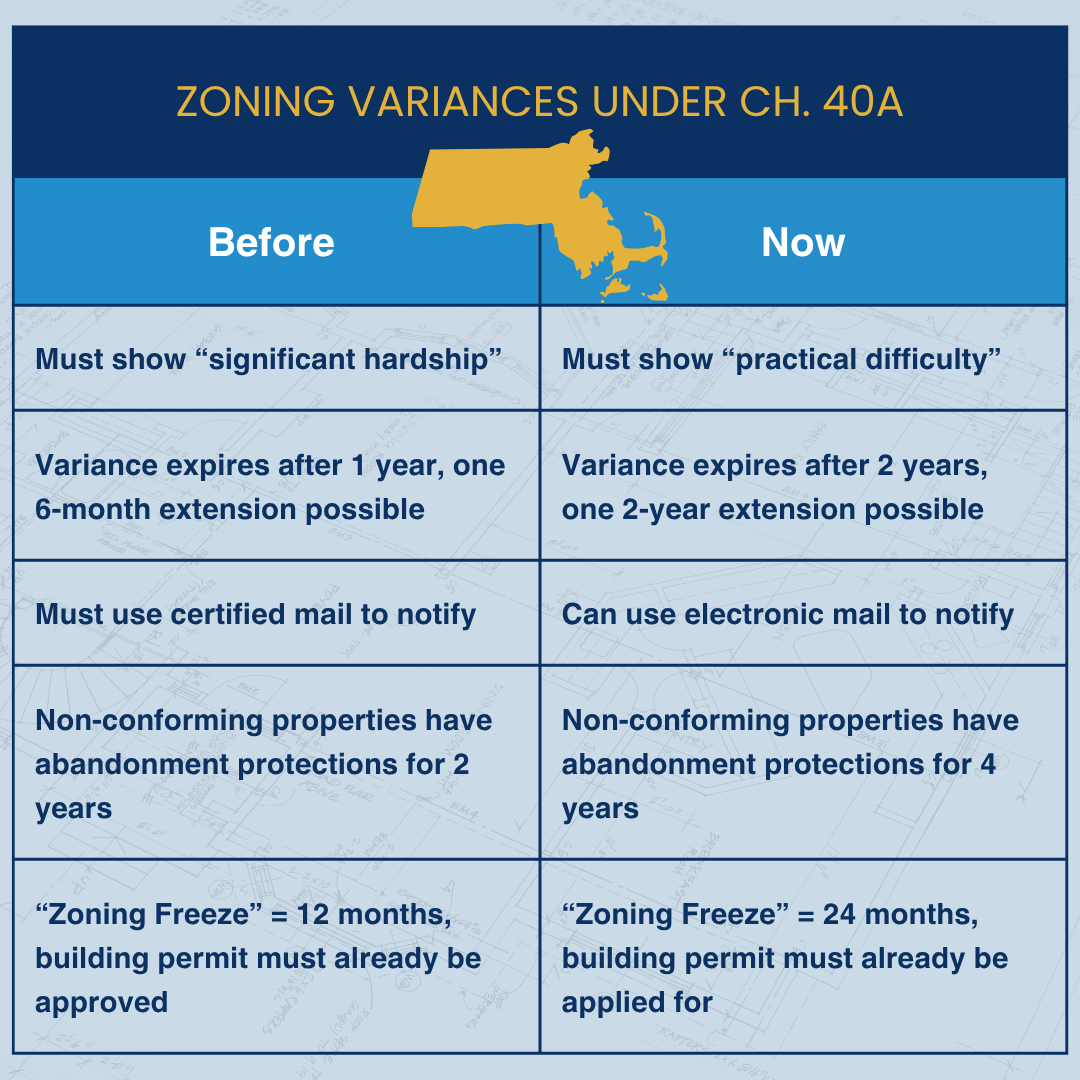
Changes to MGL Chapter 40A make it easier for property owners seeking zoning variances to complete their projects and create more housing units. (Image License: CC BY-SA 4.0 MassLandlords, Inc.)
What Is a Zoning Variance?
If you want to make a change to your property that is not allowed under your town’s existing zoning regulations, you may need to request a variance in order to complete your project. You might need an exemption from setback rules because your new renovation will place your home’s exterior wall too close to the neighbor’s property. Or your new porch might be two feet too close to the street.
Seeking a variance can be very difficult and time-consuming. If one is granted, it’s not a permanent exception to the rules. You need to complete your project within a certain time frame, or your variance will expire.
Homeowners and housing providers looking to make changes to their properties will still have to get a variance for most things not expressly allowed under municipal zoning laws, but Gov. Healey’s changes stand to make the process easier.
How Variances Changed With the New Budget
When Gov. Healey signed the FY27 budget into law, the zoning variance changes also became law. There are several key areas that make getting a variance and completing a project before it expires easier, which we’ll go over here.
Applications No Longer Require Demonstration of Substantial Hardship
Prior to July 2026, obtaining a variance in Massachusetts required you to prove that not getting an exemption to existing zoning regulations would cause you substantial or significant hardship. In other words, you essentially needed to show that not getting the variance would make you unable to use your property.
Now, people seeking a variance need only show that “strict enforcement of the ordinance or by-law would result in practical difficulty.”
In considering whether to grant the variance, zoning boards will also need to consider other factors, including the need for housing. Whoever is in charge of granting exceptions will also need to consider whether the practical difficulty relates to the property’s soil, shape or topography; whether not granting the exemption would impose financial hardship; whether another method could be used to achieve the same result; and whether the difficulty is self-created.
Variances Expire in Two Years, Not One; Extensions Also Longer
Under the old regulations, if you were granted a variance, you had one year to complete your project before the exception expired. This expiration has now been extended to two years. Importantly, this two-year timeframe now excludes any time you spend obtaining other permits, including any appeal time.
Before July 2026, zoning boards could only grant one six-month extension for a variance that was set to expire. The extension time has now increased to an additional two years, allowing more time to complete a project.
Ok, so the new zoning law changes don’t make creating new housing quite this simple, but the updates to Chapter 40A will certainly make it easier to get variances for new construction. (Image License: CC BY-SA 4.0 MassLandlords, Inc.)
Notification Methods Have Been Modernized, In Theory
Under Chapter 40A, people seeking zoning variances and other special permits had to notify the public of their intent in three ways before a hearing. They had to post a notice at city hall, publish a notice in the local newspaper, and send notice to affected properties by certified mail.
Now, you must still post notice at your city or town hall and publish your intent in the newspaper, but you may notify affected property owners via email. The law is unclear whether municipalities will have email addresses for said property owners, which may mean you are stuck using certified mail anyway.
Protections for Zoning Freezes and Nonconforming Properties Extended
Finally, property owners seeking a zoning variance will have greater peace of mind surrounding potential changes to local zoning ordinances, as well as more time to deal with nonconforming properties.
A “zoning freeze” is protection against zoning bylaw changes for planned projects. Such a freeze locks in current zoning regulations for a given period of time. Changes made to the zoning bylaws during the freeze may not apply to an existing project, as long as it is in the correct stage to be eligible for protection.
Before the changes to Chapter 40A, projects would have to conform to any zoning changes unless all variances and permits were approved and the project was already underway. The freeze was good for 12 months, as long as you already had your building permit.
Now, your project is protected from zoning changes during the application process as well, as long as your permit was already properly applied for at the time the bylaws were changed. The zoning freeze is now 24 months.
Sometimes, existing residential structures do not conform to zoning regulations. Previously, you would need a special permit to alter these structures. Now, certain changes can be made by right as long as the extension or alteration complies with the existing zoning requirements for height, number of stories and setback.
Previously, non-conforming residential properties that were not used for two years could lose their grandfathered status. The recent changes to 40A now allow property owners four years before the property loses those protections.
Key Takeaway
Overall, the new variance regulations stand to help increase housing production (and certainly won’t hurt it). While there is likely to be pushback at the local level depending on the variance requested, this gives people a little more breathing room to get their ducks in a row.
This article goes on to:
- Give specific suggestions to use the new variance law.
- Examine a case study in Worcester where new residential units were created.
- Consider the impact of one big, possible policy change.
Join us, or log in as a member, to read more.