
MUC Receives State Grant to Launch Two Biodiversity Projects
. Posted in News - 0 Comments
By Eric Weld, MassLandlords, Inc.
MUC, the Massachusetts Urban Conservancy, Inc., a 501(c)3 charity created by MassLandlords, was awarded a $22,000 state grant in May 2026 to support two biodiversity protection and restoration projects in Worcester and Randolph.
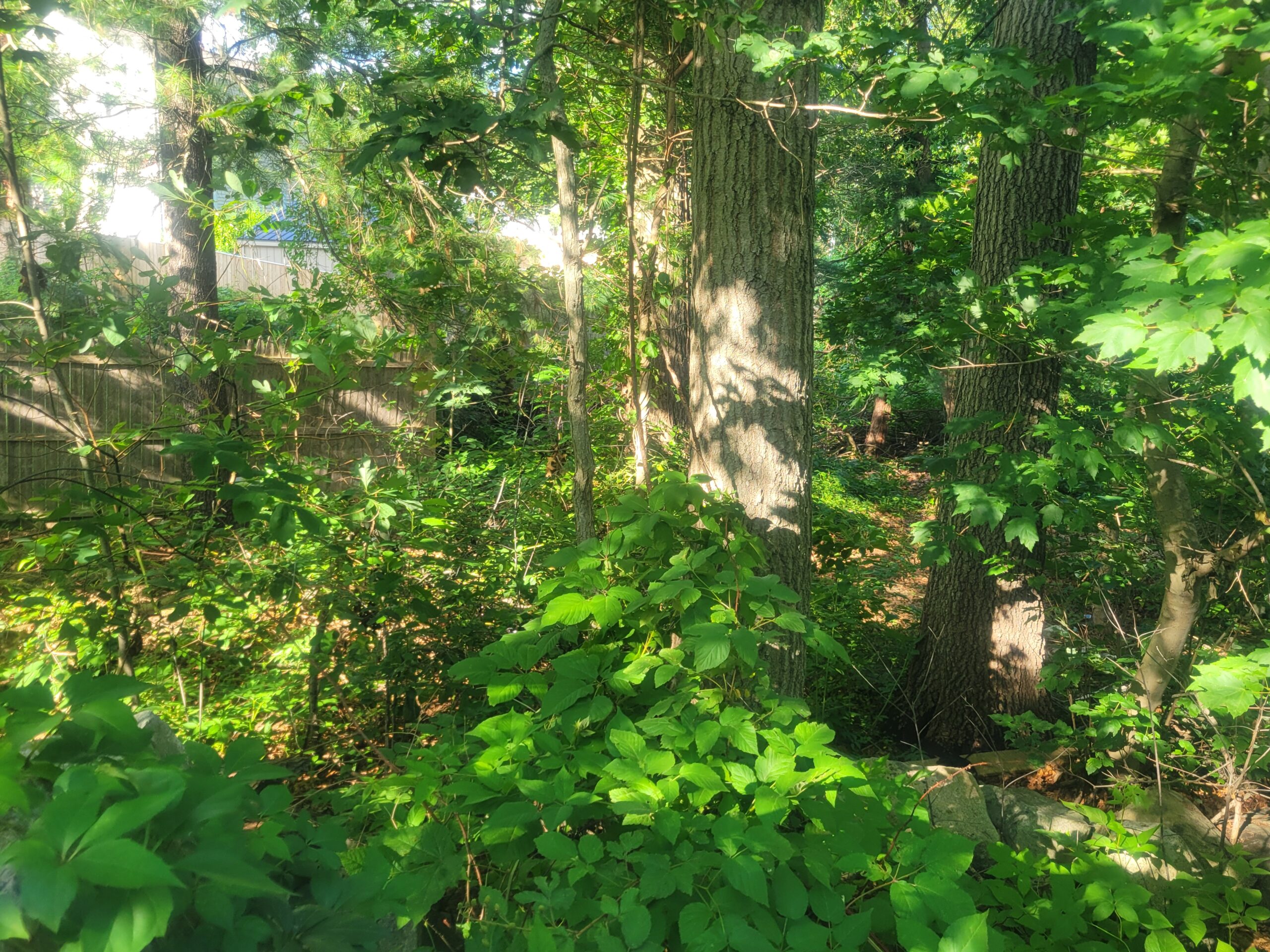
This small patch of land in Randolph, was pledged to MUC by the Sudnovsky Family Trust. The land is untended and overgrown with invasive vegetation, a nature dead zone empty of pollinators, small animals and native plants. We plan to remove invasives, restore biodiversity and create a healthy ecosystem welcoming of pollinators. Image: CC BY-SA MassLandlords
MUC received the funding through the Land Conservation Assistance Grant from the Executive Office of Energy and Environmental Affairs (EEA). Announced in fall 2025, this is a new grant intended to protect undeveloped land in the state for conservation and outdoor recreation. The EEA grant is designed to support project expenditures over two fiscal years, FY26 and FY27 in this case.
Combined with funds raised through a GoFundMe campaign, the grant enables MUC to move forward with acquiring two parcels of unbuildable land. The parcels were pledged for donation for the purpose of conserving them as undeveloped land and enriching their biodiversity and restoring pollinator habitats.
The grant funds will be used to cover closing costs around deed transfers, as well as contracting for boundary surveys, environmental assessments and potential actions stemming from the information collected from those services.
Following these preliminary steps, MUC intends to continue seeking funding to remove invasive plants and trees from the land, and purchase and plant native vegetation there. Those steps are important for protecting and restoring biodiversity and pollinator habitats.
We will also eventually create and install signage on the properties, both directional/informative and commemorating the land donors, using separate funding.
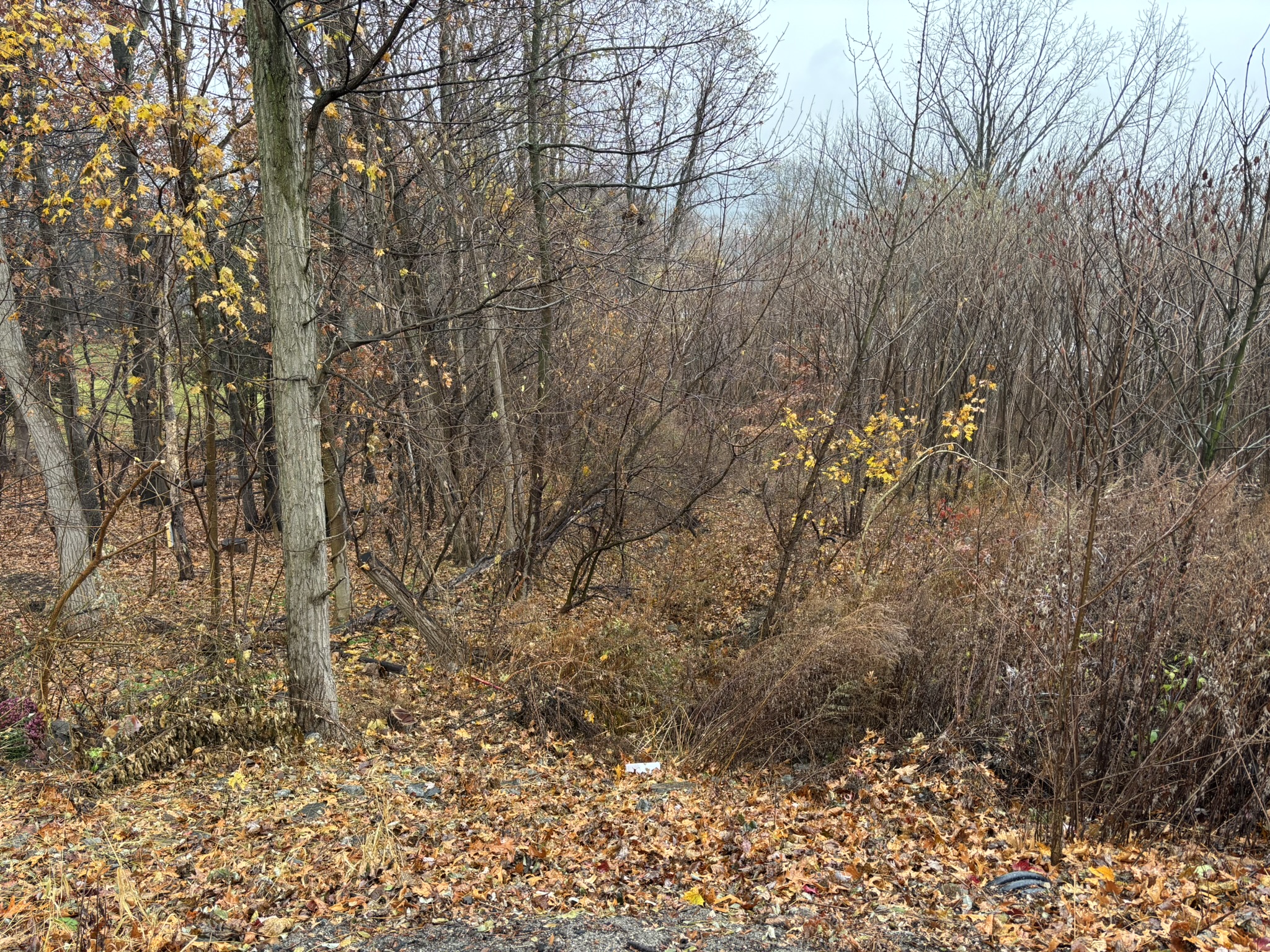
This invasively overgrown lot on Keach Avenue in southern Worcester, was pledged by MassLandlords member Mary Palazzo. The parcel, which lies beyond the road’s end, has been deemed unbuildable by the city. As with our Randolph property, we plan to remove invasives and re-enliven this property with native plants and trees. Image: CC BY-SA MassLandlords
Benefits of Trees and Nature for Health, Economy, Better Grades and Much More
MUC was incorporated in January 2025 with the intention of acquiring and protecting unbuildable lots in urban areas across Massachusetts, to restore biodiversity and grow and connect pollinator habitats on the lands.
We know from our associations with property owners through MassLandlords that there are hundreds of small, unbuildable lots in the state. Many are in urban areas. These lots may be left over from development projects or deemed too small for building, on a wetland or a slope, or some other reason for development unsuitability.
Meanwhile, we also know that urban areas – environmental justice communities in particular – are lacking in native greenery and open, natural spaces that are proven to enhance life for residents in many ways. We have frequently cited studies showing that even modest exposure to nature in urban areas improves residents’ mental and physical health, economy, sociability, academic performance and other metrics.
While some urban or residential areas, such as our two lots pledged in Randolph and Worcester, host empty, green lots, they are overgrown and filled with invasive vegetation like bittersweet and knotweed. Those invasive plants, not native to our region, muscle out other plant species and tend to take over the lot. Invasive plants also offer far fewer food options for small animals and pollinators. The effect can be a lot that appears green, but is full of useless plants and weeds, and empty of animals, insects and healthy nature.
At the same time, biodiversity – a healthy balance of plants and animals that creates complementary conditions for growth of many species – and animal habitats, especially those of pollinators, are disappearing from urban areas. We are amid one of history’s largest extinction eras, in which tens of thousands of plant and animal species are dying out, to the detriment of our food and other life resources, and potentially to our future existence.
Starting with the two lots we are acquiring with this EEA grant, we at MUC envision building a statewide network of small, undeveloped parcels rich with biodiversity and native vegetation. Local residents and kids will be welcome to explore our semi-wild lots. They will be able to experience managed forest environments free of invasives, and know what healthy, biodiverse nature, full of pollinator and animal activity, looks like right in their own backyards.
Benefits of Donating Land to MUC
When we reached out to MassLandlords members in 2025, inviting owners of unbuildable properties to donate the land to MUC, we were heartened by the response. We received interest from landowners in Springfield, Randolph, Worcester, Dorchester and other communities.
The landowners, as we emphasized, can save thousands by clearing the unbuildable lands from their annual tax burden, while also no longer budgeting for maintenance or insurance coverage for the land. An added bonus is knowing the land they donate to MUC will be protected forever as green space, and enhanced as biodiverse lots for native plants and animals to flourish, providing a boon to the environment and surrounding communities.
The two parcels of our grant-funded projects were among the first to be pledged for donation.
Randolph
The lot in Randolph, a 0.14-acre strip of invasively overgrown, untended forest on Millhouse Avenue, was pledged by the Sudnovsky Family Trust. The Sudnovsky family, including trust executor Don Sanders, lived in a house next to the donated lot for many years.
The lot is situated in a residential neighborhood, in an environmental justice community, sandwiched between house lots, but is not zoned for building.
The Sudnovsky Family Trust donated their land to MUC as a way of preserving the natural, semi-wild patch, improving its horticultural health, and ensuring that it will remain undeveloped.
Worcester
The Worcester lot, on Keach Ave., is also less than an acre and also invasively overgrown and untended for many years. The lot was pledged by Mary Palazzo, a MassLandlords member and resident of Worcester.
The Keach Ave. lot is also located in a residential, environmental justice neighborhood, but is removed from the end of the road and only accessible on foot.
Are You Paying Taxes on Unbuildable Land?
We are grateful to the Sudnovsky Family Trust and to Mary Palazzo for their donations that will launch MUC on its first of many biodiversity and pollinator restoration projects.
We are also grateful to other landowners who responded to our outreach to donate their unbuildable land.
If you own land that has been designated unbuildable, because it’s too small, on a slope, in a wetland, of an unsuitable shape or any other reason, email us at eweld@muc.bio to discuss the possibility of donating it to MUC.
Maybe you don’t want to continue paying property taxes year after year with no return on that investment. Maybe you see no reason to keep paying for liability insurance coverage on land that you will never use. Or you’re tired of hiring landscapers to keep the land trim and cleaned up.
If so, we want to talk to you about possibly donating the land, for your cost savings and for MUC’s mission of building back biodiversity in our state and providing a series of habitats for pollinators. Pollinating animals like butterflies, bees, bats and birds are necessary for the growth of plants we all use for food, medicine, clothing, shelter and countless other life-sustaining purposes.
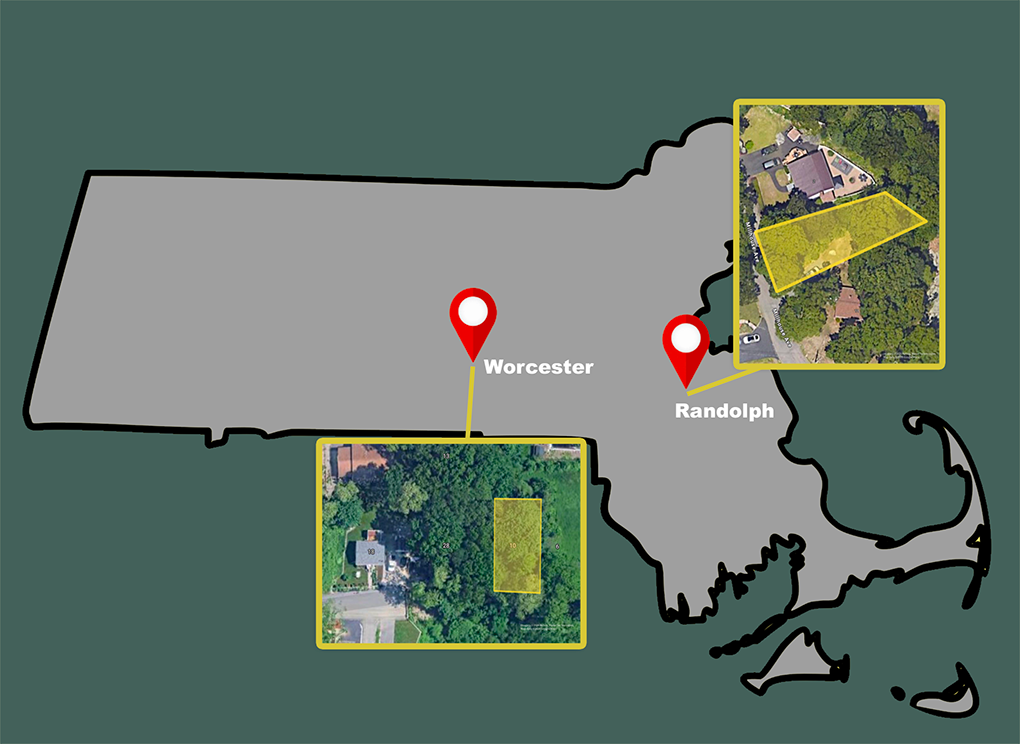
MUC is funded to close on two land parcels, locations shown here in Worcester and Randolph with aerial views showing property lines. Image: MA State Map Derivative of Airbus Maxar Tech Google Map 2026
Contribute to the MUC Mission
We are also grateful to our members and others who have donated funding and offered ideas for MUC’s efforts to restore biodiversity. After closing on these lands, we will need additional assistance to remediate, and we always want to hear more from you. You can make monetary donations through our GoFundMe campaign.
We also want to connect with local science teachers in Worcester and Randolph, to partner in creating educational units using our nature laboratories on these lands. If you know of science teachers in these communities, help us get in contact. When we connected with Springfield science teachers about this prospect around another potential land donation, they were grateful and excited about the teaching possibilities.
We can also always use donations of equipment, expertise and knowledge. Get in touch and share your thoughts and feedback. Contact eweld@muc.bio or info@muc.bio and help us make Massachusetts more biodiverse and pollinator friendly.