Landlord Basics: Lead Paint Laws in Massachusetts
By Kimberly Rau, MassLandlords, Inc.
Did you know if your rental unit was built before 1978, it could have lead paint? Lead paint is harmful, especially to children. Because of this, Massachusetts law says children under the age of 6 cannot live in housing that has lead paint.
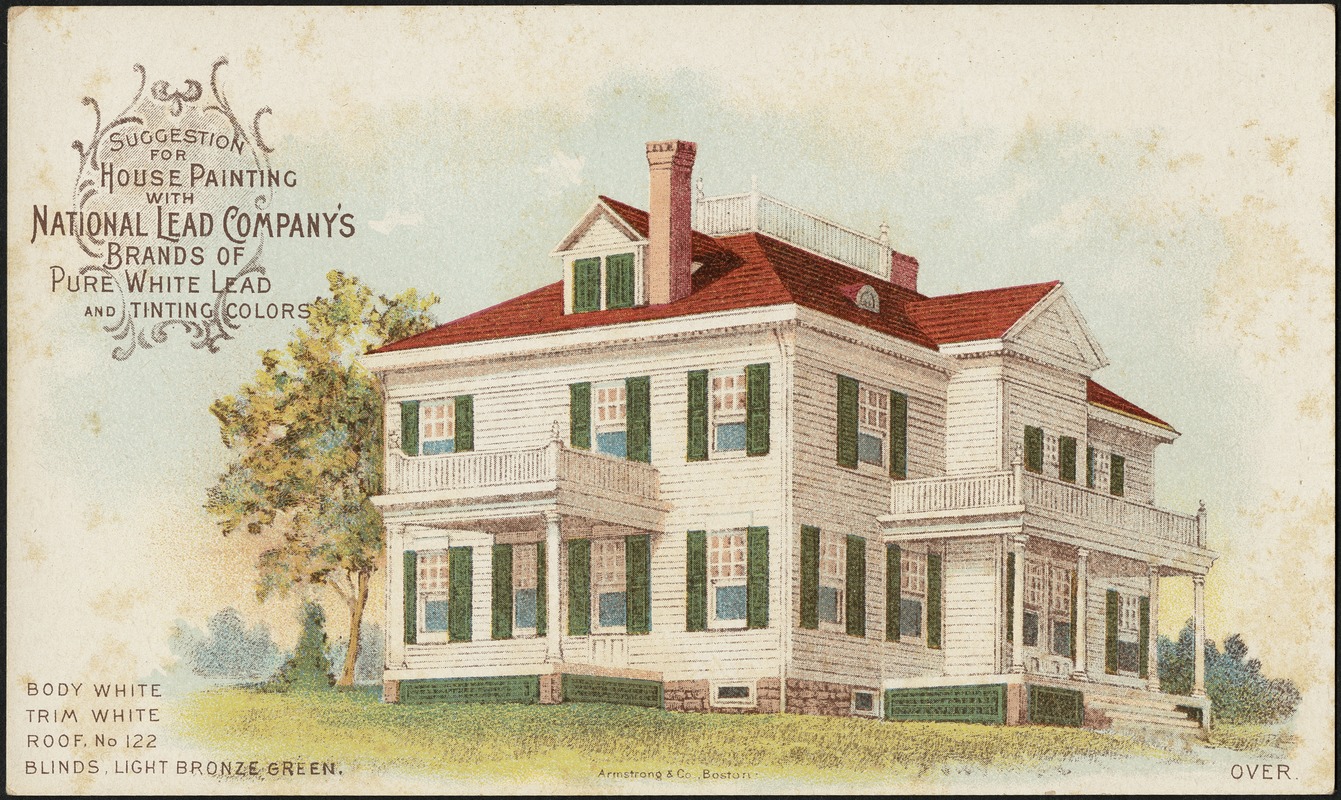
Lead paint was popular for its vibrance and durability, but it is incredibly toxic to people. The effects weren’t well known in the late 1800s, when this trade card was printed. (Image: public domain)
But Massachusetts law also says you cannot refuse to rent to families with young children. That’s considered discrimination. You need to know the state’s laws about lead so you don’t end up hurting someone, or have to pay fines or damages.
Why Is Lead Paint Harmful?
Lead paint was used for many years because it was very easy to use and very durable. Unfortunately, lead paint is also very dangerous.
Ingesting a lot of lead can kill you. Ingesting even a little bit can hurt you. It can lower your IQ, and impair your ability to make good decisions. Lead poisoning can make you more likely to commit crimes. Lead paint was banned nationwide in 1978. But it can still be in older homes.
Little kids put things in their mouths all the time. It’s very easy for a child who is around lead paint to ingest some, either on purpose or by accident. This is why Massachusetts is so strict about deleading rental units. There is no level of lead considered safe for a child.

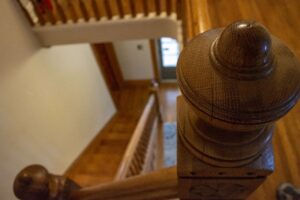
You couldn’t buy lead paint on the open market after 1978, but houses constructed before then could still have lead paint. (Image License: derived Unsplash)
Massachusetts Laws About Lead Paint in Rentals
State law says that it is unlawful to rent to families with children under 6 if the apartment has lead, or an unknown lead status. Buildings constructed after 1978 will not have lead paint. Older buildings still could.
This is important: In Massachusetts, landlords are “strictly liable” for lead injuries. That means even though a child could have been exposed to lead elsewhere, you will be held responsible for lead injuries, unless you can prove your apartment is deleaded.
Since you cannot deny housing to families with children, that means you must delead before renting to them. If you rent to someone who later brings a young child into the home, you must delead then.
If you know your rental has lead, or aren’t sure, you should take care of it as soon as possible. It’s easier to delead when no one is living in the unit.
Deleading Starts With an Inspection
Deleading is a big job. First, you need a qualified lead inspector to come examine your property. The inspector will check inside and outside, and measure lead levels with specialized equipment. They will check all walls and painted surfaces.
The results of this inspection will tell you which surfaces have lead and need to be treated or replaced.
Deleading Your Rental
Once you know what you need to do to make your rental lead-safe, you can make a plan. Deleading is different from lead-safe renovation. There are four ways to de-lead your property.
There are four ways to delead.
Not all choices are right for every situation. A professional can help you decide. You can:
- Remove the object that has lead, and replace it with something that is lead-free. Doors and windows can be replaced. So can trim.
- Cover up the object if it cannot easily be removed. A new dropped ceiling can cover an old plaster ceiling that has lead paint.
- Use special paint and fully cover up (encapsulate) the objects containing lead.
- Scrape or chemically remove the lead and then repaint.
Whatever choice you make, deleading can take a long time, and can be expensive. Deleading is also risky, because it could generate toxic waste.
Different methods have different risks.
Removing a door is low-risk, because a door comes off cleanly at the hinges. Removing a window is moderate risk, because a window casing must be demolished. Using a chemical paint stripper is high risk.
Regardless of the risk, you cannot do any deleading yourself unless you have been specifically trained or hire someone who is.
Delead the unit yourself, or hire someone?
You can hire a professional, or you can take special tests or courses to become trained to do it yourself.
Doing it yourself is cheaper. It may take you longer than an experienced professional to do the work. A professional is more expensive, but then you don’t have to take the time to do it. Remember, you cannot do any deleading yourself until you are trained.
If you want to use high-risk methods, you will need to hire a professional.
Whatever way you choose to delead, your unit will need to pass an inspection after the work is complete.
Depending on what needs to be done, you have two options: 1) do a little at a time, or 2) do the whole job at once.
Option 1: Get a letter of interim control.
You don’t have to delead all at once if you are looking at a big job. You can get something called a letter of interim control.
This means, after your inspection, you (or a professional) take care of the biggest problems first. Once you have the most urgent items completed, you can ask for an interim inspection.
A letter of interim control is not the same as a deleading certificate. You will still have to get your deleading certificate eventually. You have two years from getting your letter of interim control to complete the process.
Option 2: Delead all at once.
Your other option is to delead all at once. This is more expensive, but it means the job is done once it passes inspection and you get your deleading certificate.
If you can afford to delead all at once, you probably should.
This is a good choice if the rental is currently vacant.
Tax Credits Are Available For Deleading
The cost to delead will depend on what needs to be done. In Massachusetts, the average cost to delead a single rental unit is $6,000. But it can be as high as $30,000.
You can get a deleading tax credit of $3,000 per unit to help with the cost. For decades, this tax credit was stuck at $1,500, but in 2023 we worked to get it doubled.
Your city or town may also offer financial assistance through deleading programs. Check with your municipality to see what is available.
Deleading if Someone Is Living in the Rental
It’s easier to delead a vacant unit, but sometimes you don’t have that choice. If your renter tells you they are having a baby, or their grandchild is coming to live with them, you have to delead your pre-1978 rental immediately.
If you must delead an occupied unit, you will need to relocate your renters until the job is done. Sometimes, the job will only take a day. Other times, it could take longer. You are responsible for paying for their accommodations while the work is being done.
Conclusion
Deleading is not only the right thing to do, it’s the law. As a bonus, doing so not only keeps people safe, it increases your property value as well. Check with your city or town to see what grants may be available to assist with the cost of deleading, and don’t forget about your tax credit.
This is a basic overview of Massachusetts’ lead paint law and deleading practices. For more details, read our full lead law page.