
Housing for Massachusetts Coalition Spearheads the ‘Vote No on Rent Control’ Campaign
. Posted in News - 0 Comments
By Eric Weld, MassLandlords, Inc.
Think of Housing for Massachusetts as an organizational hub at the center of a multi-spoked effort to defeat the rent control proposal heading for the November ballot.

MassLandlords is part of the Housing for Massachusetts coalition, a statewide campaign to defeat the rent control 2026 proposal headed for the November election ballot. Vote No on Rent Control. (Image: Copyright Housing for Massachusetts with permission.)
Housing for Massachusetts, as the group’s website states, is a coalition of all the parties committed to opposing and quashing the destructive rent control proposal working its way onto the November 2026 ballot: property owners, housing providers, real estate professionals, affordable housing developers and housing advocates.
Not to be confused or conflated with the pro-rent control groups Homes for All Massachusetts or Keep Massachusetts Home, the coalition that filed the rent control ballot initiative, Housing for Massachusetts was launched in December 2025 specifically to lead and organize the campaign to defeat rent control 2026.
The coalition is spearheading a campaign against the initiative, partnered with MassLandlords, Greater Boston Real Estate Board, the Small Property Owners Association, Massachusetts Association of Realtors, NAIOP Massachusetts – The Commercial Real Estate Development Organization – and individual donors and housing advocates. “Vote No on Rent Control,” urges the coalition’s simple, straightforward slogan.
The Housing for Massachusetts coalition is chaired by Conor Yunits, executive vice president at Issues Management Group and a communications strategist with a background as a spokesperson, media and government relations and communications director for elected officials and clients in technology, insurance, real estate and automobile industries.
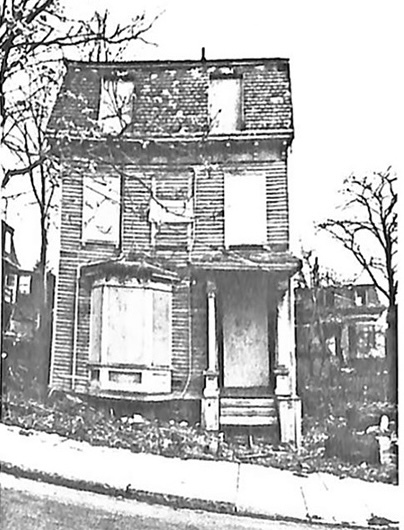
Scenes like this boarded up, dilapidated house became all too familiar during Massachusetts’ rent control past. MassLandlords is working as part of the Housing for Massachusetts coalition against rent control 2026 to make sure it doesn’t become law and to avoid returning to the urban blight illustrated by this eyesore. (Image License: CC BY-SA 4.0 MassLandlords, Inc.)
Housing for Massachusetts Events
Housing for Massachusetts hosted a press conference near the State House in Boston in early February, in which it formally announced the launch of its anti-rent control campaign. The group also sponsored a No on Rent Control rally in Holyoke attended by the city’s mayor, Joshua Garcia, who has publicly stated his opposition to the policy. The coalition continues to host several other events across the state, educating voters on the dangers of this policy.
In these public events and statements, Housing for Massachusetts and its supporters reiterate the many proven harms that rent control imposes on cities and states that have tried rent-restriction policies. From Massachusetts in the 1970s through 1994, and today in St. Paul, Minn., and Montgomery County, Md., to name a few, rent control has repeatedly doused housing development and reduced property values of all properties, even non-controlled. It has diminished overall housing stock, ultimately raised average rents, and benefited higher-income renters, not the lower-income residents it is intended to help.
The rent control 2026 proposal, as Housing for Massachusetts and its partners explain, would be the toughest statewide rent control in the country. It would impose a 5% hard cap on rent increases within a 12-month period, or the rate of inflation as measured in a Consumer Price Index, whichever is lower. As Yunits has pointed out publicly, the average rate of inflation this century has been about 2.5%, meaning in most years rent increases would be restricted to approximately that rate. This proposal would be the most restrictive mandatory statewide policy in the nation.
Rent control 2026 would also, notably and unusually, not allow vacancy decontrol, which allows landlords to reset rents to market level between tenancies. It would exempt owner-occupied rentals with four or fewer units in one building (as long as the building is not under a trust or LLC), and all new housing within the first 10 years.
The origins and history of rent control’s decades-long destruction is detailed pictorially in rentcontrolhistory.com, a MassLandlords public resource.
Housing Policy Alternatives To Rent Control
Instead of a mandatory one-size-fits-all rent restriction – which would benefit a relatively small percentage of renters at the expense of all other residents – Housing for Massachusetts and its coalition partners advise stronger solutions for the long-term housing and rental housing markets.
Housing for Massachusetts coalition partners have emphasized that the key to managing rent prices is increasing housing supply, through zoning and regulatory changes and other measures. Zoning changes that allow more density, for example, could help boost housing supply. “We’re open to anything that won’t constrain the supply of housing in this housing crunch,” Yunits recently told Realtor News, the magazine of the National Association of Realtors.
Meanwhile, to help renters struggling with housing costs, the coalition encourages policy makers to consider solutions such as permitting reform, rental assistance and targeted tax credits for such renters, as recently suggested by Jonathan Gruber, professor of economics at MIT.
Specific rental assistance programs, such as RAFT in Massachusetts, have proven efficacy in helping lower-income, disabled and at-risk residents remain in their homes. And importantly, rental assistance that targets qualifying households would not carry the harmful effects that come with rent control, such as curtailing housing production, lowering overall property values or inadvertently benefiting higher-income renters.
If it were to succeed, the rent control proposal headed for the ballot would harm a wide swath of businesses across the state, so it makes sense that the Housing for Massachusetts coalition is broad and disparate in its professional and industry representation.
As Yunits often reiterates, everywhere rent control has been put in place, it has failed. He points to New York City as one example, in which tens of thousands of apartments sit vacant, many of them because it would cost more to rent and maintain the units than would be gained in rent within the city’s controlled structure.
To be sure, one of the massive challenges for the Housing for Massachusetts coalition is getting the word out about rent control’s harms, especially against loud voices that are deceptive and intentionally confusing in their description of the rent control proposal.
To support Housing for Massachusetts and the campaign against the nonsensical rent control proposal, visit the Housing for Massachusetts website, donate, join the fight, and vote no on rent control.