
Debate Submissions Highlight Biggest Issues With Rent Control Ballot Question
| . Posted in News - 0 Comments
By Kimberly Rau, MassLandlords, Inc.
Cambridge City Council candidate Zion Sherin invited MassLandlords to submit questions and answers for a rent control proxy debate to be held in Cambridge. Keep Massachusetts Home, the group backing the 2026 rent control ballot question, reportedly received the same offer.
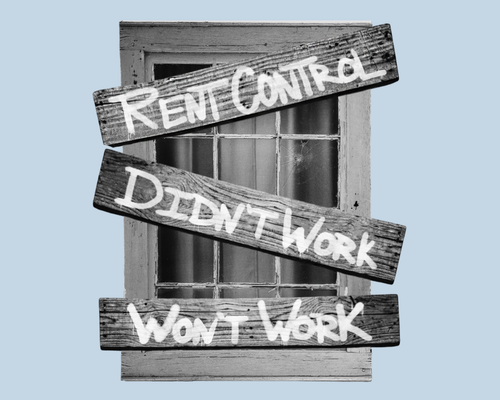
The 1970s-’90s showed us rent control didn’t work, and it won’t work now. (Image License: CC BY-SA 4.0 JRau for MassLandlords, Inc.)
The parameters were simple: Submit a 500-word opening statement, and five questions about rent control, with answers. Answers were limited to 500 characters or less. Sherin would ask the questions aloud at the debate, then read the answers. We submitted six questions and allowed Sherin to decide which to ask.
We are reproducing our submission here in its entirety, with added links for ease of research. Most of the citations linked in the questions portion of this article were documented as footnotes in the original submission.
MassLandlords Executive Director Doug Quattrochi wrote the opening statement for our side of the debate. Questions were a collaborative effort between Quattrochi and Kimberly Rau (MassLandlords writer/editor and the author of this article).
The opening statement and answers are designed to educate those who are either uninformed or misinformed about rent control, as well as those who may consider themselves outside the issue (such as non-landlords, including single-family property and condo owners). The reality is that rent control doesn’t work, and should the ballot question pass this fall, it will affect everyone in Massachusetts, regardless of whether they are ordinary homeowners, renters or landlords.
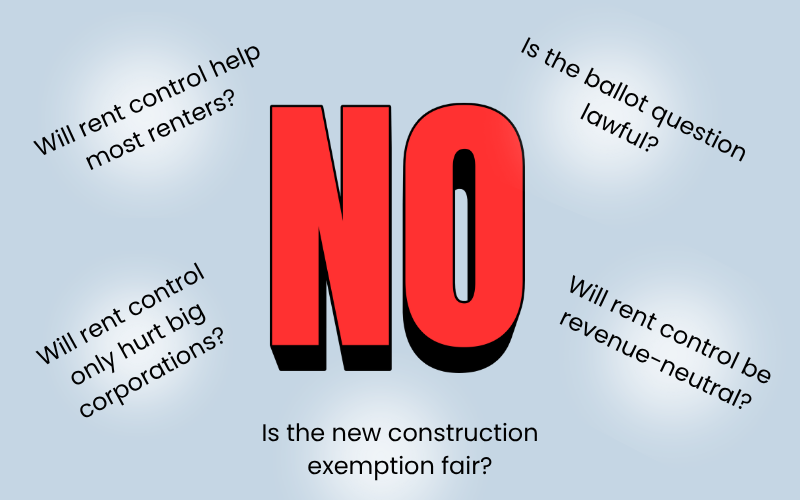
Despite what advocates are saying, rent control would be bad news for Massachusetts. (Image License: CC BY-SA 4.0 MassLandlords, Inc.)
Opening Statement Recognizes Need for Housing, States Rent Control Is Not Solution
Our debate opening statement totals 483 words, and reads as follows:
“Rent control helps people who have an apartment the moment it passes into law. It hurts everyone else forever after. We know because Cambridge had rent control until landlords unexpectedly repealed it in 1994. This created a natural experiment for economists and sociologists to study. Under rent control:
- housing was maintained less well,
- there were fewer apartments for rent,
- it was harder to qualify for apartments,
- Cambridge spent a lot of money enforcing rent control,
- Cambridge lost tax revenue from reduced assessed values, and
- landlords were gravely injured.
John McAdams refused to rent his property under rent control, so the Cambridge police broke into his building and placed Steve Meachum, of City Life/Vida Urbana, in there as a squatter. There’s a picture of Steve at our site RentControlHistory.com. Emil and Donna Javorski were convicted for a new crime, not notifying the rent board of a change of address. Homeowners showed up wearing paper bags at city council meetings because it was also a crime to live in a condo that could instead be used to create rental housing. George Tarvezian was sentenced to six months in jail for not renting his apartments fast enough. Roberta Dowling was fined $25,000 for not renting an apartment fast enough. Vincent and Laura Bologna were bankrupted with fines for inadvertently charging too much rent, while their renters rented to subletters at full market rent. Peter Petrillo died of a heart attack after being ordered to jack up his building and convert the basement into a new unit. Rent control sounded reasonable. But because it was fundamentally detached from reality, it went completely off the rails.
The reason landlords were able to repeal it in 1994 is simple: Under rent control, rents were lower and landlords had less money to repair their properties. This meant neighborhoods looked dumpy and towns lost tax revenue. And the same would apply today. Tufts University estimates that if this rent control question passes, towns statewide will have to cut 10% of their budget. That means teachers, firefighters and city staffers working to prevent climate change and improve road safety will be let go. We cannot afford this.
Rent control is a terrible policy because the people who advocate for it do not understand how market forces work, do not talk to landlords to solve problems, and do not care to listen to our side. MassLandlords sued the state because during the pandemic, people of color, single moms, and immigrants were being denied rental assistance at unfairly high rates. We fought in court for two years but not a single renter organization came to our aid.
Long-term, we need a lot more housing. Short-term, we need a safety net that catches everyone. Rent control has been tried and it failed. We want to build toward the 2070s, but instead we’re being pulled back to the 1970s.”
Question 1: Will rent control help Cambridge renters?
If you have an apartment the day rent control is enacted, you will save money, until you have to move. Under rent control, renters move less, so rent controlled units rarely hit the market. The available exempt apartments will rent at high prices. It happens in New York and San Francisco all the time.
If you do find a rent-controlled apartment, the application will be strict. In Cambridge during rent control, thousands of apartments went to wealthy professionals who could always pay the rent.
Question 2: Is the rent control ballot question legal?
No. The state constitution says we cannot put certain things to a popular vote including certain rights to compensation. We can't have a question about rent control, because Chapter 40P already allows rent control as long as you reimburse landlords. This won’t be in the official ballot description this fall. We asked the attorney for Keep Massachusetts Home if she would edit the ballot description to explain she was deleting our right to compensation. She said that would “create confusion.”
Question 3: Is the ten-year exemption for new construction fair?
No. The text exempts new development for ten years. When developers make a spreadsheet model to calculate the return on their investment, they have 20 or 30 rows for 20 or 30 years. Developers are already pulling out of Massachusetts. In Baltimore, they have a 23-year exemption. New construction has fallen 97%.
Question 4: If not rent control, what do you propose instead?
We need more housing, and we need a safety net that works. We support zoning reform in fancy places like Arlington, Lexington and Weston that aren’t creating enough housing opportunity. Cambridge is already doing its fair share. And the system for rental assistance needs work.
We could also utilize Chapter 40P the way it was intended. We put together a proposal showing how cities could enact rent control at very little cost to taxpayers. We submitted it to the legislature, but never heard back.
Question 5: Doesn’t this bill just restrict big corporate landlords?
No. Small landlords with only a few units may put their rentals in LLCs to protect themselves. Anyone with an LLC will have to comply, even if they owner-occupy. So will landlords with single-family homes, duplexes & condos they don’t live in. Rent control will hurt those people the most. Big companies can absorb the losses rent control will bring. The small landlord won’t be able to stay in business. If you vote for this, you are voting against your neighbors as well as big companies.
Question 6: Is the rent control ballot question really “revenue neutral” as was claimed at the March 17 hearing?
No. Someone is going to have to enforce the ballot initiative if it is enacted. Whether that’s the courts, rent control boards, or cities, it's going to cost money.
Second, rent control hurts property values, including surrounding properties. That means lower tax assessment and less revenue to the city.
Plus, the proposed rent cap is inflation or 5%, but there is no cap on taxes, insurance or utilities. Artificially constricting just one part of the market is never “revenue neutral.”
Conclusion: Talk to Your Neighbors About Rent Control
We are hoping the Supreme Judicial Court will agree that the rent control initiative is unconstitutional and remove it from the November ballot. They had not decided on our case, which was heard on May 6, as of press time for this article. In the event they do not side with us, we are prepared to fight rent control all the way to the voting booth.
That’s going to take money, time and your support. We hope you can volunteer some time to help fight rent control. We hope you are able to donate a small portion of your gross monthly rent to assist financially. But even if you aren’t in a position to do those things, please share the truth about rent control with your friends, family and neighbors who may not think they have a stake in the game. They do. Rent control would be bad news for all of us. Please use these talking points, refer to rentcontrolhistory.com, or our stop rent control landing page. Visit Housing for Massachusetts to follow their campaign against rent control, which we are supporting. We need to get the word out: Rent control. Didn’t work. Won’t work.