
Attorney General Drafts Shared Appreciation Mortgage Regulations; Comment Period to End Aug. 7
. Posted in News - 0 Comments
By Kimberly Rau, MassLandlords, Inc.
A final draft of the attorney general’s regulations for lawful disclosure surrounding shared appreciation mortgages is open for public comment starting July 11 through Aug. 7, 2026. The regulations come in the wake of a 2024 law that exempts BlueHub Capital – and any other lenders offering shared appreciation mortgages – from litigation surrounding the product, as long as borrowers receive proper disclosure before closing on the deal.

BlueHub Capital, located at 10 Malcolm X Blvd., Roxbury. (Image: Google Earth)
A shared appreciation mortgage (SAM) is a secondary mortgage attached to a property that allows the lender to take a portion of the home’s equity before the borrower can sell, refinance or transfer the property.
BlueHub Capital is at the center of a class action lawsuit after borrowers claimed they did not receive complete information about what they were signing, or how much of their equity they might eventually owe on their property. In some cases, borrowers owed more than half of their property’s increased value. In September 2025, Superior Court Chief Justice Michael Ricciuti ruled in favor of the plaintiffs in a partial summary judgment, stating BlueHub had violated consumer protection laws when it provided home loans with shared appreciation mortgages to its participants.
The ruling did not address all of the issues in the lawsuit, or damages, which will be determined at a trial currently scheduled for February 2027.
Following the partial judgment, BlueHub announced it was temporarily pausing offering SAMs.
Governor Maura Healey came under fire for the 2024 law that critics said offered special protections to one specific nonprofit. BlueHub CEO Elyse Cherry, whose reported annual income is more than $1 million in salary and other benefits, is a friend of Healey’s.
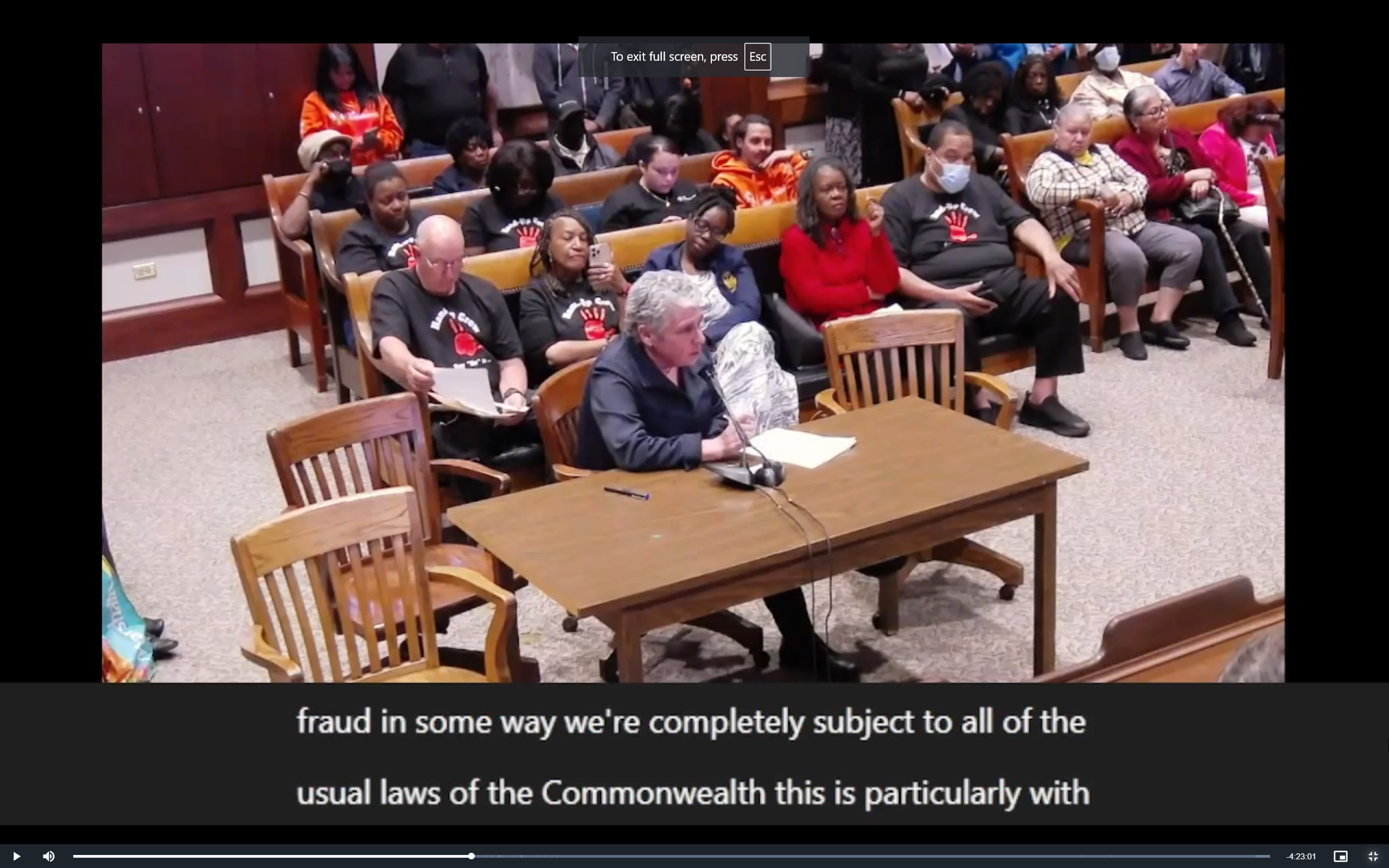
BlueHub CEO Elyse Cherry discusses fraud before the legislature at a hearing in 2023. (Image: Public Domain)
SAM Disclosures Must Be Clear and Unbiased
The regulations, most recently updated May 5, 2026, are filed as 940 CMR 39 outline what constitutes proper disclosure when borrowers sign a loan that includes a shared appreciation mortgage.
Lenders must disclose that the total amount of equity owed may vary, but the maximum a borrower would have to pay appears to be capped based on a formula that calculates maximum appreciation at 6.5% annually. The attorney general’s regulations include a closing document that outlines the maximum a borrower would have to pay on their shared appreciation mortgage if they sold or refinanced within 10, 20 and 30 years.
The regulations further compel lenders to notify the state at least 30 days before closing if they plan to offer a SAM, and state that starting and appreciated home values must be determined by “an unaffiliated third-party state certified or state licensed appraiser whose identity is disclosed to the borrower.”
Annual Statements Required to Borrower and State
Borrowers with a SAM must receive annual statements from the lender that include an estimate of the current property value, and how much would be due on the SAM based on that value.
In the statement, lenders must inform borrowers that the provided valuation is an estimate and subject to change, as well as remind borrowers of the actions that could trigger a payout of the SAM, such as refinancing.
Lenders who offer SAM products must also file annual reports with the state showing how many SAMs were offered during the timeframe of the report. Reports must also document information related to each individual loan, including how much is owed, and demographic and income data, as well as other relevant information.
Absolved Liability Is Limited
The new regulations are clear that liability protections for SAM lenders are limited. Borrowers may not bring a lawsuit against a nonprofit stating they were misled about a SAM if they received proper disclosure about the product. However, borrowers who feel they were a victim of other deceptive practices or violations of the law may still enter into a lawsuit against the lender.
The regulations also make clear that lenders must be honest about the property’s value at the time of signing and going forward.
“A mortgagee may not undervalue the starting property value, inflate the appreciated property value, or otherwise structure the transaction to increase the payment to the mortgagee based on factors other than the appreciation in the value of the home,” the regulations state.
Public Comment Period To End Aug. 7, 2026
Response to the regulations has been swift. At the first of two scheduled hearings before the Attorney General on June 9, 2026, plaintiffs from the original lawsuit and representatives from BlueHub spoke about the proposed regulations. Both sides had filed written testimony as well.
At the hearing, lawsuit plaintiff Nardella Thomas called the regulations “overdue” and said BlueHub’s actions “have disproportionately harmed low income and minority homeowners.”
“The legislative guardrails were stripped away by the Massachusetts economic development bill,” she testified. “Your regulatory framework is the final line of defense.”
BlueHub representative Adam Beattie was present to testify on behalf of the nonprofit. He did not comment on specific aspects of the regulation, instead referring the court to written testimony and noting that some of the regulations will cause “confusion.”
The regulations are in a public comment period that runs July 11 through Aug. 7, 2026, at which point a hearing will be held. MassLandlords staff support the regulations as written.