Rent Control Off the Ballot? Advocates Make 11th Hour Compromise with Mega Real Estate Corporation
| . Posted in policy - 0 Comments
Keep Massachusetts Home reached a compromise with Winn that weakens rent control proposal, still harms renters and mom-and-pop landlords.
Rent control is off the ballot for 2026.
MASSACHUSETTS, June 2, 2026 - In a surprising move at the end of business on Friday, May 29, Trevor Samios, Executive Vice President, Operations Strategy & Solutions of WinnCompanies, emailed a private distribution list to say, “the Homes for All leadership body has officially agreed to the legislative compromise as it is written now. The vote is confirmed. Have a great weekend, everyone!”
Proponents conceded on the rent cap, agreeing to CPI + 5% or 10%, whichever is lower, amounting to $200 rent increases or more on a typical Boston apartment. They also conceded on the statewide mandate and vacancy decontrol.
Corporate real estate interests conceded just cause eviction and a return to 1970s rent control boards.
This is bad news for renters and mom-and-pop landlords who provide naturally occurring, affordable housing. (Story continues below.)
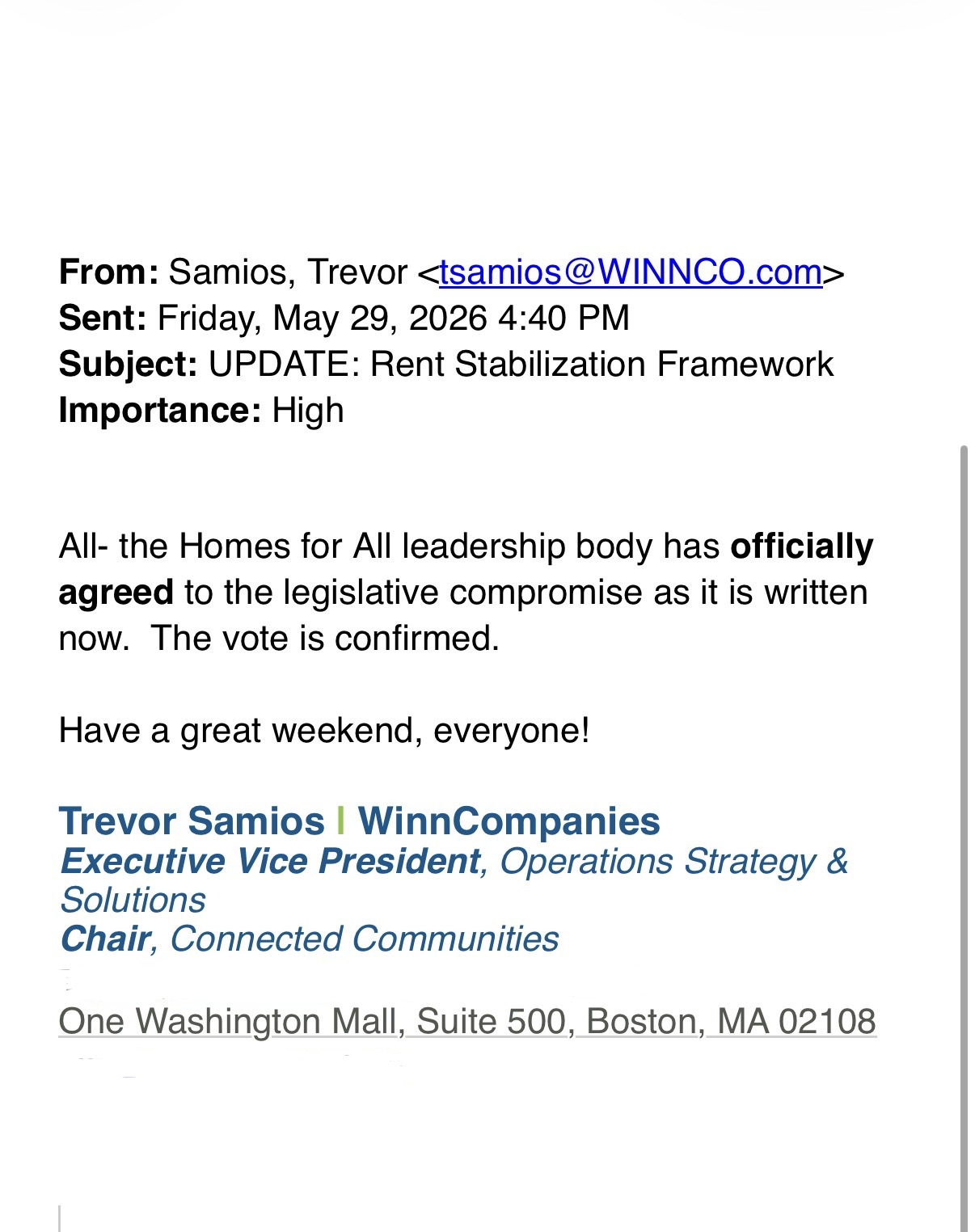
The email we received announcing a compromise had been reached. MassLandlords was not part of the negotiations. (Image License: CC BY-SA 4.0 MassLandlords, Inc.)
A rent control cap of up to 10% means that a “cheap” Boston apartment currently at $2,500 a month could receive a monthly increase up to $250 at renewal. Renters looking to move will find vacancy decontrol makes finding a new affordable apartment just as hard, if not harder, than it is now.
Landlords needing to raise the rent for even minor renovations will need approval from a rent control board to do so. The last time Massachusetts had rent control, rent control boards delayed renovations, improvements and evictions as they reviewed every case before voting.
Renters already suffering under landlords who claim they do not have the money to make repairs will find that repairs and improvements come even more slowly under a rent control board, reducing rent-controlled units to squalor. A condemned apartment means finding a new one, which will be more difficult under rent control.
While there are exemptions for owner-occupied properties with four units or fewer, individuals who rent out single-family homes or other small rental properties will still be subject to rent control. Meanwhile, Winn receives an additional 5 years of exemption, totaling 15, for any new construction.
“It’s just like during the pandemic, when Winn got out ahead of everyone in declaring their own eviction moratorium, but forgot that small owners and renters also needed rental assistance,” said MassLandlords Executive Director Doug Quattrochi. MassLandlords was not part of the compromise negotiations. “Fifteen thousand of our 70,000 mom and pop landlords sold out. Renters found it impossible to qualify for an apartment.”
This compromise may help get rent control through the legislature, but ultimately will only benefit the mega corporations that proponents like City Life/Vida Urbana claimed to be keeping in check with their ballot question.