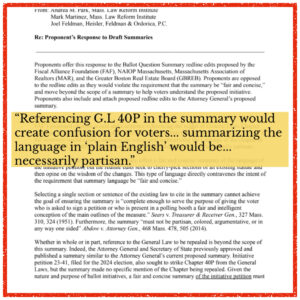
MassLandlords Urges Legislature: Put Alternative Version of Rent Control on Ballot
. Posted in News - 0 Comments
By Kimberly Rau, MassLandlords, Inc.
In an effort to address the housing crisis and prevent an unworkable form of rent control from passing, MassLandlords wrote a white paper proposing an alternative form of compensated rent stabilization. A white paper is an authoritative guide designed to educate readers on a complex issue, and, in this case, help influence decision-making. If approved by the legislature, the solution outlined in the white paper could go on the ballot alongside the voter referendum as an additional, prioritized question.
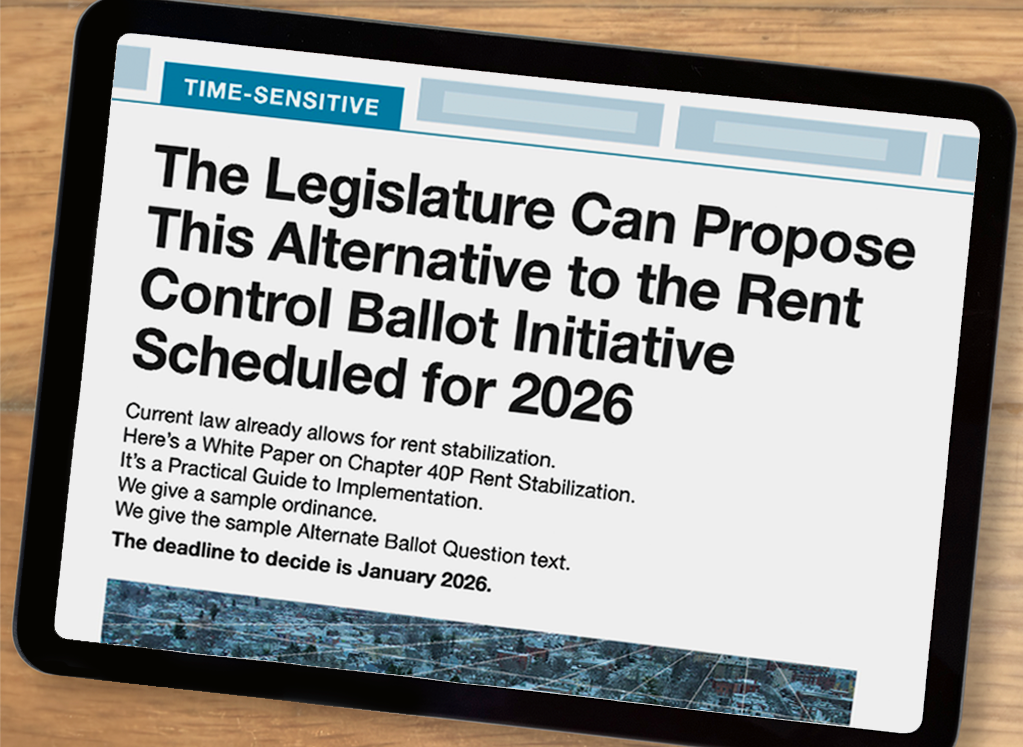
Our white paper pushes for compensated rent stabilization, which would allow rental housing providers to stay in business while keeping rent more affordable for those who need it most. (Image License: cc BY-SA 4.0 MassLandlords, Inc.)
“Advocates for rent stabilization have been calling for it for 30 years,” MassLandlords wrote in the white paper. “It’s past time we gave it to them, but in a way that does not have the harmful unintended consequences of every form of rent control recently proposed.”
The 36-page, full-color white paper proposal was sent to every member of the state legislature, as well as other concerned parties, on Jan. 14, 2026. In it, we urge the legislature to amend Chapter 40P, the law that was instituted after rent control was repealed by voter referendum in 1994. Chapter 40P allows for rent stabilization as long as participation is voluntary, and the difference between controlled rents and market price is compensated by the city or town.
Legislature Has Authority To Add Parallel Ballot Questions
The state constitution includes a process that allows the legislature to propose an alternative ballot question. The purpose is to prevent unrealistic proposals from being voted in by ballot.
If the legislature uses this process, an alternative ballot question appears alongside the original question. If both versions pass, the legislature’s version prevails. This right has not been exercised any time in recent memory, but could be used to establish a form of compensated rent stabilization that is in line with what voters wanted when they abolished uncompensated rent control in 1994.
The Housing Crisis Needs Complex Solutions
The housing crisis won’t get better on its own. Seniors, people with disabilities and households facing eviction are in tight financial straits that aren’t getting better. The federal government isn’t helping.
But the existing proposed form of rent control won’t fix these issues, and may make them worse. It might make things easier for some people who are already in an apartment they can afford, but some renters need more. Some may need complete rent freezes until they can become better stabilized. That’s far above and beyond what the existing ballot question proposes: a rent cap of 5% or inflation, whichever is less.
In other words, what is being proposed won’t help our most vulnerable renter populations. At the same time, it will make it impossible for many small landlords to renovate. The fact is the landlords who are trying to help already are going to get hurt the worst out of all housing providers if the proposed version of rent control is passed.
Small housing providers will be punished for trying to help.
Our white paper proposal reminds readers that we are not against rent stabilization or rent control, as long as it is compensated.
We can want to help residents while at the same time recognizing that housing isn’t free. Rent doesn’t just cover a property’s mortgage. It also has to pay for property taxes, insurance and upkeep, along with all the other small things that add up when you own a home. Many housing providers don’t pull anything out of their property until 30 years of ownership, once the mortgage is paid off.
Not everyone wants to or can buy a house. Some people prefer or need to rent. Housing needs to be available for everyone.
That doesn’t mean landlords should charge sky-high prices just because we can. In fact, many of our landlords have long-term tenants paying below market rates. But a rent cap as aggressive as the one proposed in the existing ballot initiative leaves little room for tax and insurance, let alone upkeep. The cost of those often exceeds 5% or the rate of inflation. It also penalizes the landlords who have stretched their budgets to accommodate seniors or other long-term tenants, because there is no vacancy decontrol option in this ballot petition.
Our proposal says a rent cap or even a rent freeze is fine, as long as the city or town covers that gap.
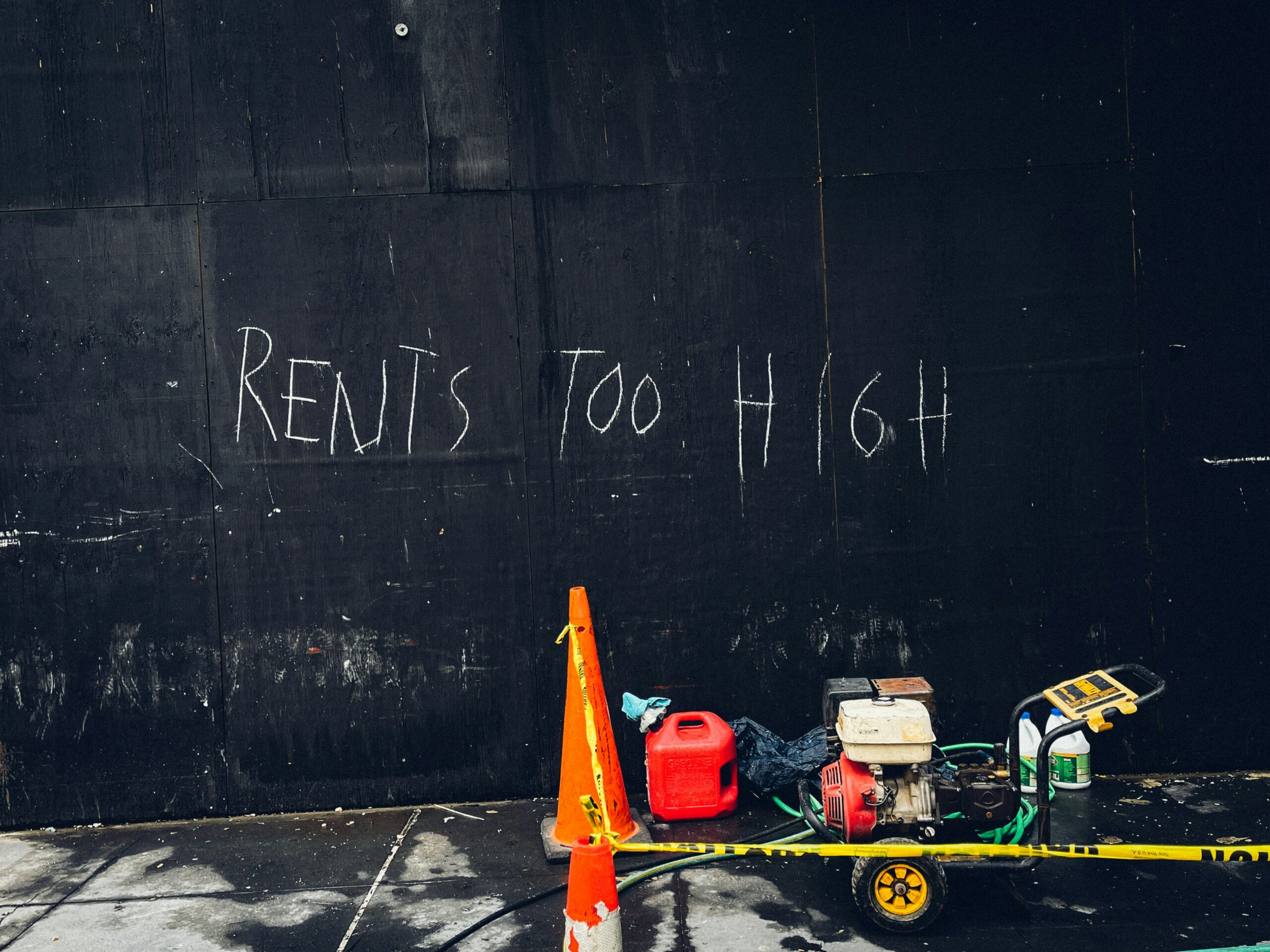
Something has to be done to fix the housing crisis. We propose rent stabilization that benefits many, without hurting others. (Image License: Jon Tyson for Unsplash)
White Paper: Municipalities Can Afford To Fund Rent Stabilization
One major difference in our proposal is that, were it enacted, rent control would be a local option for cities or towns to adopt. The current question is a statewide mandate, leaving individual municipalities with rent stabilization even if they don’t want it.
The second major difference is our idea is funded by the city or town. There can be a rent cap or a total rent freeze, whatever they deem appropriate. It can be opt-out or opt-in. It can target only certain vulnerable populations or everyone. Renters get more affordable housing and landlords get market rent.
We already have a framework for what market rent should be. The Department of Housing and Urban Development (HUD) issues area-specific fair market rents for Section 8 every year.
Taxpayer cost depends on which option a municipality chooses. In the white paper we used Somerville as an example, and showed that even the most extreme rent freeze would cost non-burdened taxpayers less than $25 a month each.
“Why should I fund rent control if I’m not a landlord?”
We’ve been asked why we would expect a city or town to fund rent stabilization. It’s a fair question.
Consider this: Taxpayer dollars already fund a lot of essentials, including roads and schools. People need roads and they need education. They also need housing. If people cannot afford housing, but housing costs remain high across the board (including taxes and insurance), we need to step in to alleviate the burden.
Under our proposal, rent control becomes rental assistance. Ideals aside, uncompensated rent control, as proposed for the 2026 ballot, destroys municipal revenue. Buildings fall into disrepair. Property values sink. Property tax revenue drops accordingly. (Read more at rentcontrolhistory.com.) Economists point to rent control as a major cause of urban blight, which then tanks property values for everyone in the area.
If the currently proposed ballot question passes, all municipalities will be forced to have rent control. Everyone will bear the cost. If our proposal makes it on the ballot, only the places that want rent control can adopt it.
Cities and towns can’t afford uncompensated rent control. Compensated rent control is a lot more beneficial.
Rent Control Alternatives: What Happens Next?
We sent the white paper in January, because the legislature has until May 5, 2026, to propose its own alternative ballot question.
May seems like a long way away as the winter winds howl, but there’s a lot of work to do before an alternative ballot question can be approved. Our elected representatives need time to read, consider and act on our proposal.
What You Can Do: Contact Your Reps and Senators
We proposed this alternative form of rent stabilization as a potential partial solution to the housing crisis (we also need more housing units). We hope the legislature sees the same value in this as we do.
Here’s how you can help. Contact your local representative and senator. If you don’t know who your representatives are, use the find my legislator tool. Ask them to read our white paper. Suggest they schedule a Zoom with MassLandlords staff to talk about what our rent control alternative would mean and how they can implement it (they can reach us at hello@masslandlords.net).
We’re serious about helping solve the housing crisis in Massachusetts in a way that works for everyone. Ask your representatives to get on board with our alternative to the proposed ballot question.