
Invasive Plant and Animal Addendum
By Eric Weld, MassLandlords, Inc.
MassLandlords has published a new form – intended as an addendum to rental agreements and available to all members – that will help landlords save money, increase property values, build better relations with tenants, and strengthen the health of the environment, overall and around your rentals.
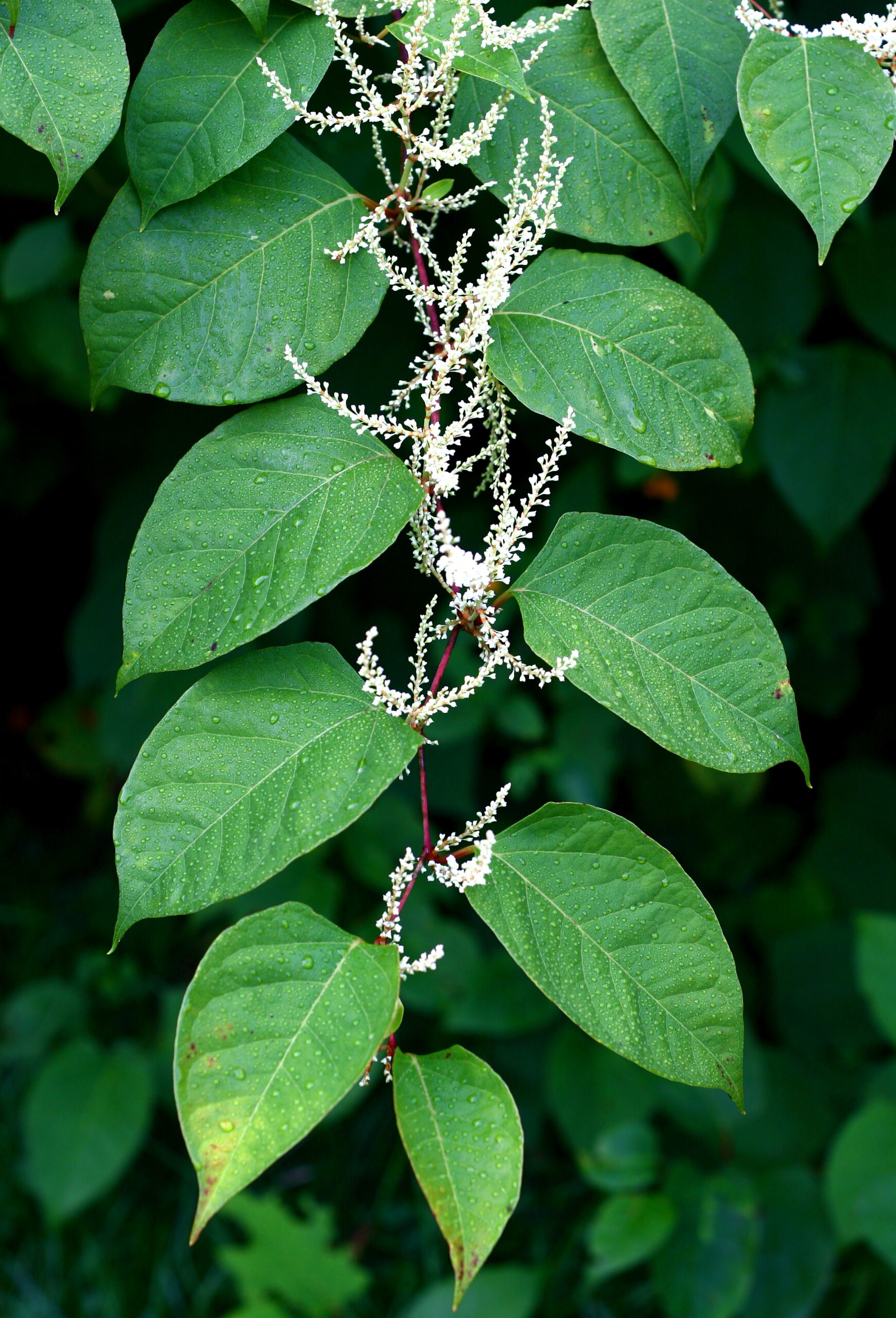
This closeup of Japanese knotweed was captured in Boxborough, Mass., but this invasive plant is widespread throughout the state, most heavily in the eastern and central regions. Japanese knotweed was first brought to the U.S. as an ornamental plant. It thrives near roadsides like the Mass Pike, water bodies, old gardens and agricultural areas, but grows everywhere, even through pavement, foundations and retaining walls. (Image License: CC BY-SA Liz West Wikimedia commons)
Newly published as of April 2026, the MassLandlords invasive plant and animal addendum is intended to help you and your renters work together, or in agreement, to rid your rental properties of destructive and costly plants and animals (insects in this case).
We’ve made sure that using the invasive plant and animal addendum is simple. You, as landlord, may include this addendum in new rental agreements, and discuss it with your tenants as part of the rental review process. The addendum states that renters will regularly review the yard and outside surroundings of their unit (especially in early summer, when new plants and animals are first showing up) to identify invasive plants or animals (or evidence of invasive animal activity).
To assist with that identification, MassLandlords has begun, and will continuously compile, a listing of invasive species that are particularly pervasive in our state, at Masslandlords.net/invasives. We aim to keep our list focused on the most common and threatening invasive species in Massachusetts, such as knotweed, Asiatic bittersweet and the Asian long-horned beetle. We will add to the list as invasive plant or insect species warrant.
Following the addendum instructions, participating renters will install an app, available at iNaturalist, that uses a database of 300 million pictures of plants and animals to make an AI recommendation that can be refined or overruled by real people, including you as landlord, if you want that level of involvement.
For a more thorough list, the addendum also links to the Prohibited Plant List, an extensive compendium of invasive species managed by the Massachusetts Department of Agricultural Resources.
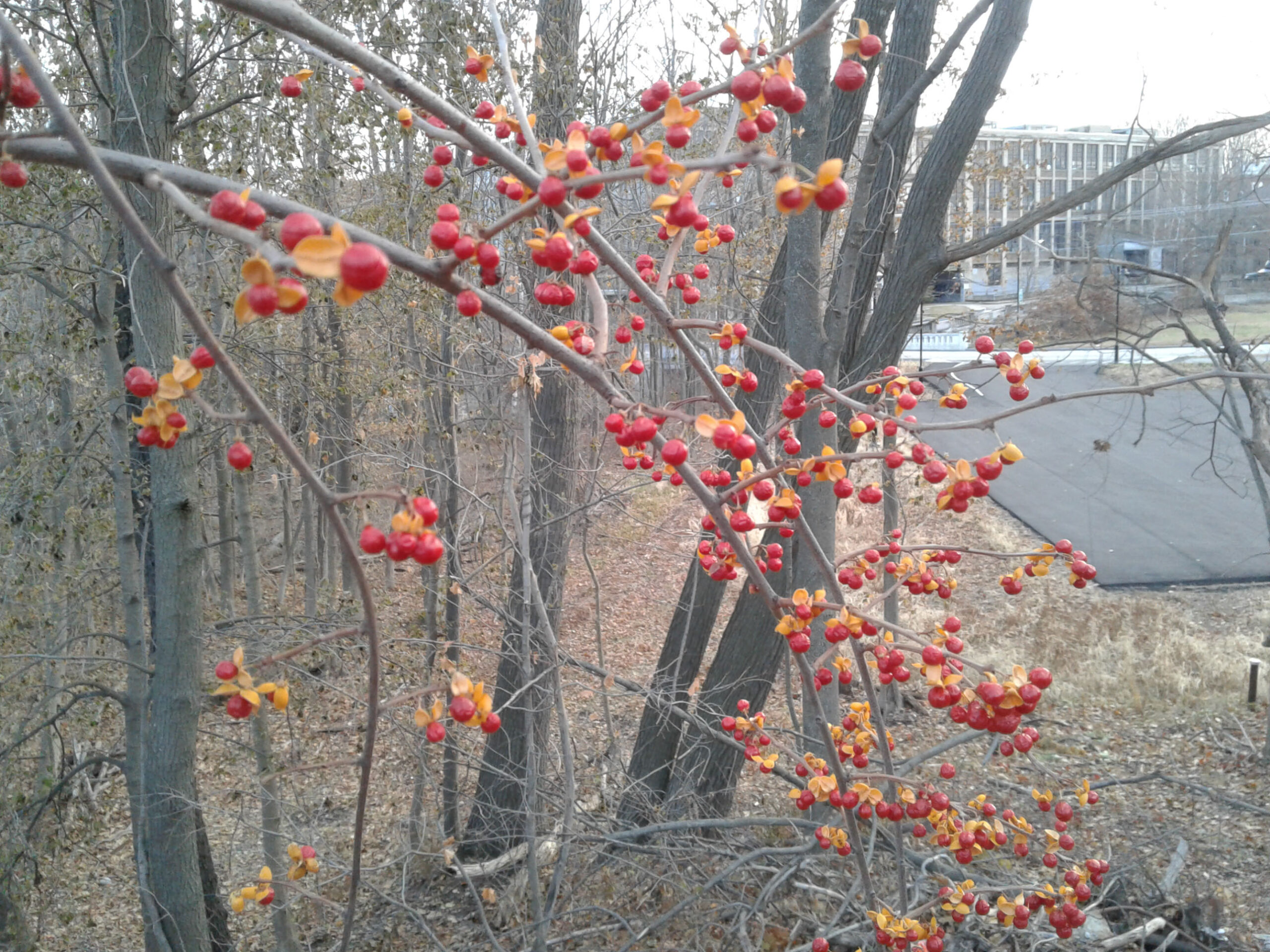
Asiatic bittersweet, also known as Oriental bittersweet, is very common throughout Massachusetts and New England. This invasive can be particularly destructive when it wraps around tree trunks, girdling them and disrupting nutrients for their growth. It is a particularly robust plant and can continue to regrow after it’s cut at the root, often requiring multiple cutting or herbicide. (Image License: CC BY-SA Soap Wikimedia commons)
What Is an Invasive Plant or Animal and What Harm Are They Causing?
We have been overrun with invasive plants, especially, and insects in Massachusetts (and in other states, too). Invasive plants and animals are species that have traveled into our state from another country or region. Invasives are typically transported through human activity. Spores, seeds and eggs can attach themselves to firewood, car tires, boat hulls, the bottom of shoes and other surfaces on which they travel to a new area and set up shop.
Also, unfortunately, many nurseries, hardware and big box stores sold invasive plants for years. People bought them for their ornamental and aesthetic flair, and brought them home to plant in their gardens, where they could take over and dominate the surrounding ecosystem.
Because invasive plants are not susceptible to most natural predators in the area (too few animals eat or use them), they can thrive, spread and muscle out native species. Insects like Japanese beetles are introduced to a new area and feast on the leaves, flowers and berries of the plants there, depleting entire species in a hurry.
As a result of invasives’ destruction, species diversity gets reduced, which can knock the local ecosystem out of balance. Invasives often disrupt pollinators’ habitats and populations, increasing the cost of food and other resources.
And it’s costing us all a lot of money. How much? The journal Science of the Total Environment estimated the cost of managing invasive plant and animals at $21 billion per year between 2010 and 2020, just in the U.S. And the cost is increasing. Read more details about invasives here.
There’s a good chance your rental properties are hosting invasives of some sort. Invasives are pervasive in our state. The best way to keep invasives from establishing themselves or taking root in a new area is to keep them from entering in the first place, and when they do, spot and remove them early.
Working with your renters, via our addendum, to rid your properties of invasives is one simple way to save money, establish rapport and help the environment. If every housing provider across the state eradicated invasives, the collective savings would be massive, and food security would improve.
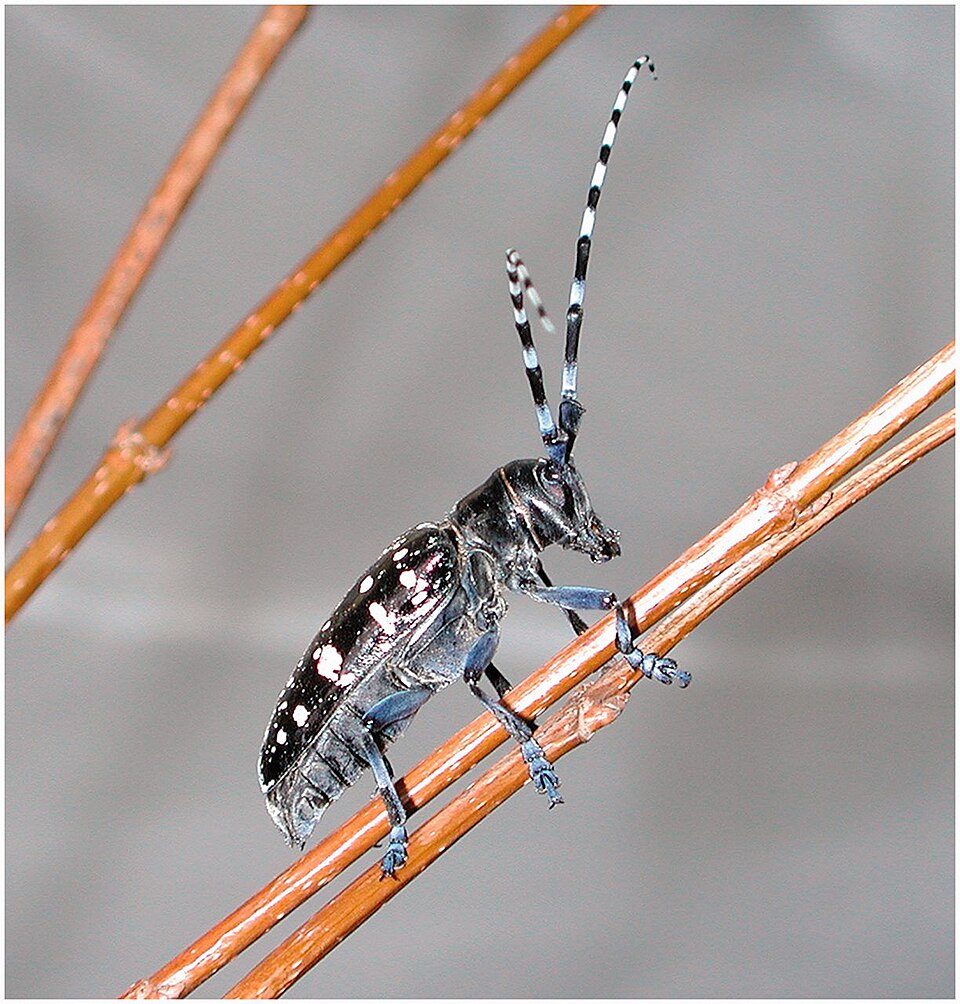
The Asian long-horned beetle has been a very destructive invasive in Worcester County, but has spread throughout the state. This beetle, readily identifiable by its telltale long horns and spots, is active mostly in midsummer to fall, and keeps very busy boring dime-size holes in tree trunks, killing maples and other hardwoods by the tens of thousands. Report sightings of this insect right away to eradicate them at the source. (Image: Public Domain Wikipedia ALBadult)
MassLandlords Invasive Plant and Animal Addendum Details
Here’s how the addendum works. If you don’t care to know about invasives, the new default is that renters are free to pluck them up when they see them. Before, this was a gray area. If you do care about the vegetation on your property, the addendum gives you some measure of oversight according to your wishes.
Using our addendum, once your renters have identified and cross-checked invasive plants on your rental property, they will report the sightings to you, unless you opt out of that requirement. As part of the agreement, you will then respond within 30 days of their report, by either teaming with your tenant to remove the invasive plants, or hiring a licensed herbicide professional for removal. This might be necessary in cases when invasive plants have grown too large for removal by you and your tenant, are located in difficult or dangerous areas, or when the removal of the plant(s) might endanger other native plants or structures on the property.
This addendum includes a section where you can specify actions to be taken by your tenant when they find invasives on your property. Paragraph 8 of the addendum, “Right to Remove Invasive Plants,” allows you to opt for a set of automatic steps your tenant will follow when invasives are located. For example, one option reads, “Resident must/need NOT (check which one you both agree to) make a photographic report of the presence of an invasive and publish this report on the App.”
Other options in paragraph 8 include “Resident must/need NOT tell Landlord they intend to remove it,” “Resident must give the Landlord 30 days to object,” and “Resident may remove any suspected invasive plant immediately,” depending on the level of responsibility you want to grant your tenant.
The process for invasive animals is a little different. “Residents will not attempt to remove or kill invasive animals,” the addendum states in paragraph 4, a listing of actions renters are not allowed to do.
It’s best to simply report the sighting of an invasive insect to an authority as listed and linked on the addendum, such as the Introduced Pests Outreach Project or the U.S. Department of Agriculture, for their recommendations of how to proceed. Professionals can confirm the existence of an invasive and, importantly, locate its source.
Empowering your tenants to kill invasive insects could carry the risk that they might simply squish the bug without a chance to confirm it as an invasive. Also, if there’s one invasive bug, there may be a hundred that you can’t see. Squishing an invasive bug might ruin the opportunity to find the source and stop them for good.
The addendum also includes a few other “don’ts” for residents, to prohibit them from entering areas of the property where they are not allowed, or areas that aren’t safe, or take any actions that may be risky or harmful. And it includes a limitation of liability statement, among a few other contractual details.
Empowering Your Renters
We landlords and property owners are at the forefront of the fight against invasives. To gain a handle on the problem, we are a necessary part of the solution. Collectively, housing providers own a lot of land in the state, and host a lot of invasive plants. Without the input of landlords and their tenants, reducing the harms of invasives will not work.
We know there are renters who want to do this, who want to create and maintain thriving, balanced ecosystems with robust biodiversity in the space where they live. And who isn’t interested in saving money?
Our invasive plant and animal rental agreement addendum creates a simple structure for you to work in partnership with your tenants for a win-win scenario. Healthier environment. More balanced food chains and prices. Higher, stabler property values.
It starts by adding this addendum and freeing your renters to pull some weeds.
- v10
- Initial version for member use.
- v1 - v9
- Internal revisions, also shared with stakeholders (e.g., Native Plant Trust). The Native Plant Trust has not endorsed the form but one of their ecologists did have substantive input in its creation.
To view this form, you must be logged-in and a member in good standing
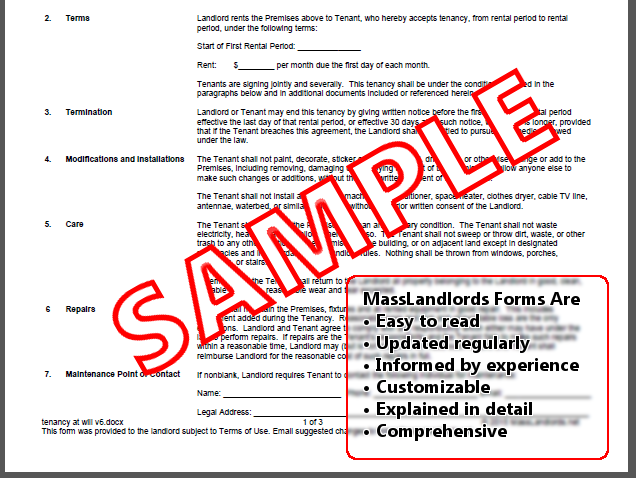
MassLandlords is a nonprofit dedicated to helping owners rent their property. We try our best, but we can't guarantee these forms will always work. We provide legal information but never advice particular to your situation. Nothing on this site is meant to create an attorney-client relationship. We advise you consult with an attorney.